Gordon Ramsay Red Wine Jus Recipe
Cooking Guides

5 Classic Sauces Every Home Cook Should Know

Five classic sauces cover nearly every meat dish you will ever cook: red wine jus, peppercorn sauce, béarnaise, madeira sauce, and hollandaise. Each one follows a simple technique, uses everyday ingredients, and transforms a good steak or roast into something that tastes like it came from a restaurant. This guide explains what each sauce is, when to use it, and how they are made.

I learned to make sauces backwards. I started with complicated reductions before realising that Gordon Ramsay builds most of his sauces from the same base: deglaze the pan with wine or stock, add cream or butter, finish with herbs. Once that pattern clicks, every sauce becomes a variation of the same five-minute process.

What Makes a Good Pan Sauce

Every great pan sauce starts the same way. After you cook your meat, the brown bits stuck to the bottom of the pan (called fond) are concentrated flavour. You deglaze the pan with liquid (wine, stock, or spirits), scrape those bits up, and build the sauce on top of them.

The liquid reduces down, concentrating in flavour. Then you finish with fat (butter or cream) to give the sauce body and shine. The whole process takes 5 to 10 minutes while your meat rests. That timing is not a coincidence. Restaurant kitchens use the resting time to build the sauce in the same pan.

The basic formula: deglaze with acid or alcohol, reduce by half, finish with fat. Everything else is just flavour additions on top of that foundation.

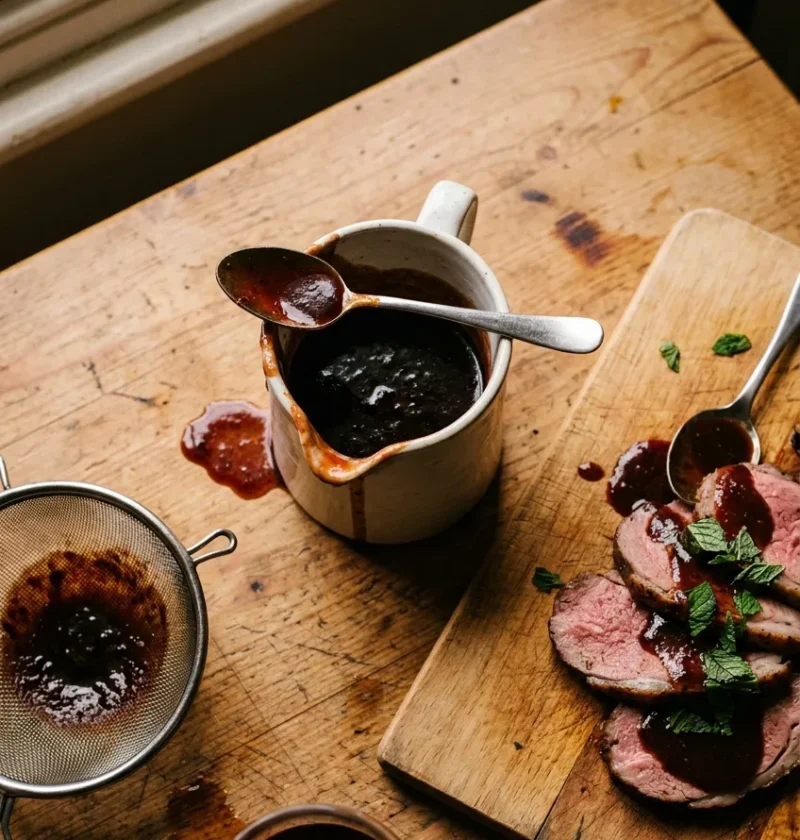
Red Wine Jus

Red wine jus sauce in a pan

A red wine jus is a concentrated, glossy sauce made by reducing red wine and beef stock until it coats the back of a spoon. It has no cream, which makes it lighter than most steak sauces. The flavour is deep, rich, and slightly sharp from the wine.

Best with: roast beef, fillet steak, lamb, duck breast, and beef Wellington.

How it works: Sauté shallots in the steak pan, deglaze with a full glass of red wine, add beef stock, and reduce until it thickens to a syrupy consistency. Strain through a fine sieve. Swirl in a knob of cold butter right at the end for shine. The reduction is what gives it intensity. A full bottle of wine might reduce to just a cup of jus.

Key tip: Use a wine you would drink. Cheap wine concentrates its flaws when reduced. A decent Merlot or Cabernet works well. My red wine jus recipe walks through the full method step by step.

Peppercorn Sauce

Creamy peppercorn sauce for steak

Peppercorn sauce is a creamy, peppery sauce made with crushed green or black peppercorns, brandy, and double cream. It is the classic British steakhouse sauce. The heat from the peppercorns cuts through the richness of the cream, and the brandy adds a warm, boozy depth.

Best with: sirloin steak, fillet steak, steak au poivre, and pan-seared pork chops.

How it works: After cooking your steak, add crushed peppercorns to the hot pan. Pour in a good splash of brandy (carefully, it may flame) and let it reduce. Add double cream, stir, and simmer for 2 to 3 minutes until the sauce thickens enough to coat the back of a spoon. Season with salt.

Key tip: Use green peppercorns in brine for a milder, more complex sauce. Crush them lightly to release flavour without turning the sauce gritty. Black peppercorns give a sharper heat. My peppercorn sauce recipe covers both versions.

What Is Béarnaise Sauce?

Béarnaise sauce

Béarnaise is a warm, emulsified butter sauce flavoured with tarragon and shallots. It is related to hollandaise but richer and more herbaceous. Think of it as hollandaise’s more sophisticated French cousin. The texture is thick and creamy, almost like a warm mayonnaise.

Best with: fillet steak, grilled lamb chops, and roast beef. It is also brilliant with pan-fried salmon and asparagus.

How it works: Reduce white wine vinegar with tarragon and shallots until almost dry. Whisk egg yolks over gentle heat until thick and pale. Slowly drizzle in clarified butter while whisking constantly. The sauce emulsifies into a smooth, golden cream. Finish with fresh chopped tarragon.

Key tip: The bowl should never be too hot. If the eggs get too warm, they scramble. Hold your hand under the bowl. If it is too hot to touch, take it off the heat and keep whisking. My béarnaise sauce recipe includes the technique Gordon Ramsay uses to prevent splitting.

What Is Madeira Sauce?

Madeira sauce for steak

Madeira sauce is a rich, glossy brown sauce made with Madeira wine (a Portuguese fortified wine), beef or veal stock, and butter. It sits between a red wine jus and a gravy in terms of richness. The Madeira gives it a distinctive sweetness and nutty depth that you cannot get from regular wine.

Best with: fillet steak, filet mignon, roast chicken, and mushroom dishes. It is a classic fine-dining sauce that pairs with anything delicate.

How it works: Sauté shallots and mushrooms in butter. Deglaze with Madeira wine and reduce by two-thirds. Add rich beef stock and reduce again until the sauce coats a spoon. Strain and finish with cold butter for shine. The double reduction is what gives Madeira sauce its concentrated, complex flavour.

Key tip: Use a medium-dry Madeira (Verdelho or Sercial) rather than sweet. Too-sweet Madeira makes the sauce cloying. A decent bottle costs around £8 and lasts for several batches of sauce. My Madeira sauce recipe goes into the full method.

What Is Hollandaise Sauce?

Hollandaise sauce

Hollandaise is a warm, emulsified sauce made with egg yolks, butter, and lemon juice. It is the base for béarnaise (above) but simpler, with no herbs or shallots. The texture should be smooth, pourable, and golden. It is the sauce you know from eggs Benedict.

Best with: poached eggs, asparagus, steamed vegetables, and grilled fish. My poached eggs guide covers the technique for the eggs that sit underneath.

How it works: Whisk egg yolks with a splash of lemon juice over gentle heat until thick. Slowly drizzle in melted butter while whisking. Season with salt and a pinch of cayenne. The whole thing takes about 5 minutes. My hollandaise sauce recipe covers the full process.

Key tip: If the sauce splits (the butter separates from the eggs), add a tablespoon of cold water and whisk vigorously. This usually brings it back together. Prevention is better though: low heat and slow butter addition are the keys.

Which Sauce Goes With Which Meat

MeatBest sauces
Fillet steakBéarnaise, Madeira, red wine jus
Sirloin / RibeyePeppercorn, red wine jus
Roast beefRed wine jus, horseradish, gravy
LambRed wine jus, mint sauce
Duck breastRed wine jus, cherry sauce, port reduction
ChickenMadeira, cream sauce, gravy
Salmon / fishHollandaise, béarnaise, lemon butter
Poached eggsHollandaise

Common Sauce Mistakes

Not reducing enough. A thin, watery sauce means you stopped reducing too early. Keep simmering until the sauce coats the back of a spoon. When you draw a line through the coating with your finger, it should hold without running.

Adding cream too early. If you add cream before the wine or stock has reduced, the sauce will be too thin and you will need to reduce for much longer. Always reduce the liquid first, then add cream at the end.

Scrambled emulsions. Béarnaise and hollandaise split when the heat is too high. Keep the heat gentle and whisk constantly. If it starts to look grainy, pull it off the heat immediately and add a splash of cold water.

Using bad wine. “Cook with wine you would drink” is a real rule. Cheap wine has harsh tannins and off-flavours that concentrate when reduced. You do not need expensive wine, just something decent.

FAQs

What is the easiest sauce to make for steak?

Peppercorn sauce. It takes 5 minutes, uses just four ingredients (peppercorns, brandy, cream, salt), and is made in the same pan you cooked the steak in. No special technique required.

Can you make sauces ahead of time?

Red wine jus and Madeira sauce can be made up to 3 days ahead and reheated gently. Peppercorn sauce reheats well but may need a splash of cream to loosen it. Béarnaise and hollandaise should be made fresh and served immediately as they split when reheated.

What is the difference between a jus and a gravy?

A jus is a thin, concentrated sauce made by reducing stock and wine without any thickener. A gravy uses flour or cornflour to thicken it, giving it a heavier body. Jus is cleaner and more refined. Gravy is richer and more traditional. Both have their place.

What is the difference between béarnaise and hollandaise?

Both are emulsified butter sauces made with egg yolks. Hollandaise is flavoured with lemon juice only. Béarnaise adds a reduction of tarragon, shallots, and white wine vinegar, giving it a more herbaceous, complex flavour. Béarnaise is for steak. Hollandaise is for eggs and vegetables.

Can I use stock cubes instead of homemade stock?

Yes. A good quality beef stock cube dissolved in water works fine for red wine jus and Madeira sauce. The reduction concentrates the flavour enough to mask any artificial taste. Use half a cube per 250ml of water to avoid the sauce tasting too salty after reducing.

Sophie Lane

AboutSophie Lane

I’m Sophie, a British home cook and fan of Gordon Ramsay. I test his recipes in my kitchen and share simple, step-by-step versions anyone can make at home.