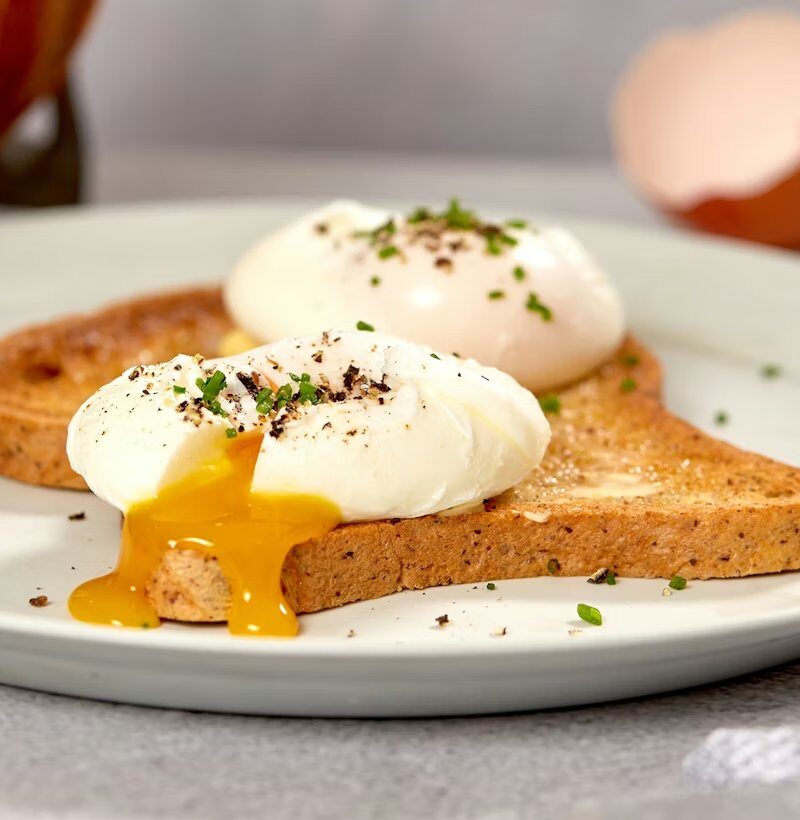
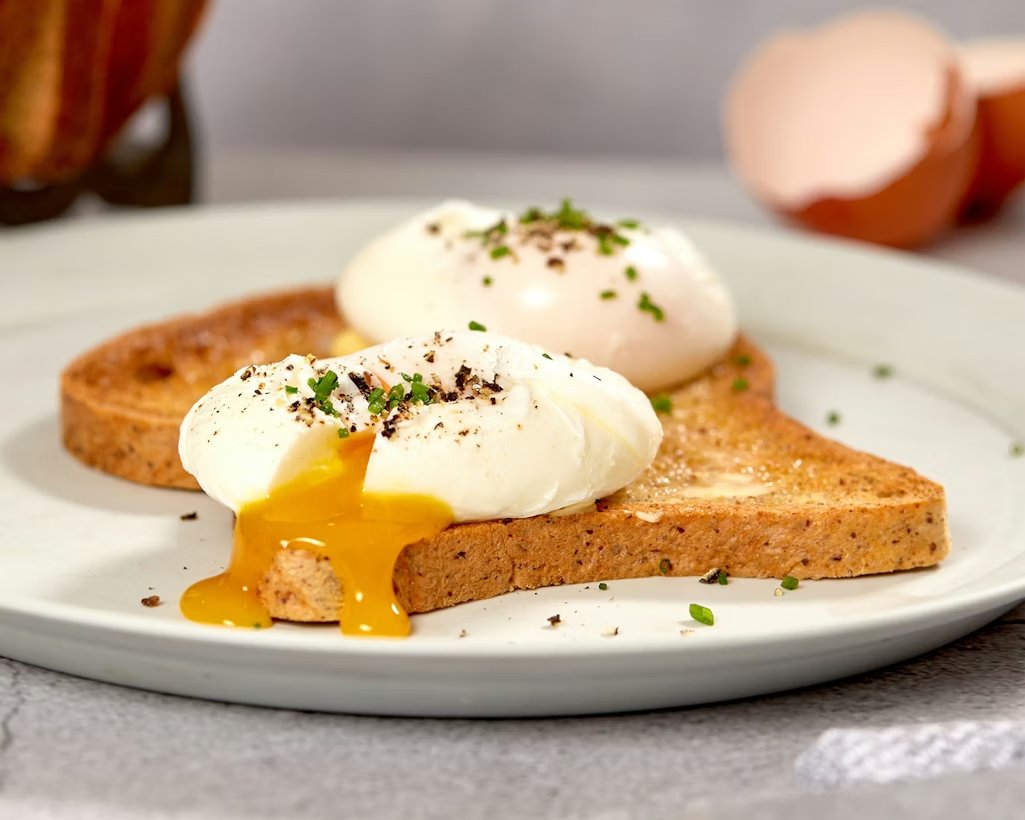
A perfect poached egg has a set white and a warm, runny yolk that spills out when you cut into it. It is made by slipping a cracked egg into barely simmering water for about 3 to 4 minutes. No special equipment needed, just a saucepan and fresh eggs.
I avoided poaching eggs for years because every attempt ended in wispy white threads floating around the pan like seaweed. Then I watched Gordon Ramsay poach an egg for eggs Benedict and noticed two things I was doing wrong: my water was boiling too hard, and my eggs were not fresh enough. Once I fixed those, it worked every time.
Why Fresh Eggs Matter
The freshness of the egg is the single biggest factor in getting a clean poached egg. A fresh egg has a thick, tight white that clings closely to the yolk. An older egg has a watery outer white that spreads out and creates those messy threads in the water.
To test freshness, drop the egg (still in its shell) into a glass of water. If it sinks and lies flat on the bottom, it is very fresh. If it tilts upright, it is still fine for frying but will be harder to poach neatly. If it floats, bin it.
The Classic Saucepan Method
This is the standard method and the one I use most. No gadgets, no tricks, just water and timing.
Step 1: Fill a deep saucepan with about 8cm of water. Add a small splash of white vinegar (about a tablespoon). The vinegar helps the egg white set faster, which reduces spreading. You will not taste it.
Step 2: Bring the water to a gentle simmer. You want small bubbles rising from the bottom, not a rolling boil. Boiling water will rip the egg apart. If the water is moving too aggressively, turn the heat down.
Step 3: Crack the egg into a small bowl or ramekin first. This lets you slide it gently into the water rather than dropping it from height. It also lets you catch any shell fragments.
Step 4: Create a gentle whirlpool by stirring the water in one direction with a spoon. Tip the egg into the centre of the swirl. The current wraps the white around the yolk, creating a neater shape. This step is optional but makes a visible difference.
Step 5: Cook for 3 minutes for a runny yolk, 4 minutes for a yolk that is just starting to thicken, or 5 minutes for a firm yolk. Do not touch the egg while it cooks. Let it be.
Step 6: Lift the egg out with a slotted spoon. Let it drain for a few seconds, then gently touch the yolk with your finger. It should feel soft and jiggly, like a water balloon. If it feels firm, it has gone too far.
Place the egg on kitchen paper briefly to absorb excess water, then serve immediately.
How Long to Poach an Egg
| Yolk result | Time in water | Best for |
|---|---|---|
| Very runny | 2.5 to 3 minutes | Eggs Benedict, on toast |
| Slightly runny | 3.5 to 4 minutes | Salads, grain bowls |
| Firm yolk | 5+ minutes | Make-ahead, meal prep |
Timing starts from the moment the egg enters the water. These times assume a gentle simmer, not a boil. If your water is too hot, the egg will cook faster on the outside and the timing will be off.
Does Vinegar Actually Help?
Yes. White vinegar lowers the pH of the water, which causes the egg white proteins to coagulate (set) faster. This means less spreading and a neater shape. Use plain white vinegar, not malt or balsamic, as darker vinegars can discolour the egg.
You do not need much. One tablespoon per litre of water is enough. Some people skip it entirely and rely purely on egg freshness. If your eggs are very fresh, you can get away without it.
The Sieve Method for Perfect Shape
If you want restaurant-quality oval shapes with no trailing wisps, crack the egg into a fine mesh sieve first. The thin, watery part of the white drains away, leaving only the thick white and the yolk. Then tip the strained egg into the simmering water.
This is the method most professional kitchens use. It eliminates the problem of messy whites entirely. The trade-off is a slightly smaller egg, but the shape is perfect every time.
How to Poach Eggs Ahead of Time
You can poach eggs up to two days in advance. This is how restaurants serve perfect poached eggs for brunch without panicking during service.
Poach the eggs until just slightly underdone (about 2.5 minutes). Transfer them immediately to a bowl of ice water. This stops the cooking. Store the eggs in the cold water in the fridge for up to 48 hours.
To reheat, lower the eggs into gently simmering water for 30 to 60 seconds. They warm through without overcooking. This is a game-changer if you are making eggs Benedict for a crowd.
How to Poach Multiple Eggs at Once
Skip the whirlpool method when poaching more than two eggs. Use a wide, shallow pan instead of a deep saucepan. Bring the water to a simmer, add vinegar, then crack each egg into its own small bowl and slip them into the water one at a time, spacing them apart.
They will not be as neat as single eggs, but they will cook evenly. Remove them in the order you added them. First in, first out.
What to Serve With Poached Eggs
A poached egg turns simple food into a proper meal. The runny yolk acts as a sauce. Here are the combinations I make regularly.
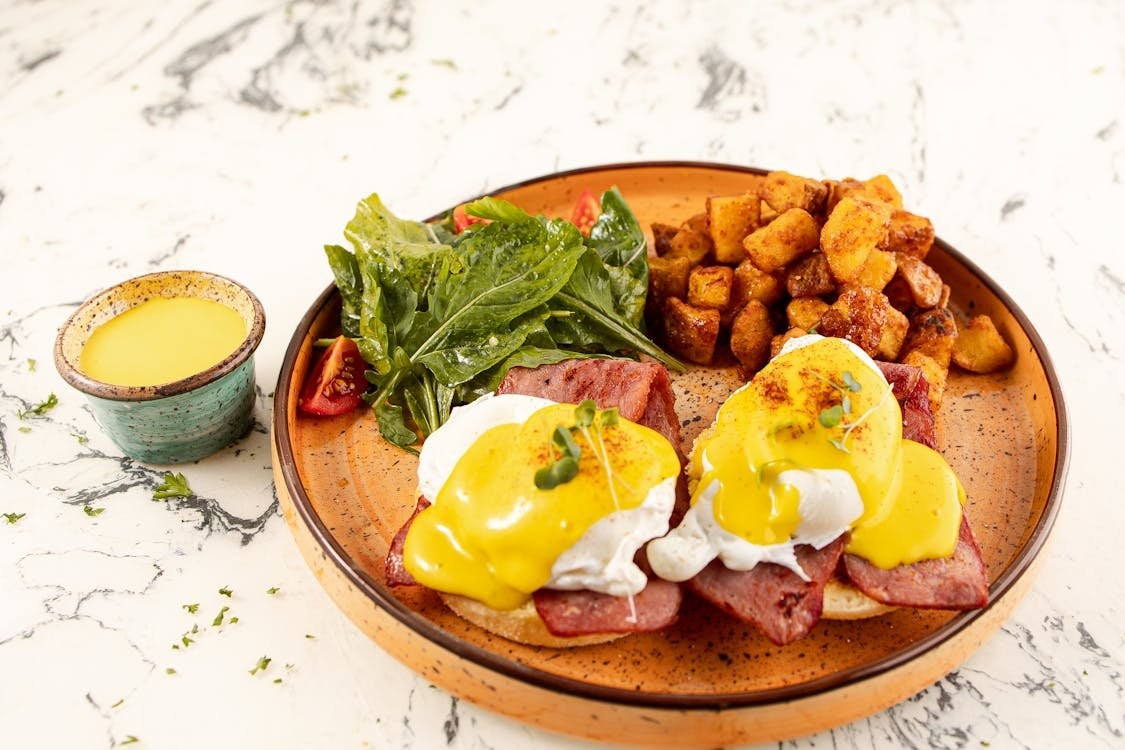
Eggs Benedict with hollandaise sauce is the classic. Poached egg on an English muffin with ham and a generous pour of hollandaise.
On top of smashed potatoes or arugula salad with shaved parmesan. The warm yolk mixes with the dressing and becomes part of the dish.
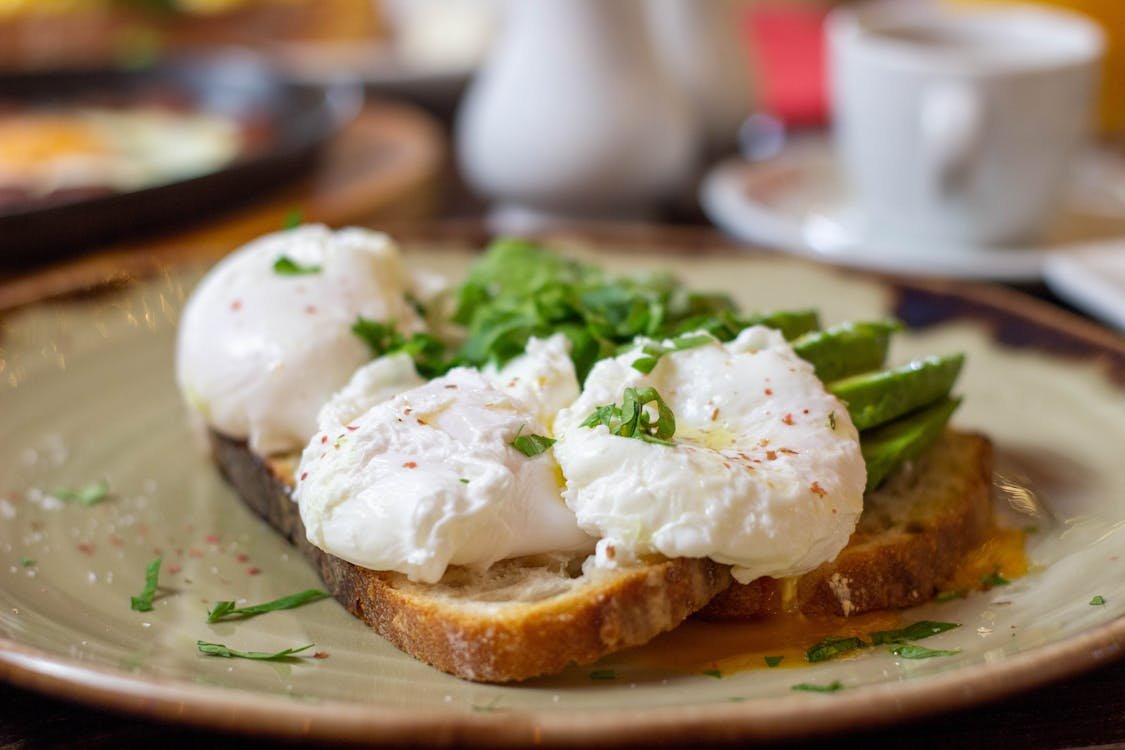
On sourdough toast with sliced avocado and chilli flakes. Or dropped into a bowl of beef barley soup right before serving for a rich, protein-packed lunch.
Common Poaching Mistakes
Water boiling too hard. This is the most common mistake. A rolling boil breaks the egg apart. You want the water barely moving, with gentle bubbles rising from the bottom.
Old eggs. The thin, watery white of an old egg spreads out instantly in the water. Use the freshest eggs you can find. If they are more than a week old, use the sieve method to drain the watery white first.
Cracking straight into the water. Always crack into a bowl first. It gives you a controlled, gentle entry into the water and prevents shell fragments ending up in the pan.
Poking or stirring the egg. Once the egg is in the water, leave it alone. Do not try to shape it with a spoon. Let the heat do the work.
FAQs
Can you poach an egg without vinegar?
Yes, if your eggs are very fresh. The thick white will hold its shape on its own. Vinegar just gives extra insurance for eggs that are a few days old. If you skip vinegar, use the sieve method to remove the watery outer white first.
Can you poach an egg in the microwave?
You can, but the result is different. Fill a microwave-safe mug with water, crack an egg in, cover with a plate, and microwave on medium power for 60 to 90 seconds. The texture is softer and less defined than a pan-poached egg. It works in a pinch but it is not the same.
Why do my poached eggs stick to the spoon?
The egg white sticks if the spoon is dry. Dip your slotted spoon into the simmering water before you lift the egg. The thin layer of water on the spoon prevents sticking.
What is the best temperature for poaching eggs?
Between 71°C and 82°C (160°F to 180°F). This is well below boiling (100°C / 212°F). At this temperature, the white sets gently without toughening while the yolk stays liquid. If you have a thermometer, aim for 75°C (167°F).