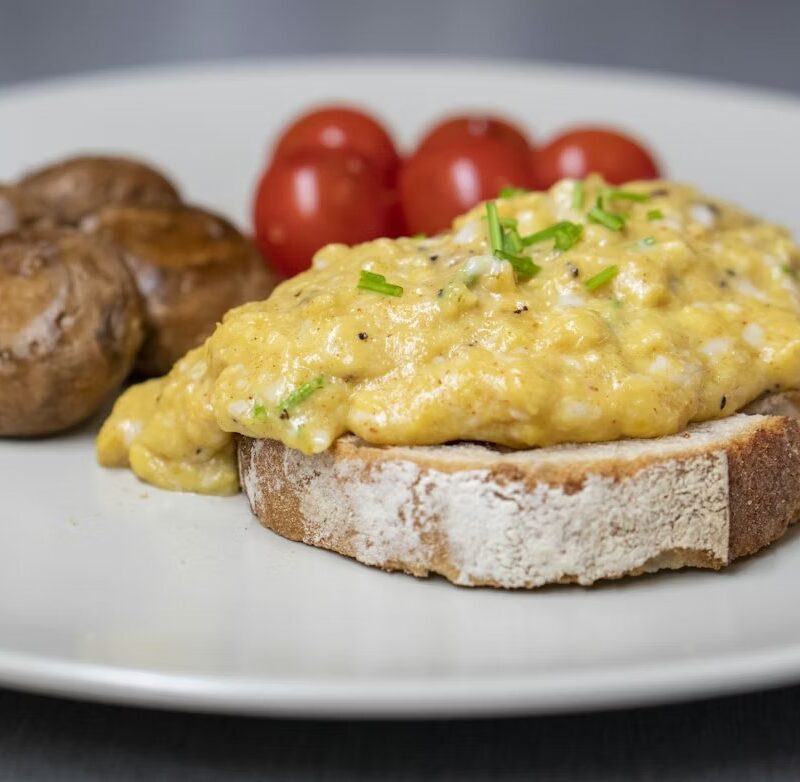
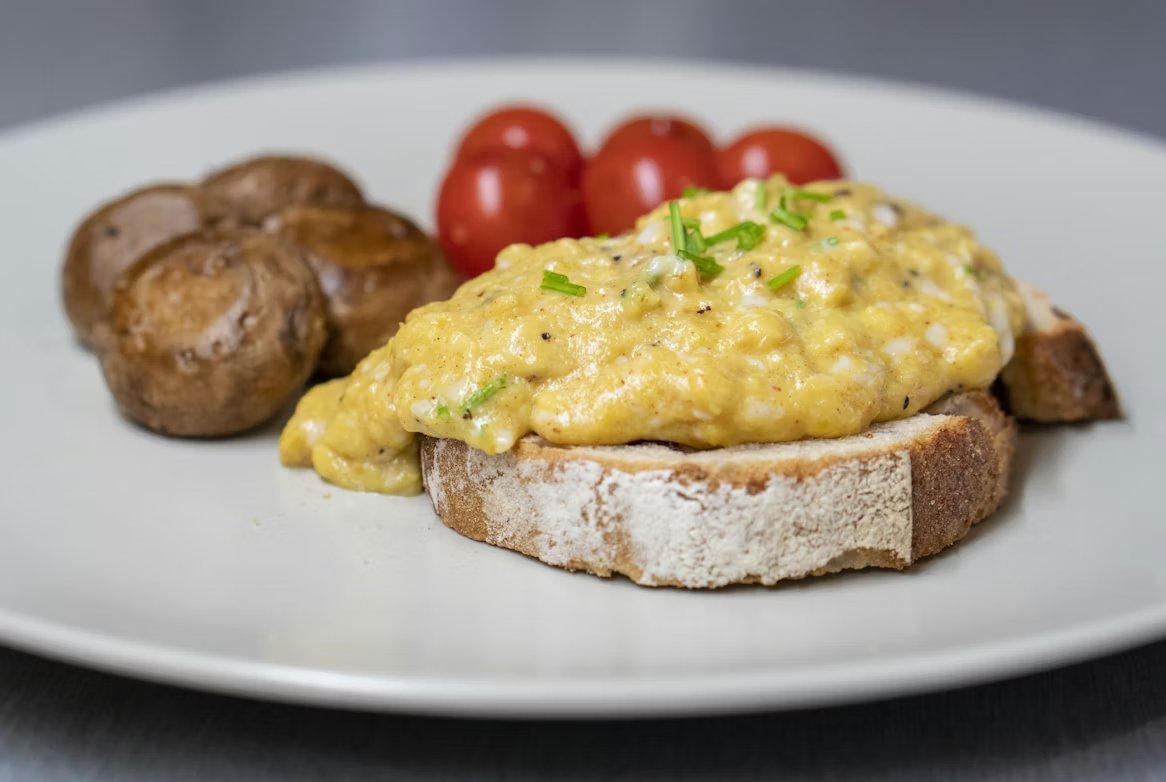
Perfect scrambled eggs are made with cold butter, low heat, and constant stirring, and they take about 5 minutes from pan to plate. The texture should be soft, creamy curds that barely hold together. If your scrambled eggs come out rubbery or dry, the problem is almost always too much heat or too much time in the pan.
This is the first thing I ever learned to cook properly. I watched Gordon Ramsay make scrambled eggs on YouTube when I was still burning toast, and his method completely changed how I think about heat control. The technique is dead simple once you see it, and it applies to far more than just eggs.
Why Most Scrambled Eggs Go Wrong
The standard mistake is treating scrambled eggs like something you cook fast over high heat. Most people crack eggs into a hot, buttered pan and stir a few times until they set. That gives you tough, dry curds with a rubbery bounce. It is edible, but it is not good.
Good scrambled eggs need the opposite approach. Low heat, constant movement, and pulling the pan off the burner before the eggs look done. They continue cooking from residual heat after you take them off. If they look perfect in the pan, they are already overdone by the time they hit the plate.
What You Need
Three large eggs per person. A knob of cold butter (about 15g). A small non-stick saucepan, not a frying pan. Salt, pepper, and optionally a tablespoon of crème fraîche or double cream at the end. That is it.
The saucepan matters. A wide frying pan spreads the eggs too thin and they cook too fast. A small saucepan keeps the egg mixture deep enough that the curds form slowly and stay creamy. This is one of those details that sounds fussy but makes a genuine difference.
The Low and Slow Method
This is the method I use every time. It takes about 5 minutes and produces the creamiest scrambled eggs you have ever had.
Step 1: Crack three eggs directly into a cold saucepan. Add the cold butter cut into small pieces. Do not whisk the eggs first. Do not preheat the pan.
Step 2: Place the pan on medium-low heat. Start stirring immediately with a spatula or wooden spoon. Keep stirring constantly, scraping the bottom and sides of the pan.
Step 3: After about 30 seconds, the butter will melt and the eggs will start to combine. Keep stirring. You will see small, soft curds beginning to form. The mixture will look like it is barely cooking. That is exactly right.
Step 4: When the eggs start to thicken (about 3 minutes in), pull the pan off the heat for 10 seconds while still stirring. Put it back on. Repeat this on-and-off technique. This prevents the eggs from overcooking and gives you more control.
Step 5: When the eggs are about 80% set with soft, creamy curds that still look slightly wet, pull the pan off the heat completely. Stir in a tablespoon of crème fraîche (or double cream). The cold dairy stops the cooking instantly and adds richness. Season with salt, pepper, and optionally some fresh chives.
Serve immediately. Scrambled eggs wait for nobody. The moment they are done, they go on the plate.
The Quick Method (High Heat)
Not everyone wants to babysit eggs for five minutes on a weekday morning. This faster method produces larger, fluffier curds rather than the creamy French style above. Different texture, still good.
Whisk three eggs in a bowl with a pinch of salt until fully combined. Heat a knob of butter in a non-stick frying pan over medium-high heat until it foams. Pour in the eggs. Let them set on the bottom for about 15 seconds without touching them.
Using a spatula, push the set edges toward the centre and tilt the pan so the uncooked egg runs to the edges. Repeat two or three times. When the eggs are mostly set but still glossy on top, take them off the heat. The residual heat finishes them. Total time: about 2 minutes.
Scrambled Eggs Add-Ins That Actually Work
Keep add-ins simple. The eggs are the star. Here are the combinations I come back to regularly.
Chives and crème fraîche. The classic. Snip fresh chives over the top just before serving. The onion flavour is gentle enough not to overpower the eggs.
Smoked salmon. Tear a few slices of smoked salmon into the eggs in the last 30 seconds of cooking. My scrambled eggs with salmon recipe is my go-to weekend breakfast when I want something more filling.
Grated cheese. A handful of gruyère or mature cheddar stirred in at the end melts into the hot curds. Do not add it too early or it turns stringy.
Fresh herbs. Tarragon, dill, or flat-leaf parsley all work. Add them at the very end so they stay bright and fresh.
What to Serve With Scrambled Eggs
Good toast is non-negotiable. Sourdough or a thick slice of crusty white bread, well buttered. Beyond that, scrambled eggs pair naturally with a full breakfast spread.
Try them alongside eggs Benedict for a weekend brunch table. Serve them on top of homemade bagels with cream cheese and smoked salmon. Or keep it simple with buttermilk pancakes and crispy bacon on the side.
Common Scrambled Egg Mistakes
Adding milk. Milk makes scrambled eggs watery, not creamier. The water in milk creates steam that puffs the eggs up, then they deflate and weep liquid on the plate. Use butter or crème fraîche instead.
Seasoning too early. Salt breaks down egg proteins. If you add salt before cooking, the eggs can turn watery. Season at the end, right before serving.
Leaving them in the hot pan. Even after you turn the heat off, a hot pan keeps cooking the eggs. Transfer them to the plate immediately when they reach the right texture. Or add cold crème fraîche to kill the residual heat.
Cooking too many at once. More than four eggs in a small pan makes them cook unevenly. If cooking for a crowd, use a larger pan or work in batches.
More Egg Recipes to Try
If you enjoy the technique behind good scrambled eggs, these recipes build on the same principles of gentle heat and timing:
- Scrambled Eggs With Salmon takes the low-and-slow method and adds a layer of luxury with smoked salmon folded through at the end.
- Eggs Benedict uses poached eggs instead, but the same patience with heat applies to getting a soft, runny yolk.
- Deviled Eggs start with hard-boiled eggs and are a completely different texture, but they make a brilliant appetiser.
- Bacon and Leek Quiche bakes eggs into a custard filling with pastry. A different skill but the same ingredient done well.
FAQs
Should you add milk or cream to scrambled eggs?
Skip the milk entirely. It makes eggs watery. If you want extra creaminess, stir in a tablespoon of crème fraîche or double cream at the very end, off the heat. This stops the cooking and adds richness without diluting the flavour.
How do you make scrambled eggs fluffy?
For fluffy American-style curds, whisk the eggs well before cooking and use medium-high heat with less stirring. For creamy French-style eggs, start in a cold pan with cold butter and stir constantly over low heat. Both are good, just different.
Why are my scrambled eggs rubbery?
Too much heat or too much time. Eggs overcook fast because they set between 65°C and 70°C (149°F to 158°F), which is much lower than most people realise. Pull them off the heat while they still look slightly underdone. They finish cooking on the plate.
When should you season scrambled eggs?
Add salt at the end, just before serving. Salting raw eggs before cooking can break down the proteins and make them watery. Pepper goes on at the end too.
Can you reheat scrambled eggs?
Technically yes, but they will never be as good as fresh. Reheat gently in a pan over low heat with a small knob of butter, stirring constantly. Microwaving makes them rubbery. Best approach: make them fresh each time. It only takes five minutes.