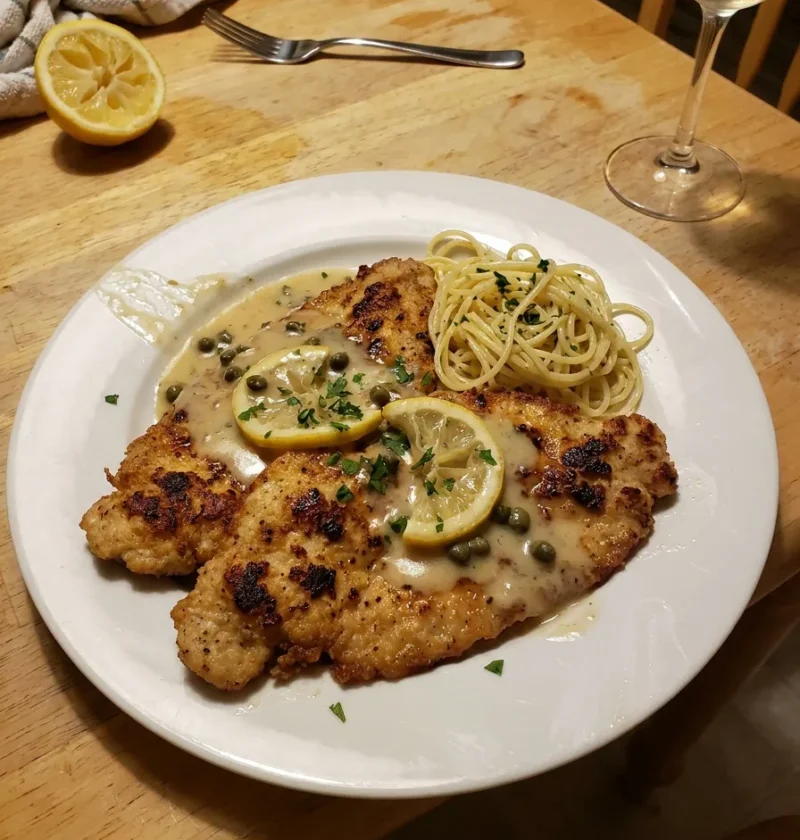
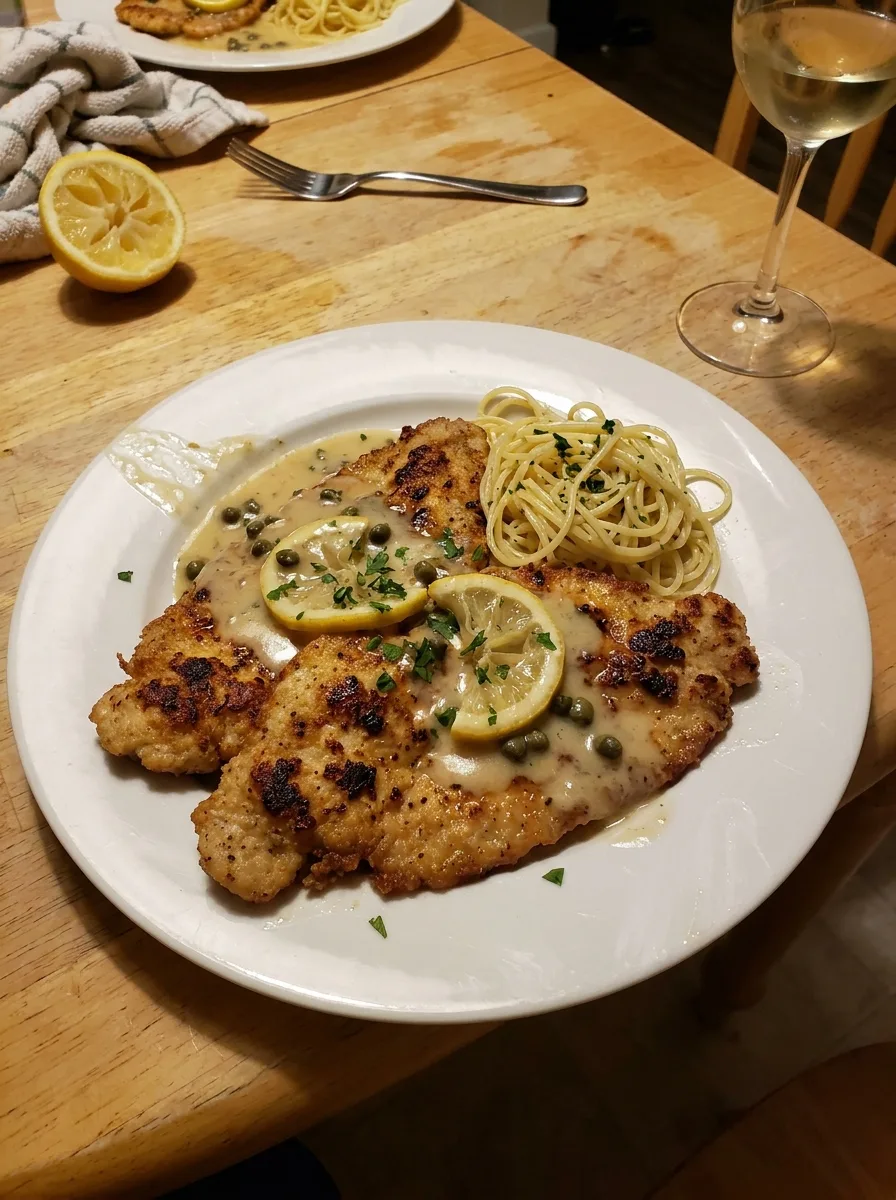
Gordon Ramsay’s chicken piccata is thin cutlets dredged in seasoned flour and pan-fried until golden, then served with a white wine sauce finished with capers and crème fraîche. The crème fraîche is what makes his version different from every other piccata recipe online. Ready in about 20 minutes, serves 2.
This recipe is adapted from his veal piccata in Cooking for Friends. He says “traditionally, the sauce for piccata consists simply of white wine and capers, but I find crème fraîche adds a lovely, velvety richness to the sauce.” I’ve swapped the veal for chicken and added lemon juice back in because piccata without lemon isn’t really piccata.
The flour on the chicken does two jobs. It creates the golden crust when it hits the hot pan, and the excess flour left in the pan thickens the sauce as it simmers. Skip the flour and your sauce will be thin and watery.
Cooked this recipe? Send a photo or tell me what you changed at fans@gordonramsayrecipes.uk and I’ll share your experience live on this page.
Gordon Ramsay Chicken Piccata
Course: DinnerCuisine: ItalianDifficulty: Easy2
servings10
minutes12
minutes420
kcal22
minutesAdapted from Ramsay’s veal piccata in Cooking for Friends. Thin chicken cutlets pan-fried in garlic-infused oil, finished with a white wine, lemon, and caper sauce enriched with crème fraîche. His unique twist is the crème fraîche, which makes the sauce velvety where most piccata sauces are thin. About 420 kcal per serving.
Ingredients
2 large boneless, skinless chicken breasts
50g (2 oz) plain flour, seasoned with salt and pepper
3 tbsp olive oil
½ head of garlic (unpeeled), halved crosswise
1 rosemary sprig
Handful of thyme sprigs
15g (½ oz) butter
175ml (6 fl oz) dry white wine
Juice of 1 lemon
2 tbsp capers, drained
75ml (2½ fl oz) crème fraîche
Small handful of flat leaf parsley, chopped
Sea salt and freshly ground black pepper
Directions
- Prepare the chicken: Slice each breast in half horizontally to make 4 thin cutlets. Place between sheets of baking parchment and pound with a rolling pin to about ½cm thick. Season both sides with salt and pepper, then dredge in the seasoned flour. Shake off excess.
- Infuse the oil: Heat the olive oil in a wide frying pan over a medium-low heat. Add the garlic halves cut-side down and let them infuse for a minute. Increase the heat to medium-high.
- Pan-fry the chicken: Add the cutlets and herbs to the pan. Fry for 2-3 minutes on each side until golden brown. Remove to a warm plate and rest for 2 minutes.
- Make the sauce: Pour off excess oil from the pan. Add the butter, then pour in the white wine, scraping up the browned bits from the bottom. Let it bubble and reduce by half. Stir in the lemon juice, capers, and crème fraîche. Simmer for 1-2 minutes until the sauce reaches a velvety consistency. Season to taste.
- Serve: Spoon the sauce onto warmed plates and place the chicken on top. Scatter with chopped parsley. Serve with spaghetti, mashed potato, or crusty bread.
FAQs
Why does Ramsay use crème fraîche in piccata?
Most piccata recipes finish with just butter and lemon, which makes a thin, sharp sauce. Ramsay stirs in crème fraîche at the end, which he says “adds a lovely, velvety richness to the sauce.” It thickens it into something closer to a cream sauce without being heavy.
The crème fraîche also rounds out the acidity from the wine and lemon. If you find traditional piccata too sharp, this version is more balanced. Use full-fat crème fraîche, not the half-fat version, because it holds together better when it hits the hot pan.
Why infuse garlic in the oil first?
Ramsay puts a halved garlic head cut-side down in cool oil and lets it warm slowly before turning up the heat. This draws the garlic flavour into the oil without burning it, so every part of the chicken picks up that garlic taste as it fries.
He removes the garlic before serving. You don’t eat it, it’s just there to flavour the oil and the sauce. If you want more garlic punch, squeeze the soft roasted cloves out and stir them into the finished sauce.
How thin should the chicken be?
About half a centimetre thick. Slice each breast in half horizontally first, then pound them flat between parchment paper. If the chicken is too thick, the outside burns before the centre cooks. If it’s too thin, it dries out in seconds.
Even thickness matters more than exact measurement. One thick corner means uneven cooking, so spend the extra minute pounding it flat. His chicken cacciatore uses a similar escalope technique in the F Word version of that dish.
What is the best side for chicken piccata?
Spaghetti tossed in a little butter and parsley is the classic Italian pairing. Ramsay suggests “country bread on the side for mopping up the delicious sauce” in the cookbook. His focaccia is perfect for this.
A rocket salad with lemon dressing mirrors the piccata’s citrus flavour and cuts through the richness of the crème fraîche. Keep sides simple because the sauce is the star.
Can you use something other than white wine?
Dry vermouth works well and is what many restaurant kitchens use because it keeps longer once opened. Chicken stock with a squeeze of extra lemon is the best non-alcoholic swap. The wine’s job is to deglaze the pan and add acidity, so whatever you use needs some sharpness.
Avoid red wine. It turns the crème fraîche an unappetising grey-pink colour. If you like wine-based pan sauces, his hollandaise uses a similar reduction technique with white wine vinegar instead.
Does chicken piccata store well?
The sauce reheats well, but the chicken itself dries out once cooled because the cutlets are so thin. Best eaten fresh. If you have leftover sauce, it makes a brilliant pasta sauce the next day, just toss it with hot spaghetti and a splash of pasta water.
Don’t reheat the chicken in the microwave. If you must, warm it gently in the sauce on the hob over a low heat with a lid on, adding a splash of stock to loosen the sauce.