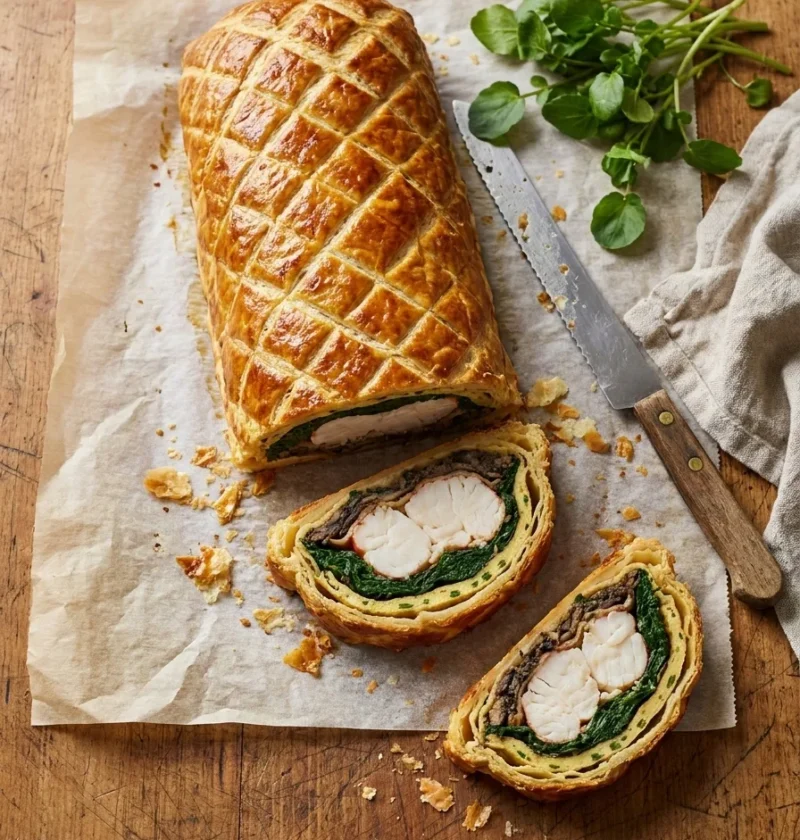
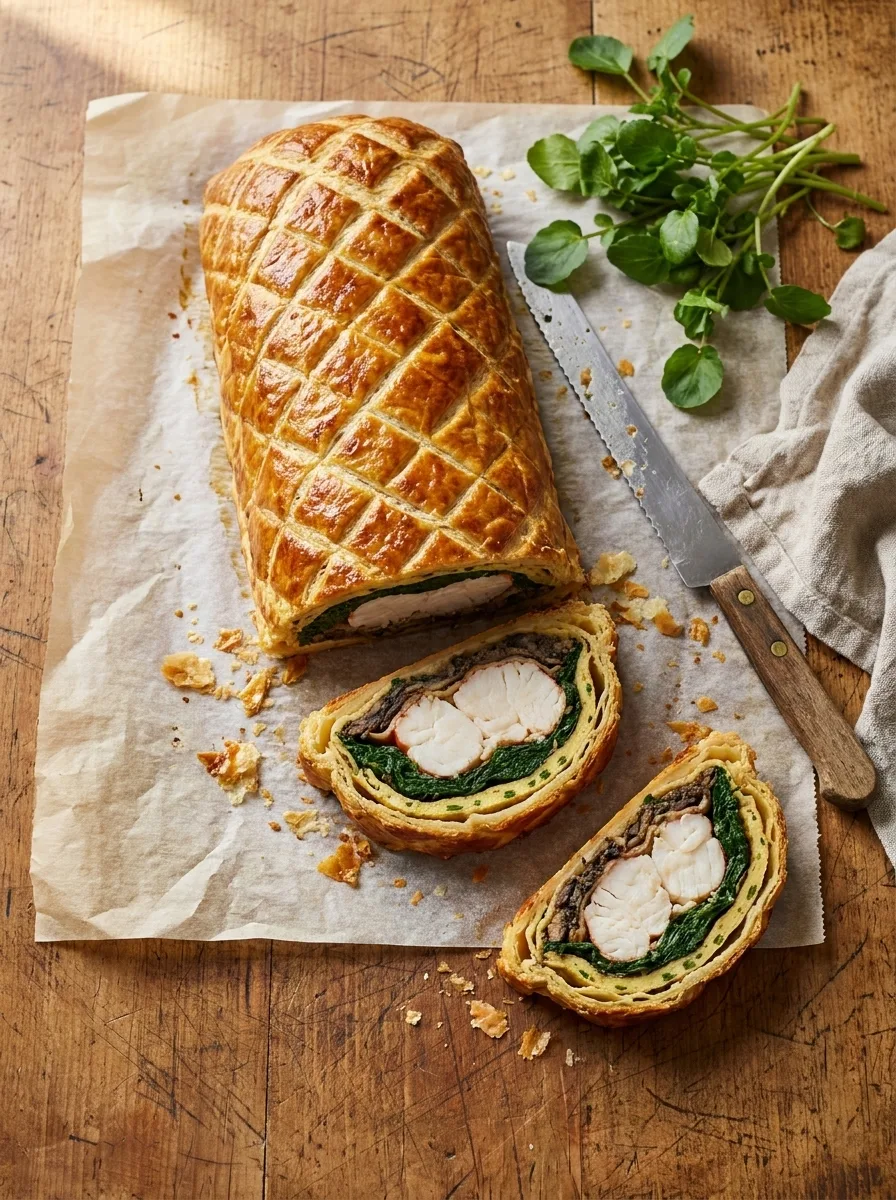
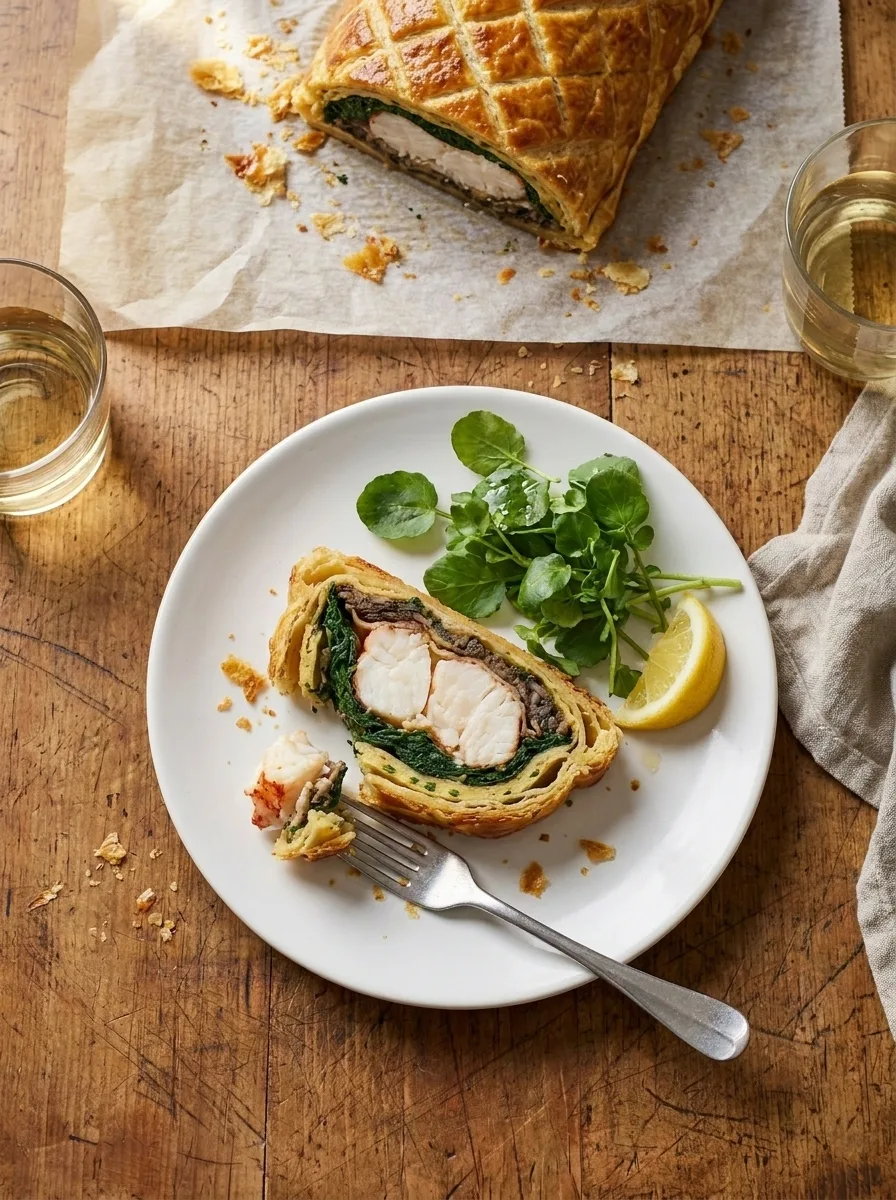
Gordon Ramsay’s lobster wellington recipe wraps par-cooked lobster tails in garlic spinach and mushroom duxelle, rolls everything in a herbed crepe, then bakes it inside puff pastry at 220°C (425°F) for 20 to 25 minutes. It’s the most luxurious wellington on the site, and it takes under an hour.
Ramsay served this at Bread Street Kitchen during his BeefWellingtonWeek series, and the method pulls from techniques across his cookbooks. The lobster prep follows his Bread Street Kitchen approach (brief boil in salted lemon water, shell carefully, keep the meat whole), while the pastry and crepe wrapping come from the same Sunday Lunch technique used in his beef and salmon wellingtons.
The key difference from the beef version is speed. Lobster is already par-cooked before it goes into the pastry, so baking time is just long enough to crisp the puff and warm the filling through. Overbake it and the lobster turns rubbery, which is the one thing that can ruin this dish.
Cooked this recipe? Send a photo or tell me what you changed at fans@gordonramsayrecipes.uk and I’ll share your experience live on this page.
Gordon Ramsay Lobster Wellington
Course: MainCuisine: BritishDifficulty: Intermediate4
25
minutes25
minutes520
kcal50 min
(plus chilling)Intermediate
Par-cooked lobster tails wrapped in garlic spinach and mushroom duxelle inside a herbed crepe and puff pastry, inspired by Ramsay’s Bread Street Kitchen version.
Ingredients
- For the lobster:
4 lobster tails, about 150g (5 oz) each
Juice of 1 lemon
Large pinch of sea salt
2 thyme sprigs
- For the filling:
200g (7 oz) chestnut mushrooms, finely chopped
1 thyme sprig, leaves only
150g (5 oz) baby spinach
2 garlic cloves, finely chopped
30g (1 oz) butter
Zest of ½ lemon
Sea salt and freshly ground black pepper
- For the crepe:
60g (2 oz) plain flour
1 egg
140ml (5 fl oz) milk
1 tbsp fresh chives, finely chopped
Pinch of salt
- For the pastry:
1 sheet puff pastry, rolled to about 3mm thick
1 egg yolk, beaten
Directions
- Par-cook the lobster: Bring a large pan of water to the boil with the lemon juice, salt and thyme. Drop in the lobster tails and cook for 4 minutes until the shells turn orange. Drain, cool slightly, then carefully remove the meat from the shells in one piece. Pat dry and set aside.
- Make the duxelle: Finely chop the mushrooms and cook in a dry pan over high heat with the thyme leaves and seasoning for 8 to 10 minutes, stirring often, until all the moisture has gone and you have a dry paste. Spread on a plate to cool.
- Cook the spinach: Melt the butter in a pan, add the garlic and cook for 30 seconds. Add the spinach and wilt for 1 minute. Drain well, squeeze out every drop of water, then mix with the lemon zest. Season with salt and pepper.
- Make the crepe: Whisk the flour, egg, milk, chives and salt until smooth. Cook in a large non-stick pan over medium heat until golden on both sides. Leave to cool.
- Assemble: Lay cling film on a work surface. Place the crepe flat on top. Spread the spinach mixture in an even layer over the crepe. Spread the mushroom duxelle over the spinach. Lay the four lobster tails end to end in a line down the centre. Season with salt and pepper.
- Roll and chill: Use the cling film to roll the crepe tightly around the lobster into a neat log. Twist the ends and chill for 20 minutes.
- Wrap in pastry: Brush the puff pastry with egg yolk. Unwrap the lobster log, place seam-side down on the pastry. Fold around it, press to seal, trim excess. Turn seam-side down onto a lined baking sheet. Egg wash all over. Chill for 15 minutes.
- Bake: Heat oven to 220°C (425°F/Gas 7). Score the pastry lightly and egg wash again. Bake for 20 to 25 minutes until deep golden. Rest for 5 minutes, then slice into thick portions.
FAQs
Can you use frozen lobster tails?
Yes, and most people will. Thaw them fully in the fridge overnight, then par-cook and shell the same way. Fresh is better for texture but frozen tails work well. Pat them extra dry after shelling because frozen tails hold more water.
Why par-cook the lobster before wrapping?
Because raw lobster releases a huge amount of liquid as it cooks, which turns the pastry into a soggy mess. A quick 4-minute boil sets the protein enough to stop that. The lobster finishes cooking gently inside the pastry during the bake without overcooking.
Save the shells after shelling. They’re full of flavour and make a brilliant lobster bisque as a starter the next day.
What do you serve alongside lobster wellington?
Keep it simple. Buttered samphire or steamed asparagus with a squeeze of lemon. A light hollandaise on the side works because it matches the richness without competing. Avoid anything heavy like roast potatoes because the pastry is filling enough.
What is the difference between lobster wellington and lobster en croûte?
They’re close, but wellington uses puff pastry with a duxelle and a moisture barrier like a crepe. En croûte just means “in a crust” and can use any pastry with any filling. Most people use the terms interchangeably for lobster because there’s no classic tradition for it the way there is for beef wellington.