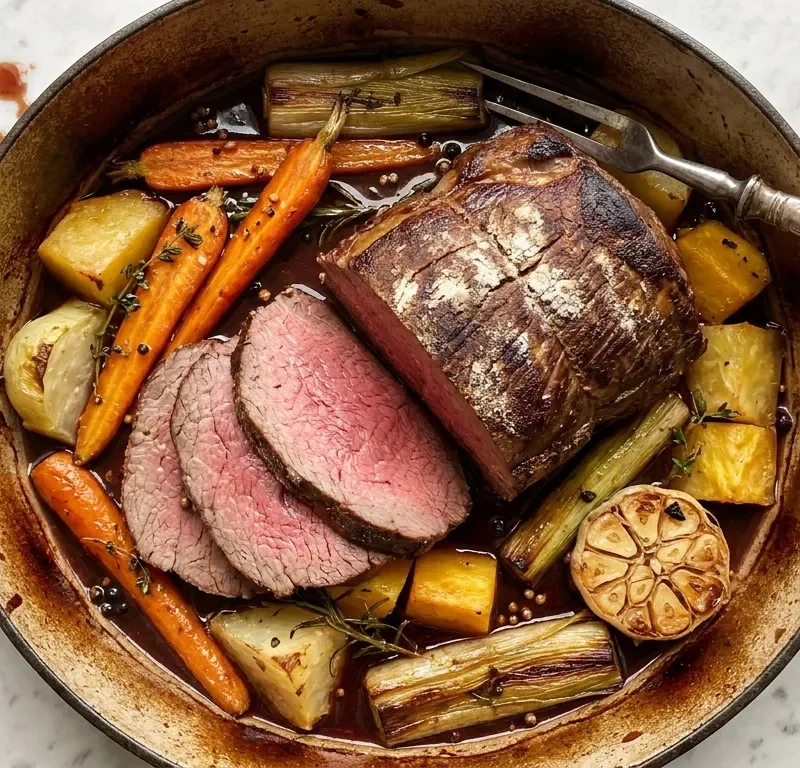
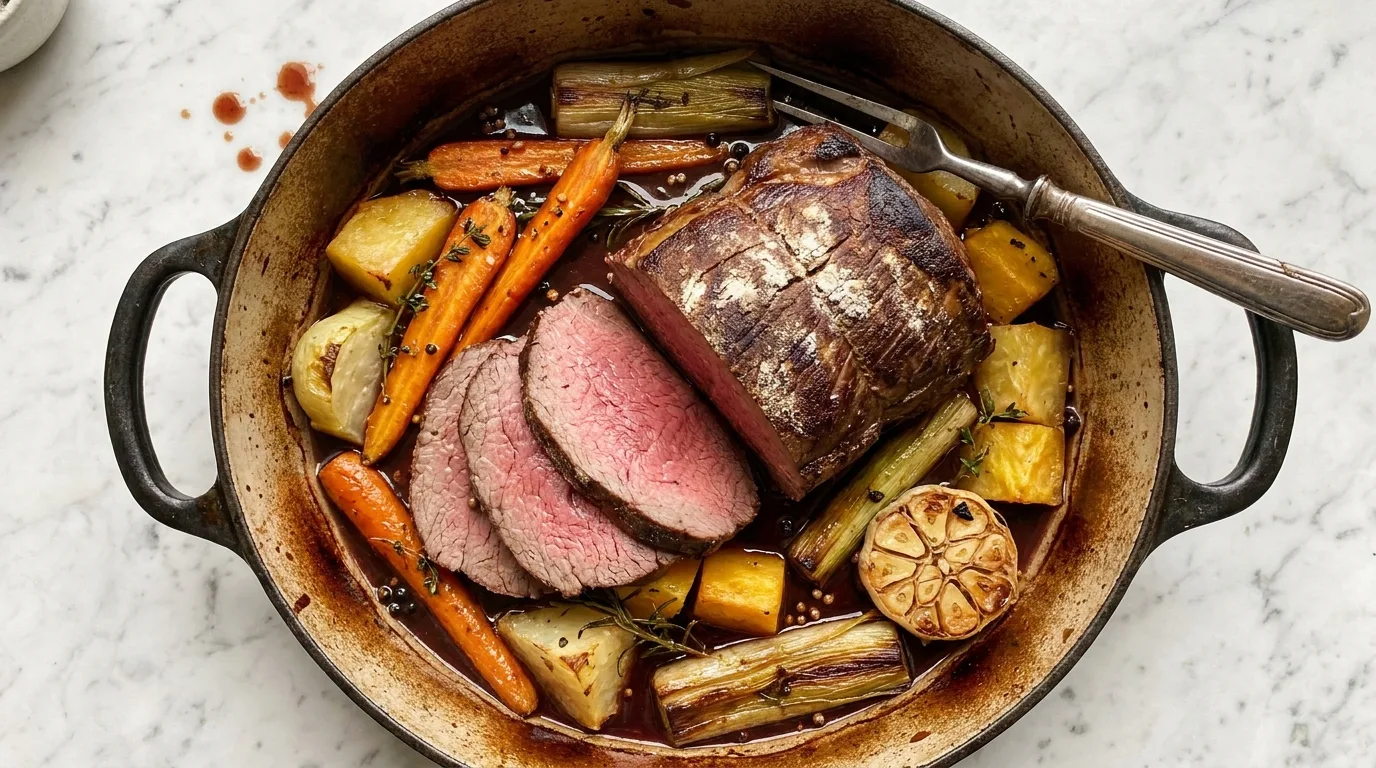
Gordon Ramsay’s pot roast is a 1.2kg beef sirloin coated in seasoned flour, then slow cooked in the oven with red wine, golden-fried root vegetables, and fresh thyme and rosemary. Serves 4, ready in about 1 hour 15 minutes including resting.
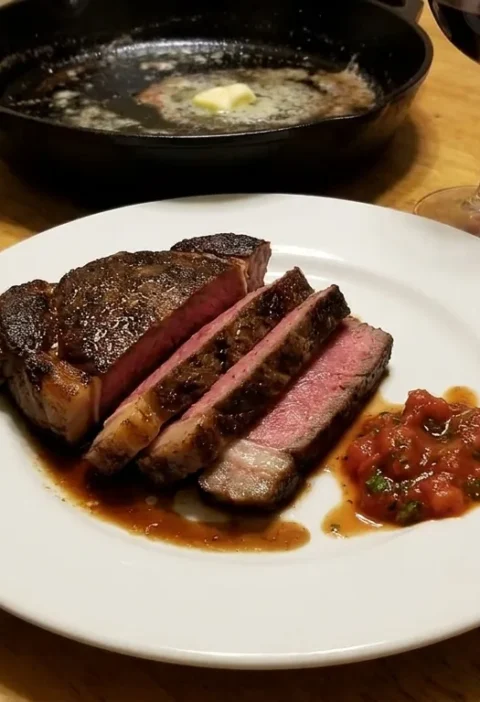
This is his Pot-Roast Sirloin of Beef with Root Vegetables, also published in The Times in 2008. Almost every pot roast recipe online tells you to drop chuck roast in a slow cooker for 8 hours until it falls apart. Ramsay does the opposite: sirloin in the oven at 180°C for just 25 to 30 minutes, served medium-rare and carved into slices.
The technique that separates his version is frying the vegetables first. He browns the carrots, swede, kohlrabi, and leeks in batches until golden before the beef ever touches the pot, which builds caramelised flavour that raw vegetables dumped in liquid never give you. The red wine then gets reduced by two-thirds before the stock goes in, so the sauce starts concentrated instead of watery.
Cooked this recipe? Send a photo or tell me what you changed at fans@gordonramsayrecipes.uk and I’ll share your experience live on this page.
Gordon Ramsay’s Pot-Roast Sirloin of Beef with Root Vegetables
Course: DinnersCuisine: BritishDifficulty: Medium4
20
minutes55
minutes620
kcal1 hr 15 min
Sirloin pot roast from Ramsay’s cookbook, also printed in The Times. The vegetables fry until golden first, the wine reduces by two-thirds, and the beef comes out medium-rare in half an hour rather than shredded after eight.
Ingredients
- For the beef:
1.2kg beef sirloin
2-3 tbsp plain flour, seasoned with salt and pepper
4 tbsp olive oil
- For the vegetables and sauce:
2 large carrots, peeled and halved lengthways
¼ swede, peeled and cut into chunks
1 large kohlrabi, peeled and cut into chunks
2 large leeks, trimmed and cut into lengths
½ head of garlic, halved horizontally
200ml red wine
300ml beef or chicken stock
Handful of thyme sprigs
Handful of rosemary sprigs
½ tsp black peppercorns
½ tsp coriander seeds
Directions
- Prepare the beef: Preheat the oven to 180°C (350°F/Gas 4). Coat the beef sirloin all over in the seasoned flour and pat off any excess.
- Fry the vegetables: Heat half the olive oil in a large hob-proof casserole over a medium-high heat. Fry the carrots, swede, kohlrabi, and leeks in batches until golden on all sides. Remove and drain on kitchen paper.
- Sear the beef: Add the remaining oil to the casserole. Sear the beef over a high heat for 8 to 9 minutes, turning, until evenly browned all over. Remove and set aside.
- Build the sauce: Pour the red wine into the casserole to deglaze, scraping up the bits from the bottom. Boil until reduced by two-thirds, then stir in the stock and bring to a simmer.
- Assemble: Return the beef to the casserole and spoon the vegetables around it. Add the garlic, thyme, rosemary, peppercorns, and coriander seeds.
- Pot roast: Cover with the lid and transfer to the oven for 25 to 30 minutes for medium-rare. Allow longer if you prefer it more done.
- Rest and finish: Lift the beef onto a warm platter, cover loosely with foil, and rest for 15 minutes. Simmer the sauce to reduce if needed, then strain through a fine sieve. Carve the beef and serve with the vegetables and sauce.
FAQs
What about Ramsay’s slow-cooked beef for fall-apart texture?
If you want beef that falls apart instead of pink slices, Ramsay has a separate slow-cooked version using beef shin. He browns the shin in hot oil, fries carrots, shallots, celery, ginger and garlic in the same pan, deglazes with a glass of dry white wine and the juice of an orange, then simmers in chicken stock for 1 hour 20 minutes. He calls shin “a very economical cut of beef” because as it slow cooks “the marrow thickens and flavours the sauce.”
He finishes it with gremolata, chopped parsley and garlic mixed with orange zest, scattered over the tender beef. For a slow cooker, both routes work the same way: do the browning and deglazing on the hob first, then transfer to low for 6 to 7 hours. His beef stew and dumplings is the third slow-cooked option if you want something with a topping.
Why does Ramsay use sirloin instead of chuck roast?
Chuck needs hours of cooking to break down its connective tissue, which is why American pot roast recipes run 8 hours and end with shredded meat. Sirloin is tender from the start, so it only needs 25 to 30 minutes at 180°C to reach medium-rare.
The result is closer to a Sunday roast than a stew: pink slices of beef with concentrated wine sauce and caramelised vegetables. Because the cooking time is short, the flour coating matters more, since it builds the only crust the beef will get. His red wine jus uses the same reduce-hard logic if you want a deeper sauce alongside.
What does reducing the wine by two-thirds actually do?
Raw wine in a sauce tastes sharp and alcoholic. Boiling it down by two-thirds drives off the alcohol and concentrates the fruit into a red wine sauce that coats the beef rather than thinning the stock. Ramsay deglazes the casserole with the wine first, so the browned bits from the vegetables and beef dissolve into it as it reduces.
Only then does the stock go in. If you add wine and stock together, the wine never properly reduces and the sauce stays watery and slightly raw tasting for the whole cook. It’s a two-minute step that separates gravy from grape juice. Serve it over his mashed potatoes and nothing goes to waste.
What is kohlrabi and what can you swap it for?
Kohlrabi is a pale green bulb from the cabbage family, sold in most UK supermarkets near the turnips. It tastes like a milder, sweeter turnip with a hint of broccoli stem and holds its shape well during pot roasting.
If you can’t find it, swap in 2 turnips or an extra quarter of swede, both cook in the same time and take on the wine sauce the same way. Celeriac works too but softens faster, so cut it into bigger chunks. His fondant potatoes are the upgrade on the side if you want something richer than the root vegetables alone.
Why do the coriander seeds and peppercorns go in whole?
Whole spices release flavour slowly without overpowering, which suits a 30-minute pot roast where ground spices would turn the sauce gritty. The coriander seeds add a faint citrus note that lifts the red wine, and the peppercorns give background heat rather than sharp bites.
Both get caught by the sieve when you strain the sauce at the end, so you get the flavour without crunching one. Straining also gives the sauce its smooth restaurant finish, pulling out herb stalks and flour sediment. His peppercorn sauce shows the opposite approach, where the peppercorns are crushed and stay in.