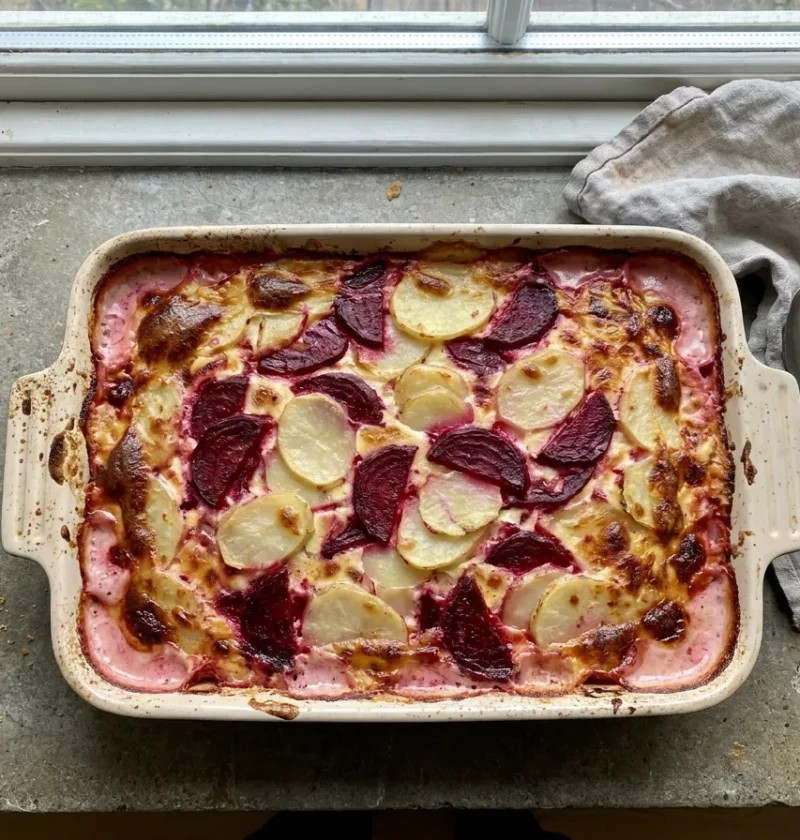
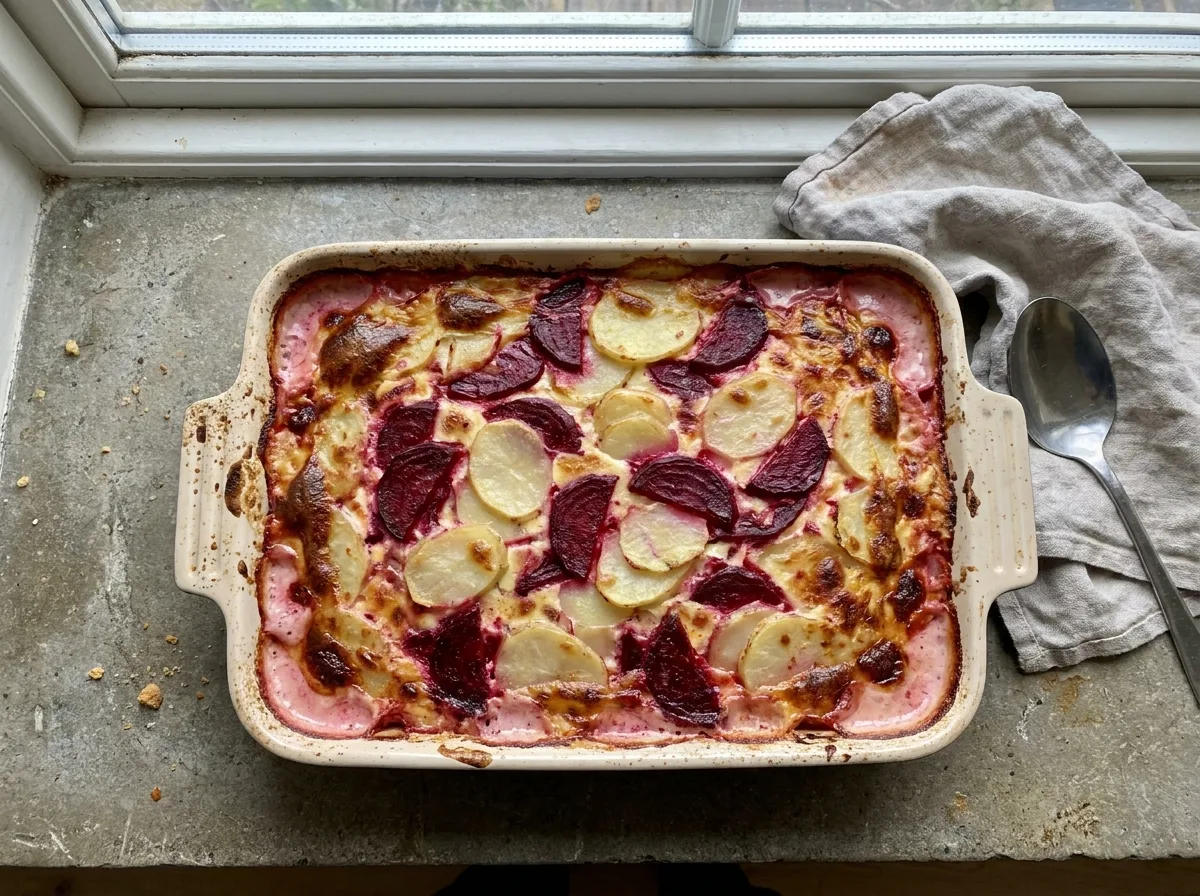
Gordon Ramsay’s potato and beetroot gratin layers thinly sliced potato and cooked beetroot in garlicky double cream, baked for about an hour until tender. It comes out creamy, earthy and deep ruby red.
The recipe is from his Ultimate Home Cooking, where Ramsay calls it a twist on the classic gratin dauphinois. Unlike his dauphinoise, this one has no cheese. The beetroot brings the sweetness instead, so the cream stays clean and the colour does the talking.
The trick is treating the two vegetables differently. The potato is sliced wafer-thin so it softens, while the beetroot is cooked first and cut thicker, around 5mm. They cook at different speeds, so matching the thickness to each keeps the layers distinct.
Cooked this recipe? Send a photo or tell me what you changed at fans@gordonramsayrecipes.uk and I’ll share your experience live on this page.
Gordon Ramsay Potato and Beetroot Gratin
Course: Side DishCuisine: FrenchDifficulty: Easy4
20
minutes1
minute480
kcal1 hr 20 min
Gordon Ramsay’s potato and beetroot gratin from Ultimate Home Cooking. Layers of thin potato and pre-cooked beetroot baked slowly in garlic-rubbed cream, no cheese, until tender and deep red. A striking side for a Sunday roast.
Ingredients
750g (1 lb 10 oz) waxy potatoes, peeled
500g (1 lb 2 oz) cooked beetroot, peeled
500ml (18 fl oz) double cream
1 garlic clove, peeled and halved
Butter, for greasing
Sea salt and freshly ground black pepper
Directions
- Prep the dish: Heat the oven to 180C (160C fan) Gas 4. Rub a baking dish, about 26 x 18cm, with the cut sides of the garlic, then grease with butter.
- Slice: Slice the potatoes very thinly, ideally on a mandolin. Cut the cooked beetroot into thicker slices, about 5mm.
- Heat the cream: Warm the double cream gently in a pan until hot, but do not let it boil.
- Layer: Lay a third of the potatoes in the dish, saving the best slices for the top. Cover with half the beetroot and season. Repeat, then finish with a neat layer of potato and season again.
- Bake: Pour the hot cream over and bake for 1 hour, until the potatoes are completely tender. If the top browns too fast, cover with foil. Serve warm.
FAQs
Why is the beetroot cut thicker than the potato?
Because the beetroot is already cooked, so it only needs to warm through, while the raw potato needs time to soften. Cutting the potato wafer-thin and the beetroot around 5mm means both reach tenderness at once.
If you sliced them the same, the beetroot would collapse long before the potato cooked. Ramsay points to even slicing in his classic dauphinoise too, where matching the cut is everything.
Do you cook the beetroot before it goes in?
Yes. Ramsay wraps whole beetroots with a little salt in foil and bakes them at 180C for about an hour. He waits until a skewer slides in easily, then peels them once cool.
You can use ready-cooked beetroot to save the hour, just not the kind in vinegar. Plain vacuum-packed cooked beetroot from the supermarket works fine.
How do you stop the beetroot bleeding pink into everything?
Some bleeding is the point, that ruby marbling is the look. To keep it from going totally pink, layer the beetroot in its own bands rather than mixing it through, and cut it cleanly.
Ramsay has a useful tip in Bread Street Kitchen. Don’t trim the root and leaf ends too close, or the beetroot bleeds more as it cooks. Leaving a little end on also gives you something to grip.
Why is there no cheese in this gratin?
The sweetness of the beetroot does the work cheese normally would, so cream, garlic and seasoning are all it needs. It stays lighter and more vegetable-led.
That’s the difference from his cheesy dauphinoise, which layers in Cheddar for a golden crust. You can add a little Parmesan here, but it will mute the beetroot colour.
What do you serve potato and beetroot gratin with?
It suits rich, dark meats that match the earthy beetroot. It’s lovely under a roast leg of lamb or alongside roasted duck, where the sweetness cuts the fat.
For a vegetarian plate, serve it with a sharp leaf salad and toasted walnuts. The gratin is rich, so it wants something fresh and acidic next to it.
Can you make potato and beetroot gratin ahead?
Yes. Assemble it, cover, and keep it in the fridge for a day before baking, which helps the cream soak in. Bake from cold and add 10 to 15 minutes.
Leftovers keep two to three days and reheat well, covered, at 160C. The colour deepens overnight, though the potato softens further.