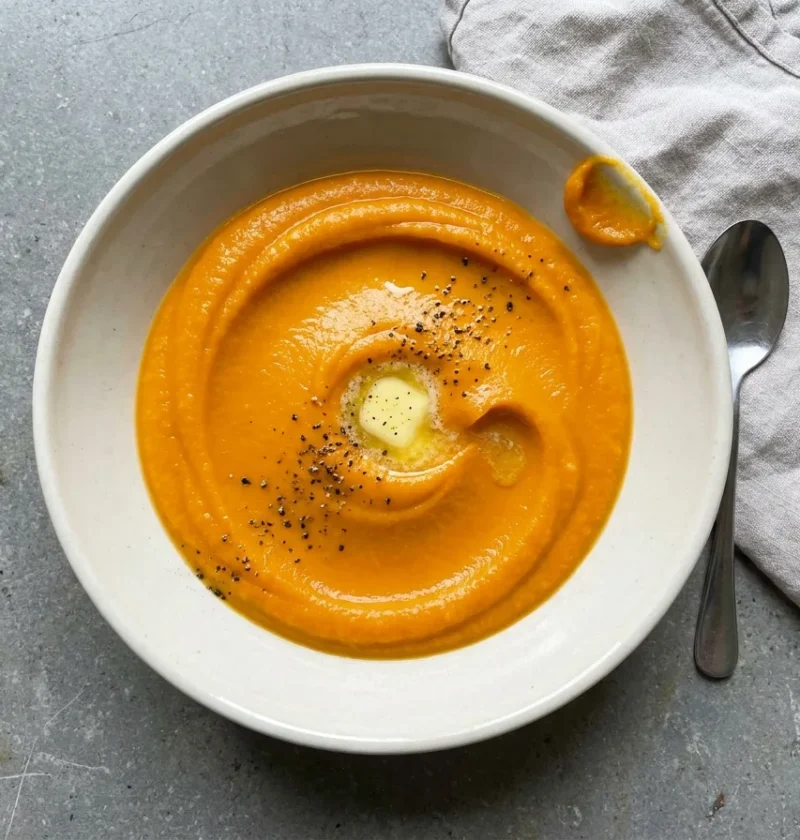
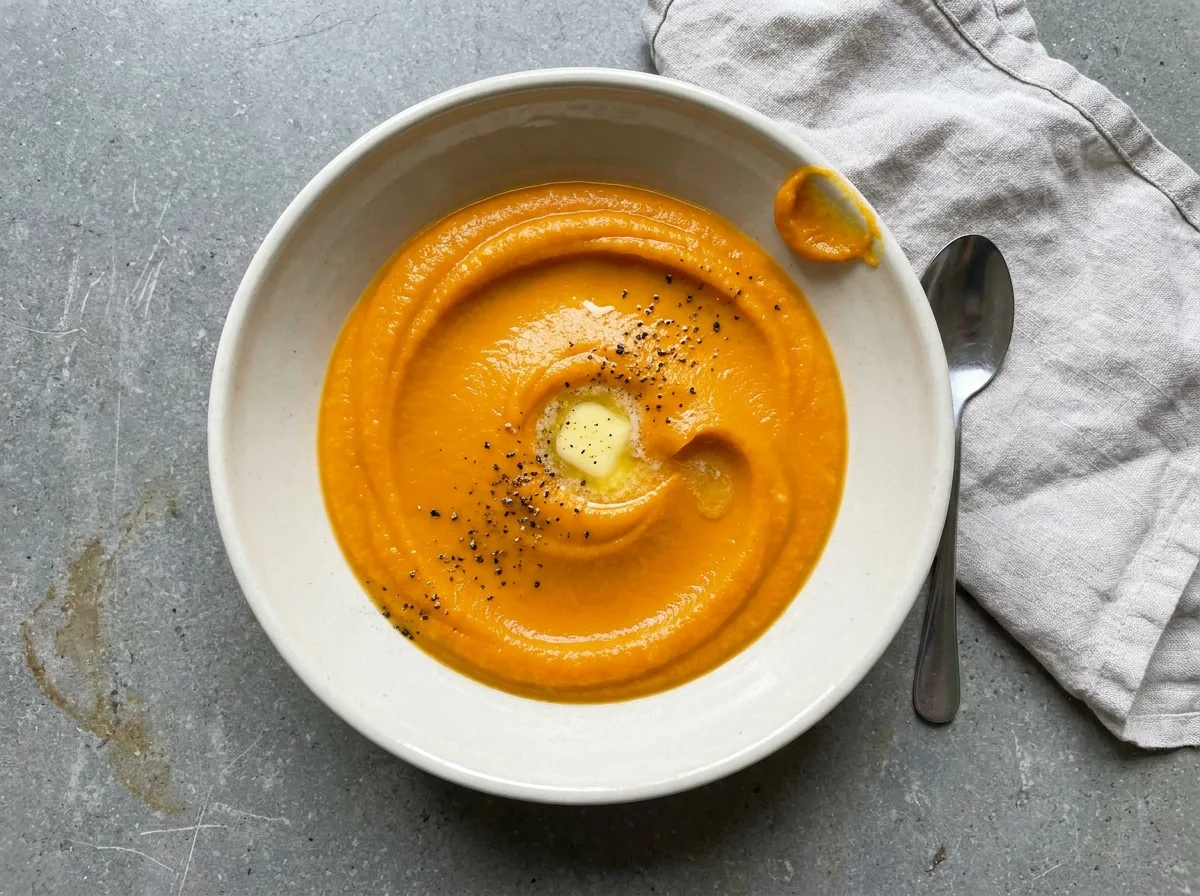
Gordon Ramsay’s carrot puree is a smooth, buttery side made from carrots, a little butter and seasoning, ready in 20 minutes. He blends the boiled carrots with their own cooking liquor, then sieves them silky. The recipe is from his Sunday Lunch book.
What makes his version clean is what he leaves out. There’s no cream, so the carrot flavour stays bright and sweet rather than buried. He finishes with a few knobs of butter and calls it a base for chicken breasts or monkfish.
The technique that makes it smooth is the cooking liquor. Ramsay blends the carrots with a splash of their own liquid, not cream, which loosens them without watering down the flavour. Push it through a sieve and it turns glassy and fine.
Cooked this recipe? Send a photo or tell me what you changed at fans@gordonramsayrecipes.uk and I’ll share your experience live on this page.
Gordon Ramsay Carrot Puree
Course: SideCuisine: BritishDifficulty: Easy4
10
minutes10
minutes140
kcal20
minutesGordon Ramsay’s carrot puree from his Sunday Lunch book. Boiled carrots blended with their cooking liquor, sieved silky and finished with butter. A clean, sweet, restaurant-style side for chicken, lamb or fish, with no cream needed.
Ingredients
750g carrots, peeled and thickly sliced
30g butter (a few knobs)
Sea salt and freshly ground black pepper
Directions
- Boil the carrots: Cook the carrots in boiling salted water for 5 to 7 minutes, until tender. Drain well, reserving the cooking liquid.
- Blend: Tip the carrots into a food processor and blend to a fine puree, adding 1 to 2 tbsp of the cooking liquor to get them moving. Scrape down the sides as you go.
- Sieve for smooth: For a silky finish, push the puree through a fine sieve with the back of a ladle.
- Finish and serve: Reheat gently, stir in the butter, season to taste, and serve hot.
FAQs
What’s the difference between carrot puree and carrot mash?
Mash is crushed and left with texture, often with the skins still on. Puree is blended until completely smooth, then sieved, which is what Ramsay does. His goes through a fine sieve so there’s not a single lump left.
Carrot mash is quicker and more rustic, good piled next to a sausage. The puree is the smarter plate version, smooth enough to spoon under a piece of fish or chicken.
How do you make carrot puree smooth and not grainy?
Three things. Blend it for a few full minutes, not a quick blitz, adding a splash of the cooking liquor to get the carrots moving. Then push the puree through a fine sieve with the back of a ladle.
The sieve is the step most people skip, and it’s what removes the last grainy bits. Reheat it gently afterwards with the butter, since a hot puree always looks and feels silkier than a cooling one.
Can you make a brown butter or caramelised carrot puree?
Yes, and Ramsay has a richer take himself. In his creamy carrot version he caramelises the carrots in butter first, then cooks them in milk before blending, which makes them sweeter and rounder. Browning the butter before you stir it in adds a nutty, toffee note.
For a deeper, almost burnt flavour, roast the carrots until the edges char before blending. That char is where the trendy burnt carrot puree comes from, and it works beautifully under rich meat.
Can you make carrot and swede or turnip puree the same way?
The method carries straight over. Boil swede, turnip or parsnip alongside the carrots, then blend and sieve them together. That gives you the classic carrot and swede mash served with haggis or a roast. It isn’t a specific Ramsay recipe, but the technique is identical.
For a smoother result keep the ratio carrot-heavy, since swede and turnip hold more water. His silky parsnip purée uses the same blend-and-finish idea if you want a single-root version.
What does Gordon serve carrot puree with?
Ramsay calls it a base for chicken breasts or monkfish, where the sweet purée balances lean white meat and fish. It also sits well under his roast leg of lamb or a roasted duck, where the sweetness cuts through the richer meat.
Spoon it down first, then sit the protein on top so the purée shows around the edge. If you want a second purée on the plate, his cauliflower purée gives you a white contrast against the orange.
Is this carrot puree suitable as baby food?
No, not this version. The butter and salt make it an adult side dish, not a weaning purée. For a baby, steam or boil plain carrots and blend them with a little of the cooking water. Leave out the butter, salt and seasoning completely.
Plain carrot is a popular first food because it’s naturally sweet and easy to digest. Once your child is older and eating family meals, this buttery version is fine, but keep the salt light for little ones.