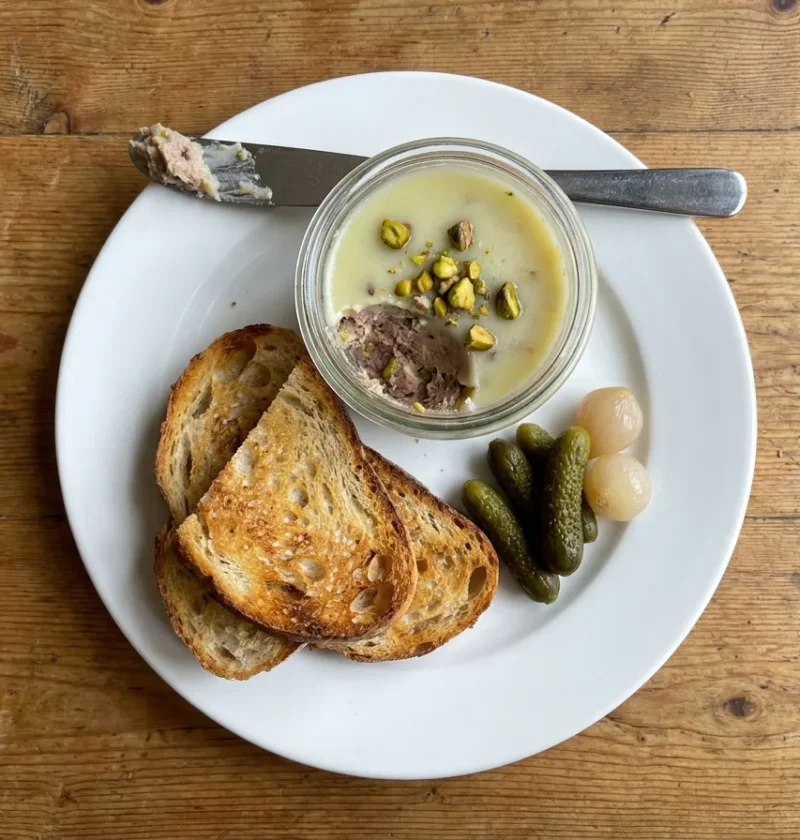
Gordon Ramsay’s potted duck is a make-ahead starter of soft, shredded duck leg, slow-cooked in its own fat with garlic and thyme. You mix it with toasted pistachios and pack it into jars to spread on warm toast. It needs about two and a half hours in a low oven, plus chilling time.
That spread comes from his Great British Pub Food, where it sits in the bar-food chapter as something to share, not a main. In the book he says the pistachios “help to cut the richness of this tasty spread.” The pickled onions and cornichons he serves alongside do the same job.
All that richness comes from the fat, and the fat is also what makes it potted duck rather than just shredded duck. First it cooks the legs, submerged and barely bubbling, until the meat falls off the bone. Then a thin layer poured over the top seals the jar, so it keeps for weeks.
Cooked this recipe? Send a photo or tell me what you changed at fans@gordonramsayrecipes.uk and I’ll share your experience live on this page.
Gordon Ramsay Potted Duck
Course: Starter, AppetizerCuisine: BritishDifficulty: Easy4-6
servings15
minutes2
minutes400
kcal3 hr
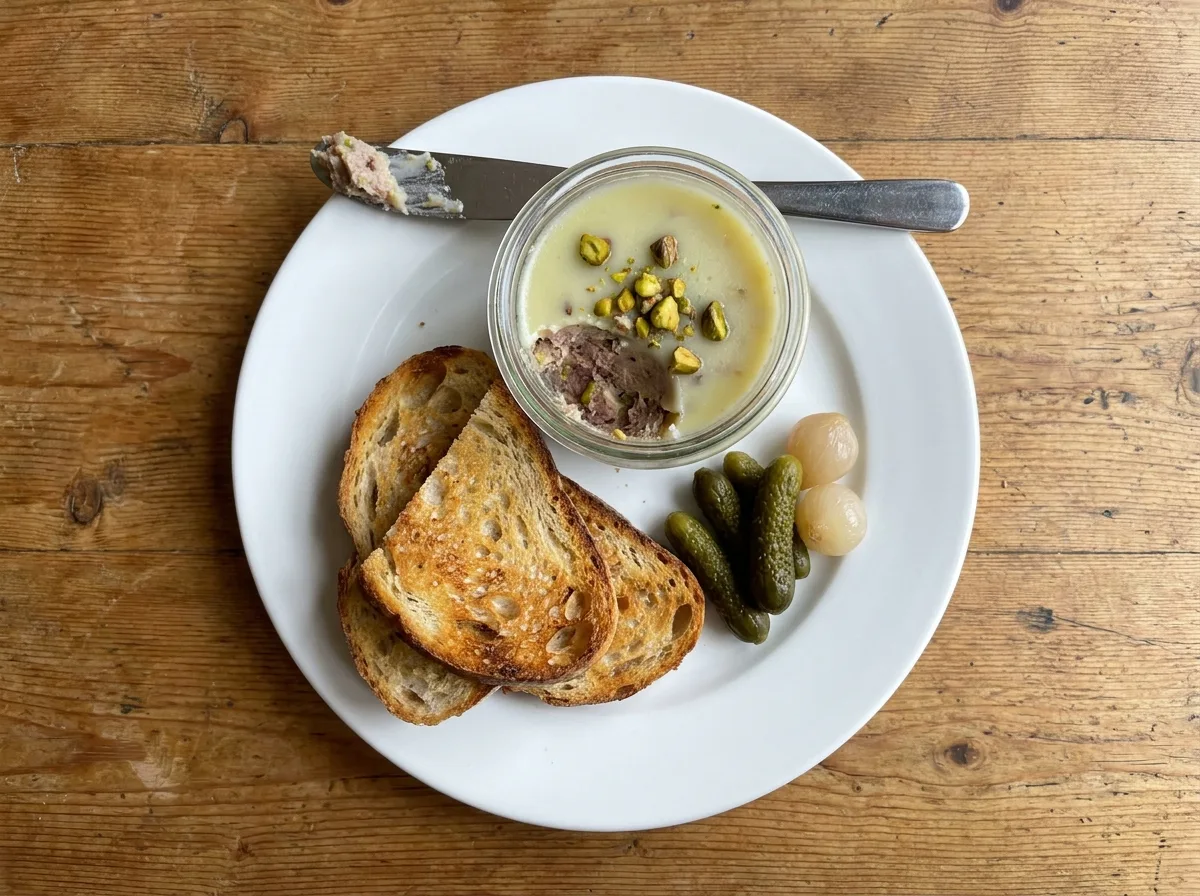
Gordon Ramsay’s potted duck from Great British Pub Food, slow-cooked duck legs shredded with toasted pistachios and sealed under fat in jars. A make-ahead spread for four to six, served on warm sourdough with cornichons.
Ingredients
- For the duck:
2 duck legs, about 300g (10½ oz) each
2 large garlic cloves, peeled and chopped
A few thyme sprigs
300g (10½ oz) duck fat, melted
Sea salt and freshly ground black pepper
- To finish and serve:
60g (2 oz) pistachios, toasted and roughly chopped
Sourdough bread, toasted
Pickled onions and cornichons
Directions
- Cook the legs: Preheat the oven to 150°C (300°F / Gas 2). Sit the duck legs skin-side up in a roasting tin they fit snugly, then scatter over the garlic, thyme and seasoning. Pour over the melted duck fat to cover and roast for 2 to 2½ hours, until the meat is very tender and falls off the bone.
- Shred the meat: Cool slightly, then lift the legs onto a plate and reserve the fat. Shred or finely chop the meat, discarding the skin. Strain the reserved fat through a fine sieve.
- Mix and season: Add the pistachios to the meat and toss, moistening with a little of the strained fat. Season generously to taste.
- Pot it: Divide among 4 to 6 small jars or ramekins, pressing down with the back of a spoon. Pour a thin layer of fat over each to cover, then chill until set.
- Serve: Take it out of the fridge 30 to 40 minutes before serving so it softens enough to spread. Serve with warm sourdough toast, pickled onions and cornichons.
FAQs
Is potted duck the same as duck rillettes?
I called it a spread above, and what you call it depends on which side of the Channel you sit. Rillettes is the French name, potted duck is the British one. Both are meat slow-cooked in fat, shredded, then packed under more fat to keep.
Gordon’s version sits on the coarse, chunky side, which is the rustic pub style. If you want it smoother, chop the meat more finely or pulse it briefly. You just lose a little of the texture that makes it feel handmade.
So what is potted duck, if it isn’t pâté?
It’s cooked duck meat preserved in fat, set firm in a jar and softened to spread at room temperature. People often expect a pâté, but it isn’t one in the smooth, liver sense. A classic duck pâté or parfait is blended to a silky paste with liver, butter and cream.
This one stays chunky instead, because it’s shredded duck leg held together with its own fat. It’s also simpler, since there’s no liver to cook and nothing to blend. That makes it a good first go if you’ve never made a duck spread before.
Why does potted duck sometimes taste bland, and how do I fix it?
Because it’s so simple, seasoning is the one thing that makes or breaks it. Duck leg and fat are rich but mild, so salt is what wakes them up. Gordon’s recipe tells you to season generously to taste, and that line matters more than it looks.
Taste the shredded meat before you pot it, and add salt and pepper until it tastes good cold. Cold food needs more seasoning than hot, because chilling dulls the flavour. So be braver with the salt than feels right while the mix is still warm.
How long does potted duck keep?
Season it well and it rewards you, because potted duck is built to sit and wait. Sealed under that layer of fat in the fridge, it keeps for two to three weeks. You will also have strained duck fat left over, which is gold for roast potatoes cooked in duck fat.
Once you break the seal and dig in, treat it like any cooked meat and eat it within three to four days. So if you make several jars, leave the fat lids unbroken and open one at a time.
What do you serve with potted duck?
When you do open a jar, what goes around it matters as much as the duck. Warm sourdough toast is the classic base, because the heat softens the fat and the crunch holds the rich spread. The pickled onions and cornichons are not just garnish, since their sharpness cuts the fat with every bite.
A little chutney works too, and turns it into a proper sharing starter for the table. Keep the bread plain though, so nothing competes with the duck itself.
How is potted duck different from duck confit?
If all this fat and slow cooking sounds like confit, you’re close, because they start the same way. Both cook duck legs low and slow in fat until tender. The split comes after.
With his duck confit you keep the legs whole and crisp the skin to serve hot. With potted duck you shred the meat, lose the skin and pack it cold to spread. So one is a plated main and the other a make-ahead starter, from nearly the same beginning.