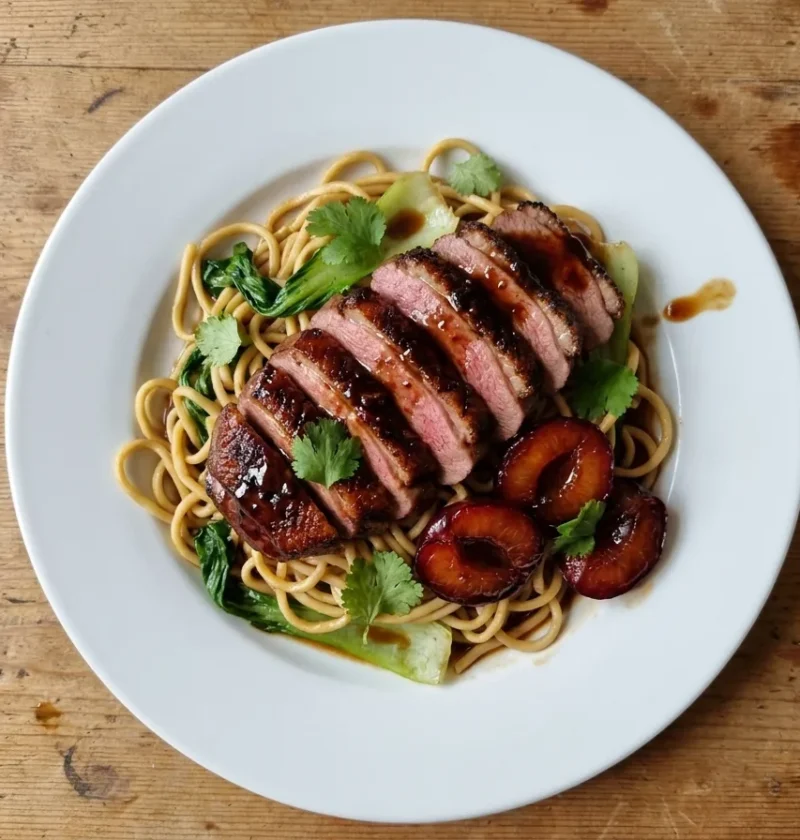
Gordon Ramsay’s teriyaki duck is pan-fried duck breast, crisp-skinned and pink, glazed in teriyaki and served with sticky caramelised plums. It comes from his Ramsay in 10 book, so the whole thing is on the table in about 15 minutes. The plums turn sweet and sour in the pan while the duck rests.
He also cooks it on his YouTube channel, where he calls duck “super lean, super delicious” and says the secret to a great one is all in the pan. He even points out it tastes like his crispy duck pancakes, just in a fraction of the time.
The skin is everything here. It goes into a hot, dry pan skin-side down with no oil, because the duck renders its own fat as it cooks. In the book he even weighs it down with a small pan and a few cans, which presses the skin flat so it crisps evenly.
Cooked this recipe? Send a photo or tell me what you changed at fans@gordonramsayrecipes.uk and I’ll share your experience live on this page.
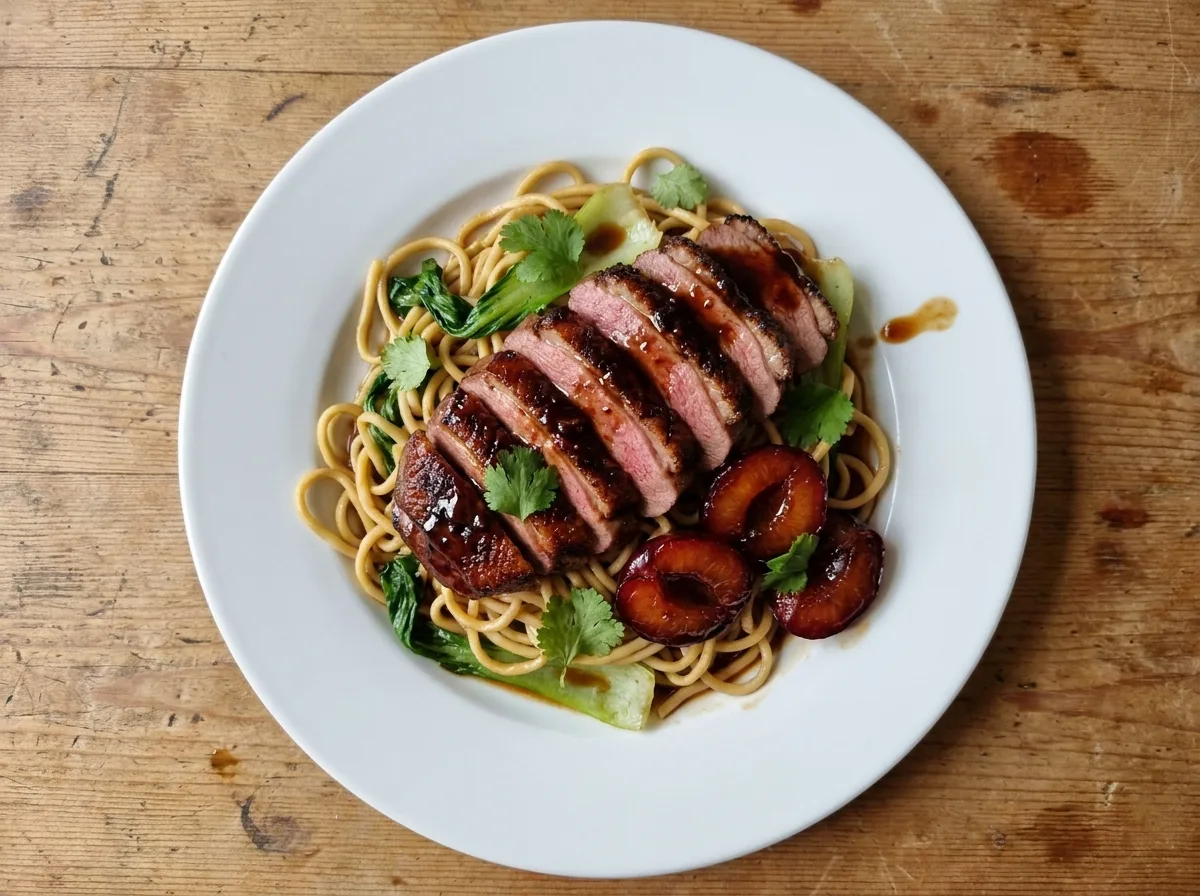
Gordon Ramsay Teriyaki Duck
Course: Main, DinnerCuisine: Asian, BritishDifficulty: Easy2
servings5
minutes10
minutes480
kcal15
minutesGordon Ramsay’s 10-minute teriyaki duck from Ramsay in 10, pan-fried breast glazed in teriyaki with caramelised sticky plums, pak choi and coriander. Serves two, with an option to make it teriyaki duck noodles.
Ingredients
2 duck breasts, about 160g (5½ oz) each
2 ripe plums
4 tbsp brown sugar
1 star anise
2 tbsp rice wine vinegar
2 tbsp teriyaki sauce
300g (11 oz) pak choi (or choi sum)
Small handful of coriander leaves
Sea salt
- To make it teriyaki duck noodles (optional):
2 nests egg noodles, cooked
Directions
- Sear the skin: Set a heavy frying pan over high heat. Score the duck skin, season with salt and lay it skin-side down. Weigh it down with a small pan and a few cans, and cook for 4 minutes.
- Start the plums: Halve the plums and discard the stones. Put them in a small non-stick pan with the sugar and star anise over medium heat. When the sugar caramelises, add the rice wine vinegar and simmer until needed.
- Flip the duck: Once it has had 4 minutes, flip the duck and cook for another 4 minutes.
- Glaze and rest: Spoon the teriyaki sauce over the duck, then lift it onto a board to rest.
- Cook the pak choi: Quarter the pak choi, add it to the duck pan with the rendered fat and cook for 2 to 3 minutes until soft. For teriyaki duck noodles, toss the cooked noodles through the pak choi now so they soak up the fat and juices.
- Serve: Pile the pak choi, or the noodles, onto plates with the sticky plums. Slice the duck, set it on top, drizzle with the plum juices and scatter with coriander.
FAQs
How do you make the sticky plum sauce?
This is the bit that makes the dish, and it cooks while the duck does. Halve two ripe plums, drop them into a small pan with the brown sugar and a star anise, and let the sugar caramelise. Once it turns golden, add the rice wine vinegar, which tips it into a sweet and sour glaze.
Let it simmer gently until the duck is ready, and the plums soften into something sticky and jammy. In the video he stirs a knob of butter in at the end too, which loosens the caramel and gives it a glossy shine.
Does teriyaki sauce go with duck, and which one should you use?
It works because duck is rich and fatty, and teriyaki is sweet and salty, so the glaze cuts straight through that richness. Shop-bought is exactly what he uses, so there’s no need to make your own. Any bottle from the world-food aisle of a UK supermarket works, and Kikkoman is the easy one to find.
If you want to stretch it, mix two parts teriyaki with a splash of soy and a little honey. That said, the plums bring the sweetness here, so the teriyaki only needs to glaze, not carry the whole dish.
How do you get the skin crispy and the meat pink?
The skin needs the fat under it to render, so the four minutes skin-side down does most of that work before you flip. Give it four more minutes on the flesh side and the middle stays pink, the same way he treats his duck breast. Any longer and it dries out.
Then rest it, because as Gordon says, you don’t slice a duck piping hot. Cutting straight away pushes the juices onto the board, so a couple of minutes off the heat keeps it juicy and pink through.
What does Gordon do differently in the video?
The book is the stripped-back ten-minute version, but in the video he builds it up. He seasons the duck with pink peppercorns as well as salt for a fragrant, gently spicy edge. He also sautés the pak choi in the rendered duck fat rather than a clean pan, and folds noodles through it to make teriyaki duck noodles.
His other trick is searing in the glaze. Instead of just spooning the teriyaki over at the end, he rolls the duck through it in the hot pan so it caramelises onto the skin. He’s blunt about the fat too: it “is the money,” so don’t pour it away.
How is teriyaki duck different from crispy duck pancakes?
Gordon makes the link himself, because the teriyaki, the duck and the sweet plums hit the same notes as crispy duck with hoisin. The difference is time. His crispy duck pancakes slow-roast a whole bird for hours, while this pan-fries two breasts in minutes.
So think of this as the weeknight version of that weekend feast. You get the same sweet, sticky, savoury combination, just plated as a quick dinner for two rather than a help-yourself spread.
Can you double the recipe?
Yes, and Gordon says so in the book, since it scales easily for more people. Just make sure your pan is big enough to hold four duck breasts at once without crowding them, because a crowded pan steams the skin instead of crisping it.
The plum sauce doubles just as happily in a slightly bigger pan. Keep the timings the same, four minutes a side, because that depends on the thickness of each breast, not how many are in the pan.