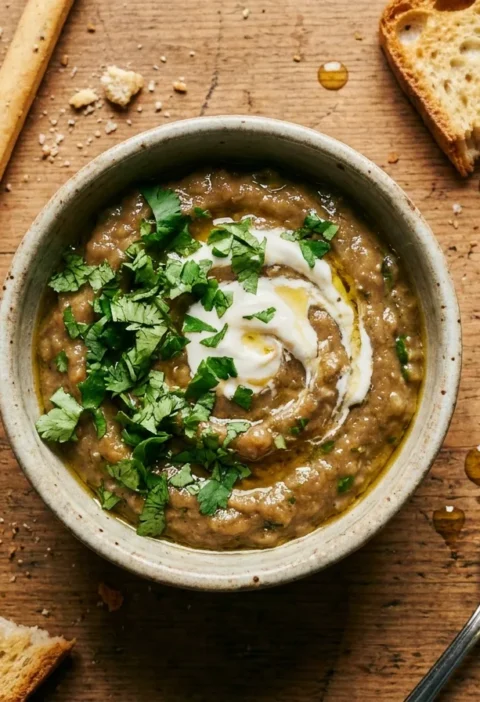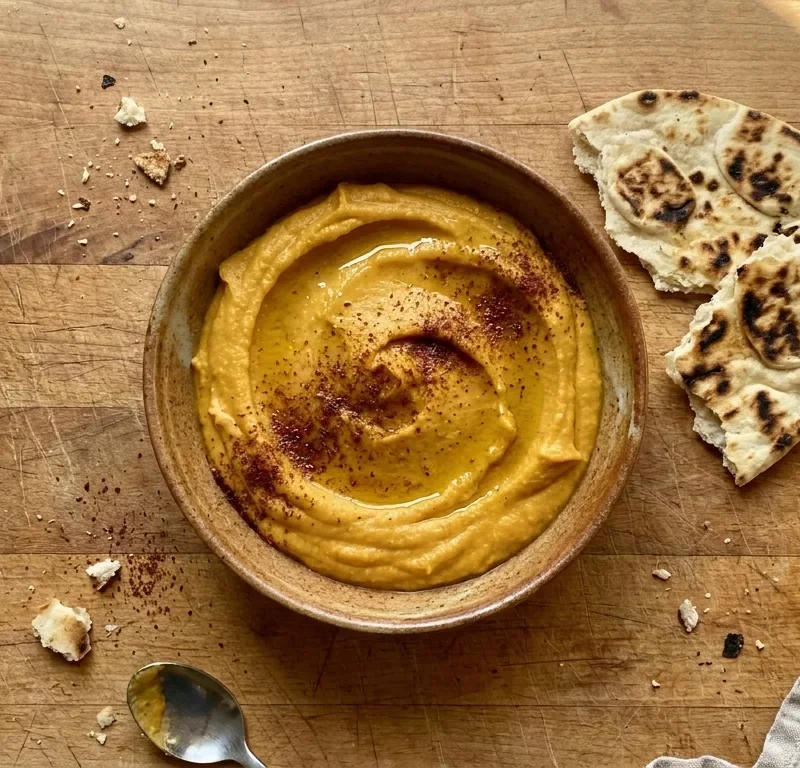
Gordon Ramsay’s butternut squash hummus is roasted with garlic and fresh ginger, then blended with chickpeas, tahini and lemon juice, and seasoned with a homemade ras el hanout spice blend he builds from eight whole spices. Ramsay publishes six hummus recipes across his cookbooks, and this roasted version from Ultimate Cookery Course is the most complex thanks to the spice blend. Serves 8 to 10 and takes 45 minutes.
He explains in the headnote that ras el hanout is Arabic for “head of the shop” and is “traditionally a blend of the best spices a merchant has to offer.” There is no universal version, which is why he builds his own from scratch, toasted and ground fresh for each batch rather than reaching for a jar.
The technique that separates this from every other squash hummus is the 30-minute roast. The squash caramelises in the oven with the garlic, ginger and a tablespoon of the spice mix already on it, so the heat toasts the flavours directly into the flesh before it reaches the blender. By the time you blend, the squash is soft enough to go completely smooth.
Cooked this recipe? Send a photo or tell me what you changed at fans@gordonramsayrecipes.uk and I’ll share your experience live on this page.
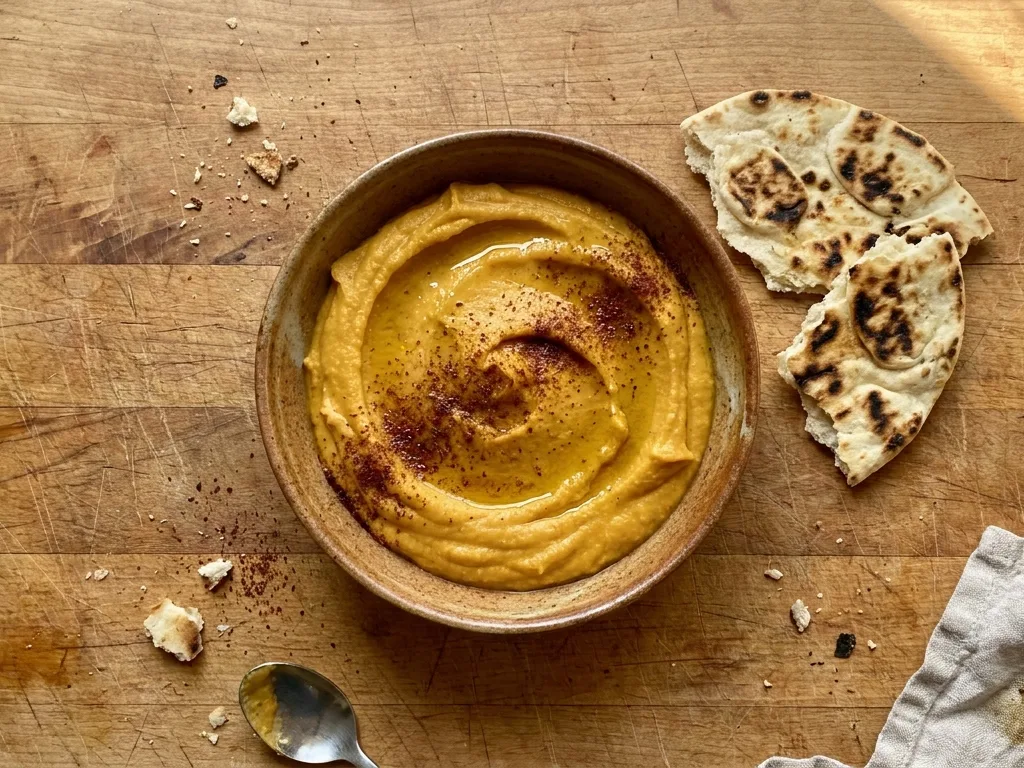
Gordon Ramsay’s Butternut Squash Hummus (Roasted Squash Houmous)
Course: AppetisersCuisine: Middle EasternDifficulty: Easy10
servings15
minutes30
minutes115
kcal45
minutesRoasted squash houmous from Ultimate Cookery Course with a homemade ras el hanout of eight whole spices toasted and ground fresh. Ramsay says ras el hanout means “head of the shop” and has no universal recipe. The spice blend keeps for 3 months.
Ingredients
- For the ras el hanout spice blend:
1 cinnamon stick, broken into pieces
1 tsp cloves
1 tbsp coriander seeds
½ tbsp fenugreek seeds
½ tbsp fennel seeds
1 tbsp mustard seeds
½ tbsp cumin seeds
1 tsp paprika
- For the hummus:
1 butternut squash, about 850g (1 lb 14 oz), peeled, deseeded and cubed
2 garlic cloves, bashed
3cm (1 inch) piece of fresh root ginger, peeled and finely chopped
Olive oil
1 tbsp tahini
1 x 400g (14 oz) tin chickpeas, drained and rinsed
Juice of ½ lemon
Sea salt and freshly ground black pepper
Directions
- Make the spice blend: Break the cinnamon stick into pieces and place in a dry pan with the cloves, coriander seeds, fenugreek, fennel seeds, mustard seeds and cumin seeds. Toast over a medium heat for about 1 minute until aromatic and the seeds are popping, shaking the pan to stop them burning. Remove from the heat, add the paprika and grind to a fine powder in a spice grinder or mortar. Sift if needed.
- Prepare the squash: Preheat the oven to 180°C (350°F / Gas 4). In a large bowl, mix the cubed squash, garlic cloves and ginger with 2 tablespoons of olive oil and 1 tablespoon of the spice mix. Season with salt and pepper and scatter in a single layer on a roasting tray.
- Roast: Place in the oven and cook for 30 minutes until tender all the way through.
- Blend: Once the squash is soft, tip the contents of the tray into a blender, discarding the garlic skins. Add the tahini, chickpeas and a squeeze of lemon juice along with 2 tablespoons of olive oil. Blend until smooth.
- Season and serve: Taste and adjust the seasoning, adding more lemon juice if needed. Transfer to a bowl, sprinkle with a little of the spice mix and drizzle with olive oil. Serve with warmed or griddled pitta bread on the side.
Notes
- If it tastes flat, do what my reader Alex did: stir through a quarter teaspoon of salt and a teaspoon of the spice blend at the end, and it sings. An extra spoon of tahini next time would not hurt either.

FAQs
What spices are in Ramsay’s ras el hanout?
Eight whole spices toasted and ground fresh: cinnamon, cloves, coriander seeds, fenugreek seeds, fennel seeds, mustard seeds, cumin seeds, plus paprika added after toasting because it burns quickly in a dry pan. In the YouTube video he says the spices are “toasted for maximum flavour” and to wait until “the seeds start to pop” before pulling them off the heat.
The batch makes more than you need for one recipe. Ramsay says it keeps for up to 3 months in an airtight container, so one round of toasting covers several meals.
Can I use pumpkin instead of butternut squash?
Yes. Pumpkin and butternut squash are interchangeable here, though butternut is sweeter and blends smoother because the flesh is denser. If using pumpkin, choose a smaller cooking variety rather than a large carving pumpkin, which is watery and fibrous and will make the hummus thin.
Ramsay specifies butternut at about 850g, which gives enough flesh after peeling and deseeding to serve 8 to 10 people. A pumpkin the same weight yields less usable flesh because the seed cavity is larger, so you may need a slightly bigger one.
What makes Ramsay’s version different from most squash hummus recipes?
Two things nobody else does. First, he roasts the squash with fresh ginger alongside the garlic, which adds a warm sharpness underneath the sweetness that every other recipe misses. I checked the top-ranking squash hummus recipes and none of them use ginger. Second, his ras el hanout blend of eight spices is far more complex than the basic cumin and paprika most recipes call for.
Compare his approach to Ina Garten’s butternut squash hummus on Food Network, which uses yogurt, Sriracha, cinnamon and maple syrup drizzle. Ramsay’s is purely spice-driven with no dairy and no sweetener, so the flavour comes entirely from the roasted squash and the toasted spice blend rather than added sugar or heat.
What does Ramsay serve roasted squash hummus with?
He writes in the headnote that it “makes a lovely dip to accompany drinks or, with a salad, a nice light lunch.” The serving is simple: warmed or griddled pitta, a drizzle of olive oil and a final sprinkle of the leftover spice blend for colour.
For something more substantial, bake his focaccia bread from the same book and tear it into the hummus while still warm. Both recipes come from Ultimate Cookery Course, so they can be made in the same session.
How is this different from his beetroot hummus?
The squash version roasts everything first with garlic and ginger for 30 minutes, then blends with a warm ras el hanout of cinnamon, cloves and fenugreek. His beetroot hummus with za’atar from Ultimate Home Cooking skips the oven entirely and blends cooked beetroot and chickpeas cold, finished with a sharp za’atar sprinkle of sumac, sesame and marjoram.
The result is two completely different dips: this one is warm and aromatic, the beetroot is bright and tangy. Ramsay puts them in different cookbooks because they serve different moods rather than being variations of the same recipe.