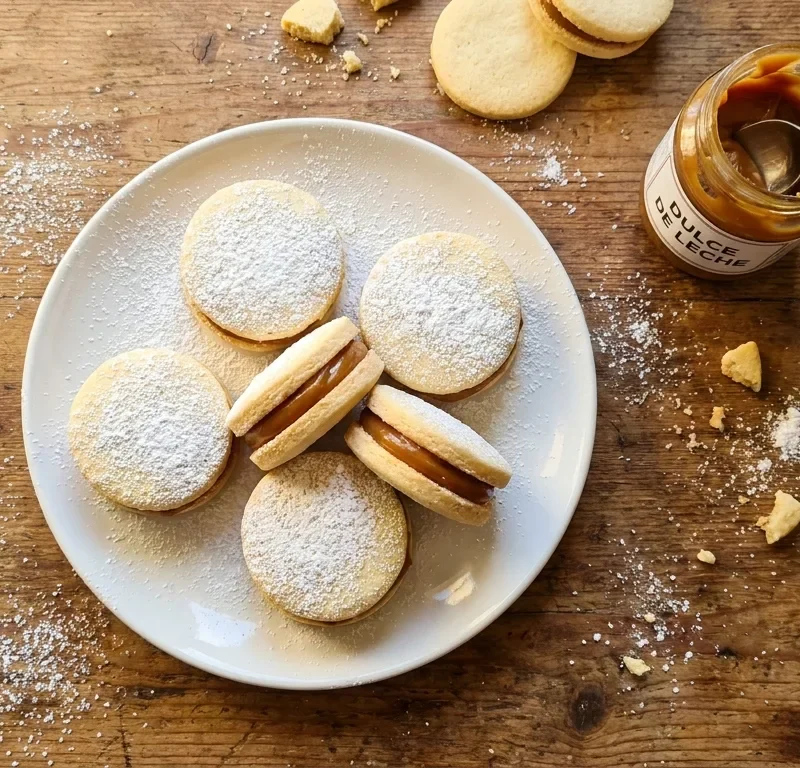
Gordon Ramsay’s dulce de leche biscuits are crumbly shortbread cookies sandwiched with sweet caramel and dusted with icing sugar, which he calls alfajores in Ultimate Home Cooking. The dough uses cornflour alongside plain flour for that melt-in-the-mouth texture, makes 8 and bakes in 10 to 12 minutes.
Ramsay traces the recipe back through three continents in his headnote: alfajores were brought to South America by the Spanish, who were introduced to them by the Moors of North Africa. He says they’re popular “all over South America, from Argentina to Peru” and that “the secret of their more-ishness is the dulce de leche” used to sandwich the biscuits together.
The technique that sets these apart from standard shortbread is the cornflour in the dough, which cuts the gluten so the biscuit dissolves on your tongue rather than snapping. Chill the shaped balls for 10 minutes before they go in the oven so they hold their shape while baking.
Cooked this recipe? Send a photo or tell me what you changed at fans@gordonramsayrecipes.uk and I’ll share your experience live on this page.
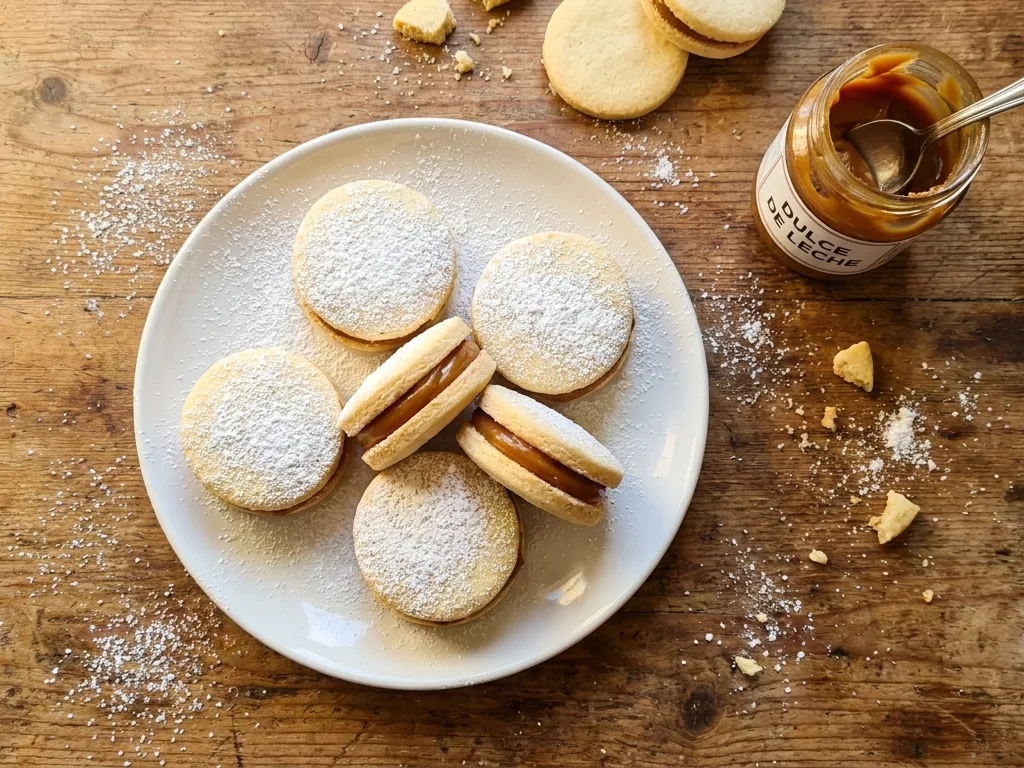
Gordon Ramsay’s Dulce de Leche Biscuits (Alfajores)
Course: DessertsCuisine: South AmericanDifficulty: Easy8
servings20
minutes12
minutes560
kcal32
minutesAlfajores from Ultimate Home Cooking, the same crumbly South American shortbread that Ramsay traces from North Africa through Spain to Argentina. Cornflour gives the melt, dulce de leche gives the glue, icing sugar gives the finish.
Ingredients
- For the biscuits:
150g (¾ cup) granulated sugar
250g (1 cup + 2 tbsp / 2¼ sticks) salted butter, softened
1 large free-range egg
1 vanilla pod, split open and seeds scraped out
250g (2 cups) plain flour (all-purpose flour), plus extra for rolling
90g (¾ cup) cornflour (cornstarch)
½ tsp baking powder
- For the filling and finish:
250g (¾ cup) dulce de leche or condensed milk caramel
Icing sugar (powdered sugar), for dusting
Directions
- Preheat and line: Set the oven to 180°C (350°F / Gas 4) and line two baking sheets with baking parchment.
- Cream the butter and sugar: Beat the sugar and softened butter together with an electric whisk until light and fluffy, then beat in the egg and vanilla seeds.
- Build the dough: Sift the flour, cornflour and baking powder over the butter mixture, then mix until a soft dough forms.
- Shape and chill: With lightly floured hands, divide the dough into 16 equal pieces and roll each into a ball. Place on the prepared sheets, spacing well apart, and press down gently with the palm of your hand to flatten slightly. Chill for 10 minutes or until firm to touch.
- Bake: Bake for 10 to 12 minutes until pale golden. Using a spatula, transfer to a wire rack and leave to cool completely.
- Fill and dust: Once completely cool, sandwich the flat sides of two biscuits together with a tablespoon of dulce de leche, then dust with icing sugar to serve.
FAQs
What are alfajores?
Alfajores are South American shortbread biscuits sandwiched with dulce de leche, and the thing that sets them apart from European shortbread is the cornflour in the dough. At 90g cornflour to 250g plain flour, nearly a quarter of the dry weight is pure starch with no gluten, which is why the biscuit dissolves on the tongue rather than snapping clean.
Ramsay’s version uses salted butter rather than unsalted, which is unusual for baking and gives the dough a savoury edge that balances the sweet caramel filling. For an extra layer he suggests rolling the filled edges in desiccated coconut just before serving, which adds texture and stops the dulce de leche from sticking to your fingers.
Can I make dulce de leche from scratch?
Ramsay includes a method on the same page: pierce the top of a can of condensed milk in two places, then stand it in a saucepan of simmering water for 3 to 4 hours, making sure the water never covers the top of the can. Let it cool completely before opening.
Shop-bought dulce de leche works just as well. Ramsay writes “dulce de leche or condensed milk caramel” in the ingredients, so he’s fine with either route. The key is thickness: if the caramel is too runny it will ooze out the sides once the biscuits are sandwiched, so go for a thick jarred version if you skip the homemade step.
Why does the recipe use salted butter instead of unsalted?
Most baking recipes call for unsalted butter so you control the salt, but Ramsay deliberately uses salted here. The salt in the butter offsets the sweetness of both the sugar in the dough and the dulce de leche filling, so the finished biscuit tastes balanced rather than one-note sweet.
His rosemary shortbread from Bread Street Kitchen takes the opposite approach with unsalted butter and adds sea salt separately, which gives you more precision. Both work, but the salted butter in these alfajores is part of what makes them taste less like a biscuit tin and more like something from a bakery.
How are these different from Fortnum and Mason dulce de leche biscuits?
Fortnum and Mason sell a boxed version of alfajores that are a popular gift. The main difference with any shop-bought version is freshness: a homemade alfajor straight from the oven has a softer, more crumbly texture because the cornflour hasn’t had time to firm up, which you cannot get from anything that sits in packaging.
The peanut butter and jam cookies sit in the same chapter of Ultimate Home Cooking, so if you’re baking for a gathering both recipes can be made in one session and give you two very different flavours from the same book.
Can I freeze alfajores?
The unfilled biscuits freeze well for up to a month in an airtight container with baking parchment between layers. Defrost at room temperature for about 20 minutes before filling, because the dulce de leche won’t stick properly to a frozen surface.
Once filled, they’re best eaten within a day or two because the caramel softens the biscuit over time and the crumbly contrast is the whole point. Ramsay doesn’t mention freezing filled alfajores, and the texture confirms why: freshly assembled is the only way to get that crunch meeting the caramel.