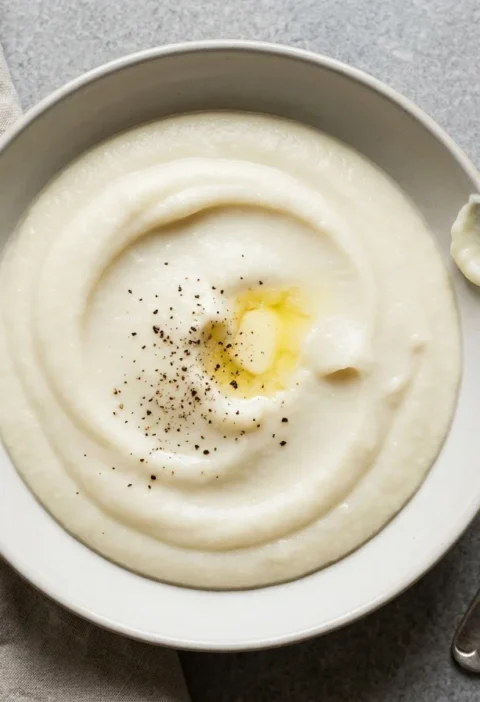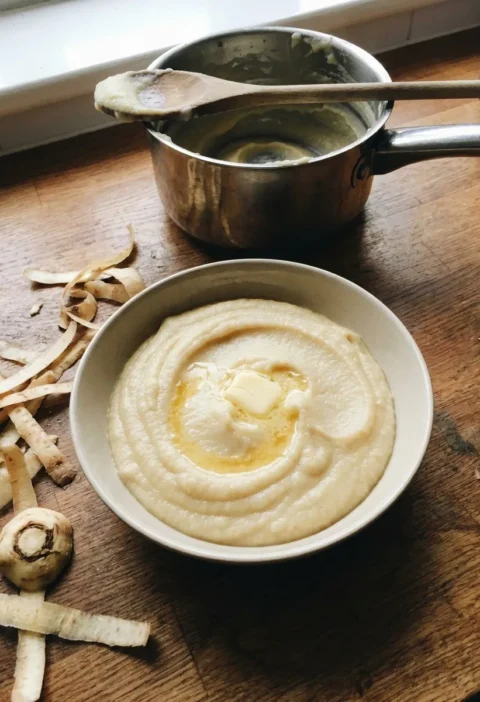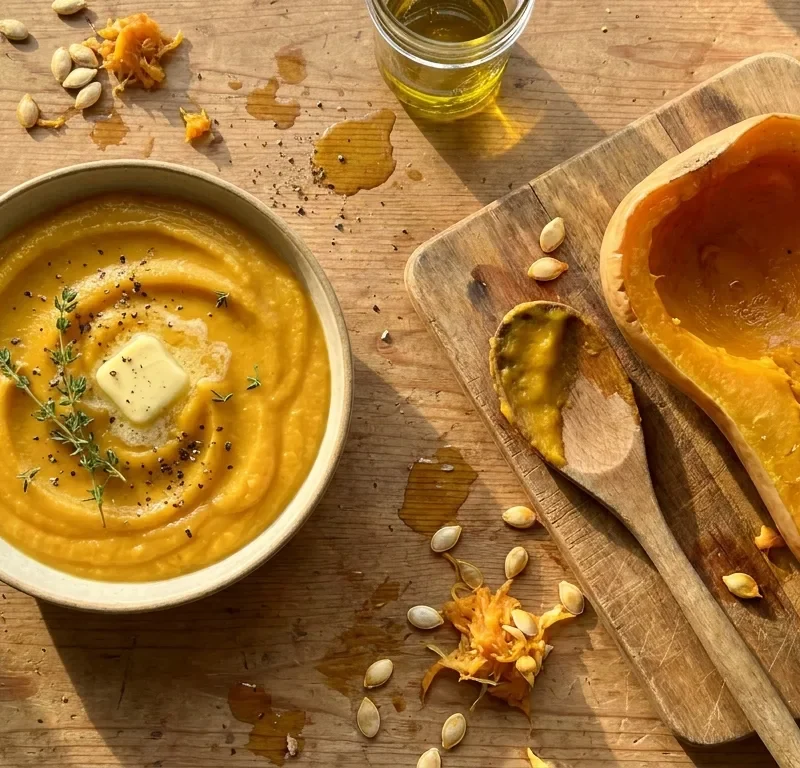
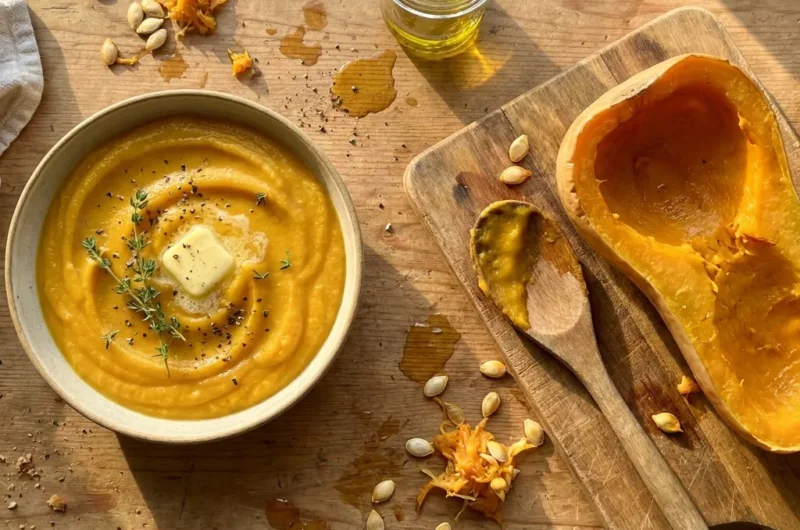
Gordon Ramsay’s butternut squash purée is roasted in halves with butter, garlic and fresh herbs, then scooped out and blended smooth with nothing else added. The recipe is published on gordonramsay.com as part of his pan-seared scallops dish, and takes 45 minutes to an hour depending on the size of the squash.
He roasts the squash cut-side up with the butter divided between the two halves, so it melts into the flesh as it cooks and bastes from the inside out. The garlic and herb sprigs sit in the cavity with the butter, which means the flavour infuses during the roast rather than being added after blending.
Most butternut squash purée recipes online boil the squash and stir in cream to make it smooth. Ramsay does neither. He roasts at 220°C until the edges caramelise, which concentrates the natural sugars, then blends with just the melted butter and a drizzle of olive oil. No cream, no stock needed. The squash does the work on its own.
Cooked this recipe? Send a photo or tell me what you changed at fans@gordonramsayrecipes.uk and I’ll share your experience live on this page.
Gordon Ramsay Butternut Squash Purée Recipe
Course: SidesCuisine: BritishDifficulty: Easy6
servings10
minutes50
minutes170
kcal60
minutesRoasted butternut squash purée from gordonramsay.com, served alongside his pan-seared scallops with pomegranate-quince slaw. Five ingredients, no cream, no stock. The butter roasts inside the squash halves and does all the work.
Ingredients
1 butternut squash, about 1.4kg (3 lbs), halved and deseeded
60g (4 tbsp / ½ stick) unsalted butter, divided between the halves
2 to 4 sprigs of fresh thyme or rosemary
4 garlic cloves, crushed
Olive oil, for drizzling
Sea salt and freshly ground black pepper
Directions
- Preheat: Set the oven to 220°C (425°F / Gas 7) and line a roasting tin with foil.
- Fill and season: Place the squash halves cut-side up on the tin. Divide the butter, herb sprigs and crushed garlic between the two cavities. Season generously with salt and pepper and drizzle with olive oil.
- Roast: Place in the oven for 45 minutes to 1 hour until the flesh is completely tender when pierced with a knife and the edges are lightly browned.
- Blend: Once cool enough to handle, scoop the flesh out of the skins and into a blender along with the roasted garlic, discarding the herbs and skins. Blend until completely smooth and season with salt and pepper to taste.
- Serve: Spoon onto warmed plates as a base for seared scallops, roast lamb or alongside any roasted meat.
FAQs
Why does Ramsay roast the squash instead of boiling it?
Roasting at 220°C caramelises the natural sugars in the squash and drives off moisture, which means the purée is naturally thick and sweet without adding cream. Boiling does the opposite: the squash absorbs water, which is why most boiled purées need cream or butter stirred in to compensate.
Ramsay doesn’t use the same method for every purée. His carrot purée from Sunday Lunch boils the carrots and sieves them with their own cooking liquor, because carrots are dense enough to hold flavour even in water. Squash is softer and waterier, so roasting is how he keeps the flavour concentrated. He picks the method based on the vegetable.
What does Ramsay serve butternut squash purée with?
On gordonramsay.com he serves it under pan-seared scallops with a pomegranate-quince slaw, where the sweet purée acts as a base for the seared shellfish. In his cookbooks he recommends butternut squash purée alongside a lamb stew with bacon, sweet onions and prunes, where it replaces polenta as the starchy side.
It sits in the same role as his pea and mint purée, which he also serves under scallops on the F Word. Both are smooth vegetable bases that give seared protein something sweet to land on. The squash version is richer and more autumnal, while the pea is lighter and works better in spring.
Can you freeze butternut squash purée?
Yes. Cool it completely, portion into freezer bags or containers and freeze for up to 3 months. Defrost in the fridge overnight and reheat gently in a saucepan with a small knob of butter, stirring until smooth again. The texture holds up well because the starch content in squash prevents it from going watery when it thaws.
If you want to batch-cook, roast two or three squashes at once since the oven is already at 220°C. The purée freezes flat in bags and defrosts into a side dish faster than cooking from scratch.
How is this different from his butternut squash hummus?
Completely different dish. The purée roasts squash halves with butter, garlic and herbs at 220°C, then blends pure with no additions. His butternut squash hummus from Ultimate Cookery Course cubes the squash, tosses it with a homemade ras el hanout spice blend, then blends with chickpeas, tahini and lemon juice.
The purée is a warm side dish designed to sit under protein on a plate. The hummus is a cold dip served with pitta bread. Same squash, same oven, different results because of what goes in the blender afterwards.
How do you thicken butternut squash purée if it’s too thin?
Return it to a saucepan over a low heat and stir for a few minutes. The water evaporates and the purée tightens naturally without needing any starch or flour. A small knob of cold butter stirred in at the end also thickens while adding richness, a technique he uses in his butter sauces like beurre blanc.
If the squash was particularly watery, which happens with larger specimens, roast it for an extra 10 to 15 minutes until the flesh pulls away from the skin. The drier the flesh before blending, the thicker the purée comes out.