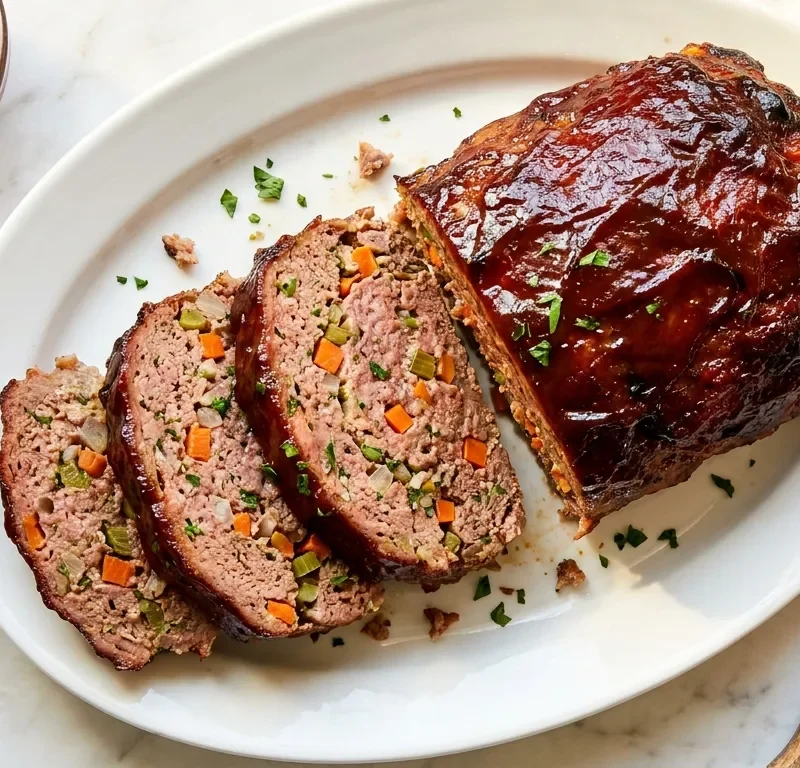
Gordon Ramsay’s meatloaf is a two-meat blend of ground beef and pork with a mirepoix base, soaked panko, Parmesan, and a ketchup glaze with honey and Tabasco. Baked at 180°C for 30 to 40 minutes until the centre hits 60°C. Feeds 6 to 8.
Ramsay has never published his own meatloaf in any cookbook, but he endorsed this version on his YouTube channel by MasterChef finalist Monti Carlo, calling it “a work of art.” The full recipe is from her Ramsay Redemption video, and it fixes everything he hates about bad meatloaf on Kitchen Nightmares.
The technique that makes this meatloaf different is the panade. Instead of adding dry breadcrumbs that soak up all the moisture, Monti cooks panko in a reduced liquid of buttermilk, red wine, and chicken stock first. The crumbs go in wet, which is why the loaf stays juicy instead of turning into cardboard.
Cooked this recipe? Send a photo or tell me what you changed at fans@gordonramsayrecipes.uk and I’ll share your experience live on this page.
Gordon Ramsay’s Meatloaf
Course: DinnersCuisine: AmericanDifficulty: Medium8
slices25
minutes40
minutes420
kcal65
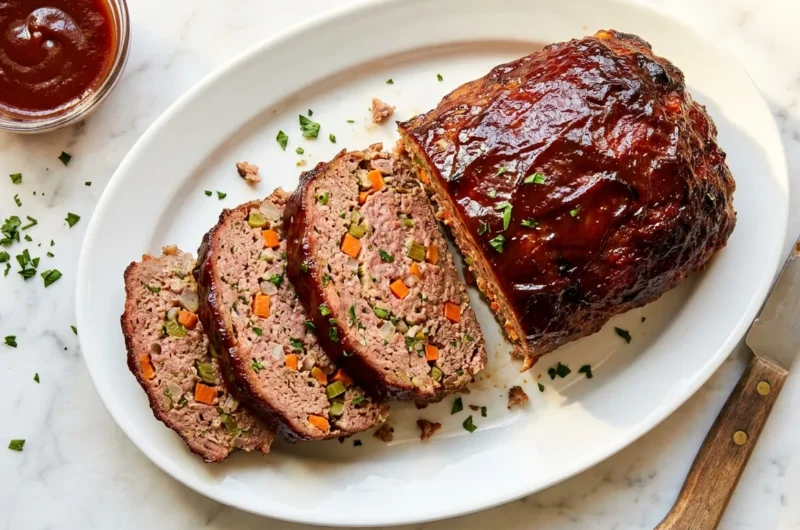
minutesEndorsed by Ramsay on his YouTube channel, this meatloaf by MasterChef finalist Monti Carlo uses a two-meat blend with a mirepoix base and soaked panko. Around 420 kcal per slice and about 65p a portion.
Ingredients
- For the meatloaf:
2 tbsp olive oil
1 small onion, finely diced
1 small carrot, finely diced
1 stalk celery, finely diced
2 cloves garlic, minced to a paste
100g (3½ oz) cremini mushrooms, finely diced
¼ tsp paprika
¼ tsp ground coriander
¼ tsp ground cumin
¼ tsp cayenne pepper
1 tsp fish sauce
1 tsp soy sauce
1 tsp Worcestershire sauce
60ml (¼ cup) chicken stock
60ml (¼ cup) buttermilk
60ml (¼ cup) red wine
50g (½ cup) panko breadcrumbs
450g (1 lb) ground beef, 80/20
450g (1 lb) ground pork
2 large eggs
25g (¼ cup) Parmesan, grated
2 tbsp finely chopped flat-leaf parsley
1 tbsp salt
1 tsp black pepper
- For the glaze:
175ml (¾ cup) ketchup
1 tbsp tomato paste
1 tsp Worcestershire sauce
2 tsp Tabasco
1 tbsp honey
60ml (¼ cup) white vinegar
½ tsp black pepper
Directions
- Cook the mirepoix: Heat the oil in a large pan over high heat. Sauté the onion with a pinch of salt until translucent. Add the carrot and celery, cook until golden. Add the garlic, paprika, cayenne, cumin, coriander, and mushrooms. Cook until the garlic blooms.
- Build the panade: Add the fish sauce, soy sauce, Worcestershire, buttermilk, red wine, and chicken stock. Reduce the liquid by half. Stir in the panko and let the mixture cool completely.
- Mix the meat: Put the beef and pork in a stand mixer with the paddle attachment. Mix on low for 20 seconds until just combined. Add the eggs, Parmesan, parsley, salt, and pepper. Mix gently until combined. Add the cooled vegetable and panko mixture. Mix until just incorporated.
- Test and season: Cook a small piece of the mixture in a pan, taste, and adjust the seasoning.
- Shape: Transfer the mixture into a 23x13cm (9×5 inch) loaf tin. Slam the tin down a few times to knock out air bubbles. Dock the top with a bamboo skewer all the way to the bottom. Cover tightly with foil and rest in the fridge for 15 minutes.
- Bake: Preheat the oven to 180°C (160°C fan / Gas 4 / 350°F). Invert the loaf onto a foil-lined rimmed baking sheet. Remove the tin and fold up the foil edges to trap juices. Bake for 30 minutes.
- Glaze: Mix all glaze ingredients in a small pan and bring to a simmer. Brush the meatloaf with a thin layer of glaze. Return to the oven for 4 minutes. Glaze again and bake until deep brown, about 4 more minutes.
- Rest and serve: Let the meatloaf rest for 15 minutes before slicing. Serve with extra glaze on the side and garnish with parsley.
FAQs
Why does this recipe use both beef and pork?
Beef gives you the savoury depth and structure while pork adds fat and sweetness that keeps the loaf moist. The 80/20 beef is essential because lean mince dries out during baking. Monti says in the video “lean means dry, you want fat, go for 80/20 minimum.”
Ramsay follows the same principle in his cookbooks. His beef meatballs use 800g beef with 200g pork for the same reason, and in Bread Street Kitchen he writes “making sure you don’t overmix” about his burger blend. The same rule applies here: gentle mixing on low, stop the moment the eggs are incorporated, or the loaf goes dense.
Why soak the panko in liquid instead of adding them dry?
This is the technique that separates a moist meatloaf from a dry one. Dry breadcrumbs absorb moisture from the meat as it cooks, which is why most homemade meatloaf turns out like cardboard. By cooking the panko in the reduced buttermilk, wine, and stock first, they go into the mix already saturated so they can’t steal juice from the meat.
It’s the same principle behind adding grated vegetables to a meat base. Ramsay’s bolognese uses grated carrot and celery to add hidden moisture to the sauce. Here, the mirepoix does double duty: flavour from the sautéed vegetables and moisture from the soaked crumbs.
Can you wrap the meatloaf in bacon?
Line the loaf tin with overlapping streaky bacon before pressing the meat mixture in, then fold the bacon over the top. When you invert it onto the baking sheet, the bacon forms a crispy shell around the outside while basting the meat underneath.
Ramsay uses the same wrapping technique in his beef wellington where Parma ham holds the duxelles tight against the fillet. The bacon does the same job here: structure on the outside, moisture on the inside. Add the ketchup glaze on top of the bacon in the last 8 minutes so it caramelises without burning.
What goes in the ketchup glaze?
Ketchup, tomato paste, honey, Tabasco, white vinegar, Worcestershire sauce, and black pepper. You simmer everything together while the meatloaf rests, then brush it on in two thin coats with 4 minutes in the oven between each. Thin coats caramelise. Thick coats steam and stay wet.
If you want a smokier glaze, swap the ketchup base for Ramsay’s BBQ sauce which adds coffee and soy sauce for depth. Either way, brush it on late. Glaze that goes on too early burns before the meat is cooked through.
What did Ramsay say about meatloaf on Kitchen Nightmares?
On the Olde Hitching Post episode, Ramsay was served an “award-winning” meatloaf and called it “lukewarm solidified chunks of crap.” He said the problem wasn’t the recipe but the execution: no colour on the outside, no glaze, served lukewarm instead of hot.
That critique is the roadmap for everything this recipe does differently. Monti’s version bakes inverted for an even crust, gets glazed twice under the grill for colour, and rests for exactly 15 minutes so it’s hot when it hits the plate. Serve it with his mashed potatoes and you’ve got a proper dinner, not the “funeral in my mouth” that Ramsay walked away from.