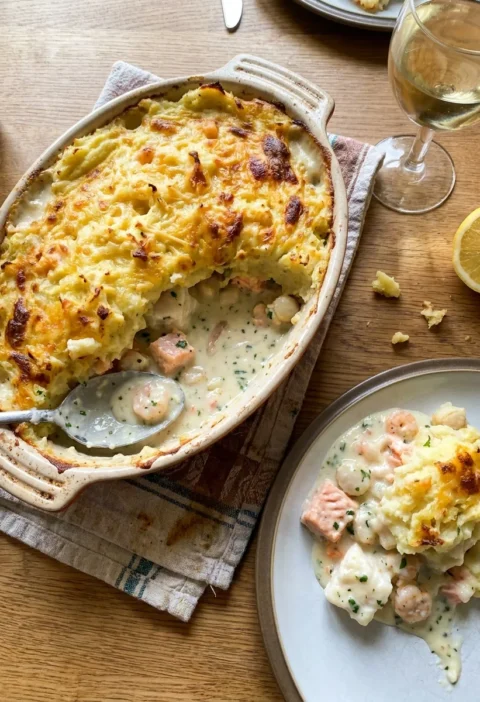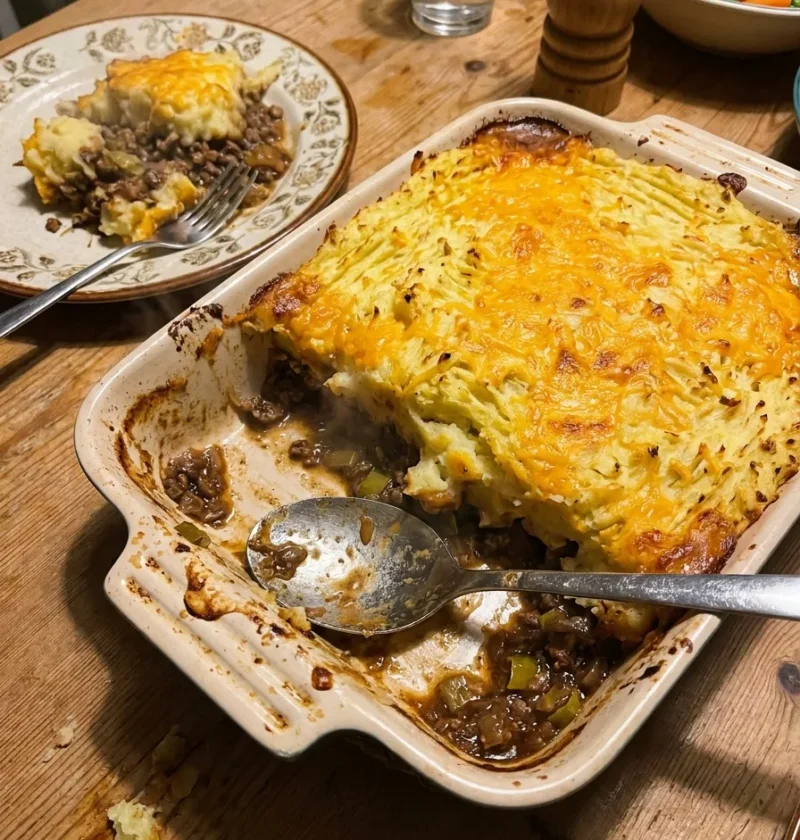
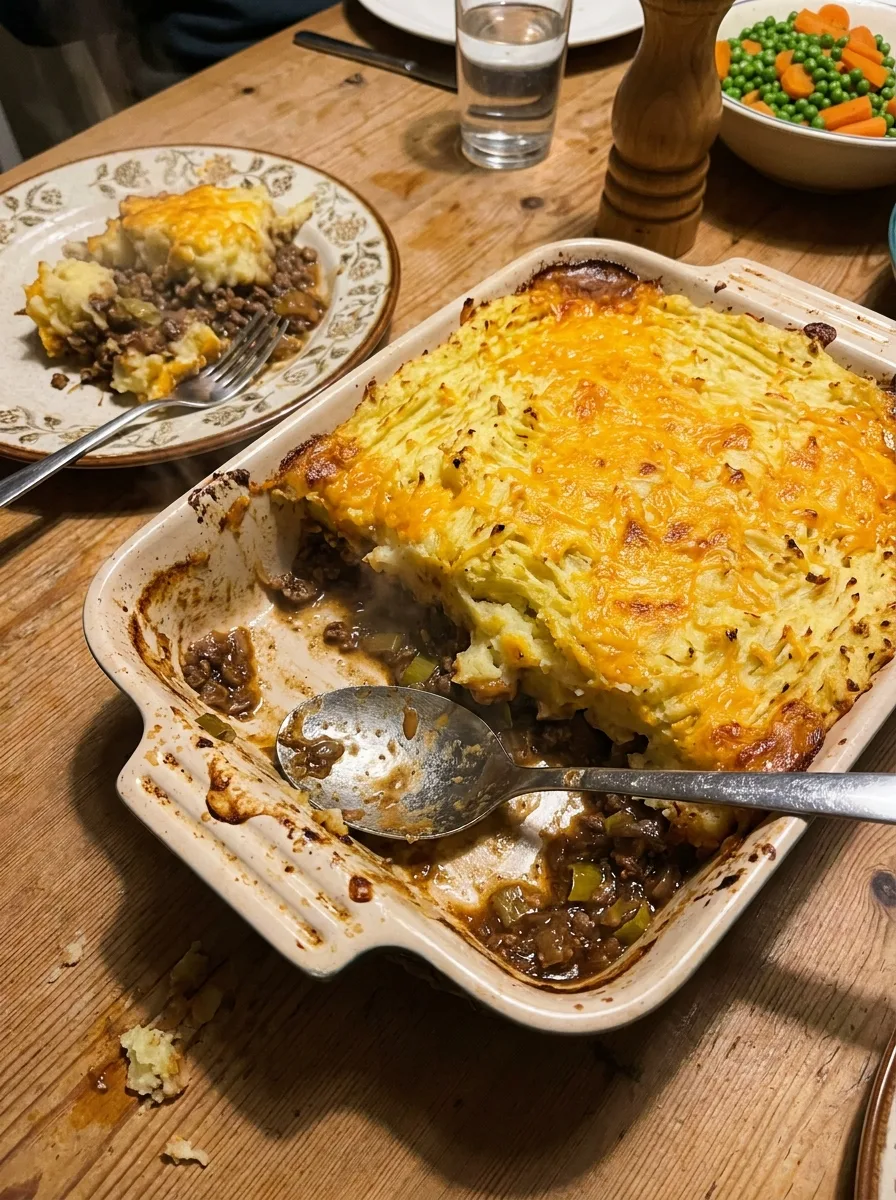
Gordon Ramsay’s shepherd’s pie is lamb mince browned hard with leeks, onions, red wine and rosemary, topped with a cheesy champ mash and baked until the top goes golden and crispy. It takes about an hour and feeds six.
He calls this his all-time favourite family dish in Ultimate Home Cooking, built from his mum’s recipe. She taught him the rule he still repeats: “no colour, no flavour.”
That browning is everything. If you skip it or crowd the pan, the mince steams grey instead of frying. Gordon calls that “sick, greasy and cheap and nasty.” Brown it in batches, hard, in a hot pan, so every piece gets colour.
Cooked this recipe? Send a photo or tell me what you changed at fans@gordonramsayrecipes.uk and I’ll share your experience live on this page.
Gordon Ramsay Shepherd’s Pie
Course: DinnerCuisine: BritishDifficulty: Easy6
servings20
minutes40
minutes670
kcalGordon’s favourite family recipe, his mum’s shepherd’s pie with a cheesy champ topping. Lamb mince browned with leeks, red wine and rosemary, topped with spring onion and Cheddar mash, forked for crispy ridges.
Ingredients
- For the filling:
Olive oil, for frying
1kg minced lamb
2 garlic cloves, finely chopped
1 onion, diced
2 leeks, halved and finely sliced
1-2 tbsp Worcestershire sauce
1 tbsp tomato puree
100ml red wine
250ml chicken stock
2 rosemary sprigs, leaves chopped
Sea salt and black pepper
- For the topping:
750g Maris Piper potatoes, peeled and chunked
50g butter
3 spring onions, finely chopped
100g Cheddar, grated
50-100ml milk (if needed)
Directions
- Brown the mince: Heat the oven to 180C (160C fan, Gas 4). Get a large frying pan properly hot, add a dash of oil and fry the mince in batches, seasoning each batch, until well browned. Add the garlic for the last two minutes. Move to a plate.
- Soften the veg: Add a little more oil and cook the onion and leeks over a medium heat for 5 to 7 minutes until soft. Add Worcestershire sauce to taste, then stir in the tomato puree.
- Build the sauce: Return the mince, pour in the wine and scrape up the bits from the bottom. Bubble for a couple of minutes, then add the stock and bring to a simmer. Add the rosemary and cook gently 10 to 15 minutes until reduced.
- Make the champ: Boil the potatoes until tender, drain and mash smooth. Stir in the butter, spring onions and three quarters of the Cheddar. Season and add milk if too dry.
- Assemble and bake: Spoon the lamb into a 28x22cm dish. Top with the mash, run a fork over the surface for ridges, scatter the rest of the Cheddar. Bake 15 to 20 minutes until golden and bubbling.
The fork trick is worth doing properly. Gordon runs the tines across the mash to make ridges, and those ridges are what crisp up in the oven. A flat top just stays pale.
FAQs
Why does Gordon say “no colour, no flavour”?
It’s his mum’s rule. When you brown mince hard in a hot pan, the surface caramelises and builds deep, meaty flavour.
If the pan is too cool or too crowded, the mince steams grey and you lose that entire layer. Fry it in batches so every piece hits the hot pan directly.
Why does he use leeks as well as onion?
Most shepherd’s pie recipes use onion alone. Gordon adds leeks because they soften into the sauce and give a sweeter, milder base than onion on its own.
They’re also why his version doesn’t taste sharp or heavy the way some do. The leek melts away so you don’t see it, but you’d notice if it wasn’t there.
Is shepherd’s pie lamb or beef?
Shepherd’s pie is always lamb, cottage pie is always beef. The clue is in the name: shepherds tend sheep.
Gordon makes both. His cottage pie uses Guinness in the filling for a darker, richer sauce. Same idea, different meat, different seasoning underneath.
Which potatoes should I use?
Maris Piper. Gordon names them in the recipe because they mash fluffy and crisp up well on top. King Edward works too.
Avoid waxy potatoes like Charlotte, they don’t break down properly and the mash stays dense and gluey instead of light.
What’s the F Word version with Parmesan?
A faster variation he does on the show. He grates the vegetables so they “disintegrate and almost purée” into the mince, which cuts the cooking time.
The mash gets Parmesan and egg yolks instead of Cheddar and spring onions, so it browns deeper. If you want a sharper, more golden top, swap the Cheddar for 3 tablespoons of Parmesan and beat in 2 egg yolks.
Can I use diced lamb instead of mince?
Gordon does exactly this in his Bread Street Kitchen cookbook. He uses diced lamb neck, simmers it for an hour and a half until it falls apart.
He also puts cream reduced by half and egg yolks in the mash, then pipes it on with a star nozzle. Mince is 20 minutes, diced neck is closer to two hours. Weekend version versus weeknight.
Does it freeze and reheat well?
Yes to both. Assemble but don’t bake, wrap tightly and freeze for up to a month. Thaw overnight in the fridge and bake as normal, adding 10 to 15 minutes.
Leftovers reheat well too: cover with foil and warm at 160C for 15 to 20 minutes so the filling heats through without the top burning. If you’re making one, make two and freeze the second.
What should I serve with it?
Gordon keeps the carrots out of the filling and serves them on the side, braised with peas and tossed in mint butter.
If you want another lamb dish in the rotation, his roast leg of lamb is the Sunday showpiece version, and his lamb curry turns leftover mince into a completely different meal the next day.
What about the Branston Pickle version?
From another of his books, and it’s a clever one. Two and a half tablespoons of Branston Pickle stirred into the lamb, Parmesan in the mash instead of Cheddar.
The pickle adds a tangy, spiced depth that rounds the whole thing out. Try it once and you might not go back.