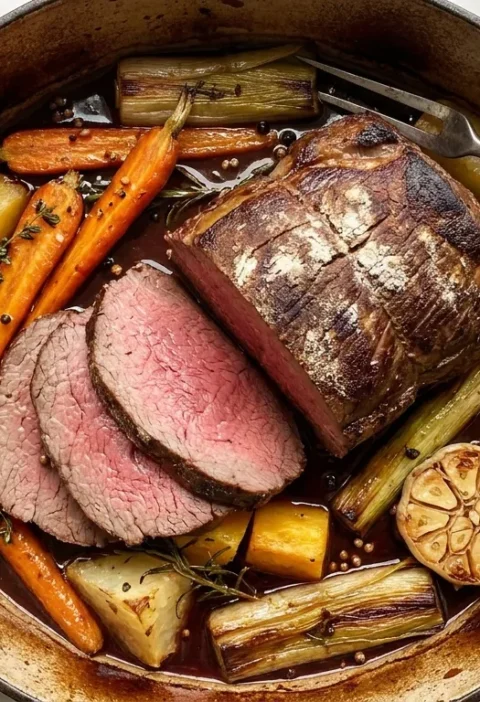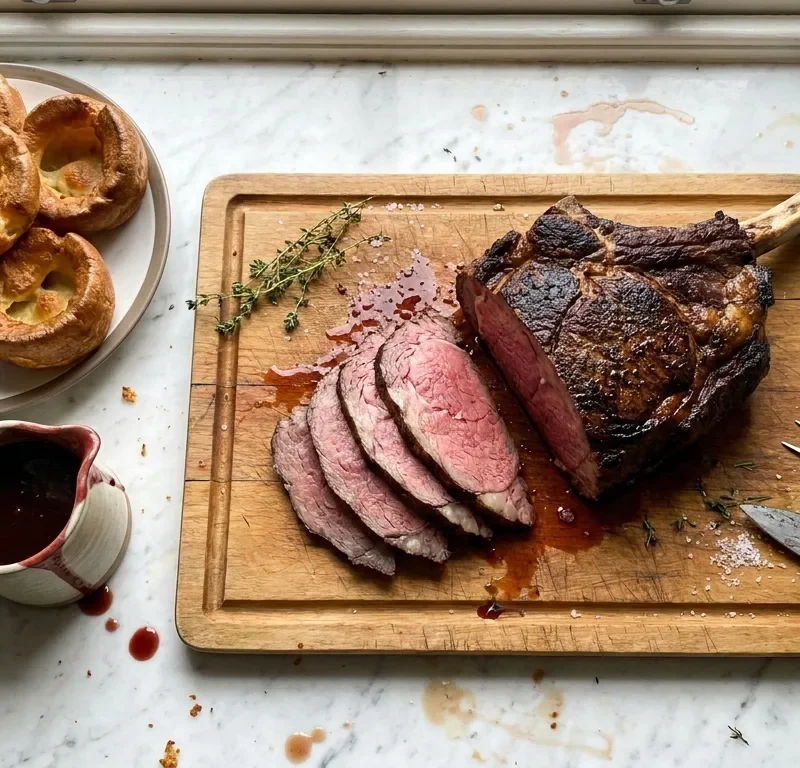
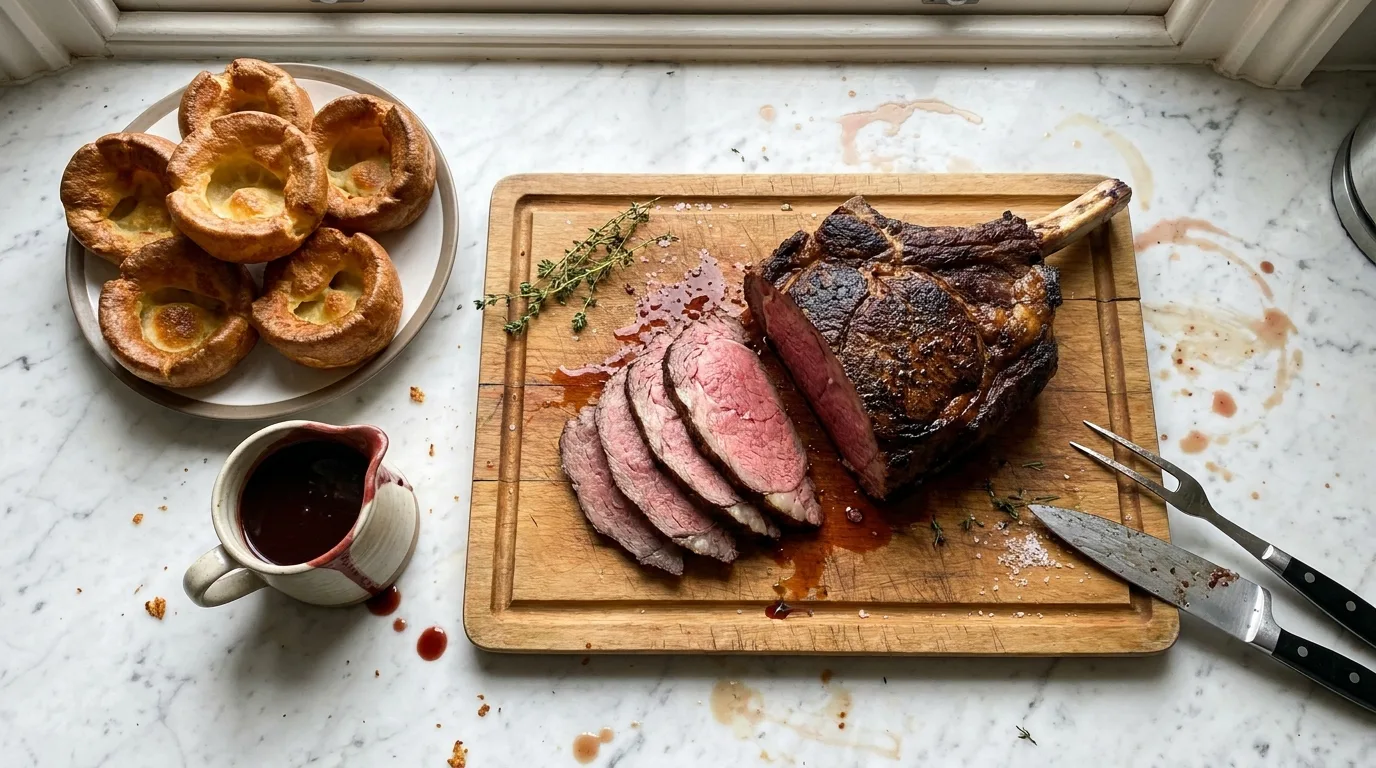
Gordon Ramsay’s roast beef is a 1.2 to 1.5kg rib of beef on the bone, seared until crusted then roasted at 200°C, served with crisp Yorkshire puddings and a red wine gravy. The beef takes about an hour for rare, plus 20 minutes resting.
This is the roast beef from his Sunday Lunch cookbook, page 70, where the whole menu is built around it. On the Yorkshire puddings he writes: “According to photographer Jill’s mum, you need ‘love and hot fat to make perfect crisp Yorkshire puddings’… I can’t argue with that!” The batter is just flour, salt, eggs, and milk, and the fat comes straight from the beef roasting tray.
The gravy is where his version beats everyone else’s. Red onions, unpeeled garlic, thyme, and four plum tomatoes go into the beef tray, then he squashes the tomatoes with a potato masher so they thicken the gravy naturally. Half a bottle of red wine and beef stock reduce down around them, and the sieve catches everything at the end, so there’s no flour in it anywhere.
Cooked this recipe? Send a photo or tell me what you changed at fans@gordonramsayrecipes.uk and I’ll share your experience live on this page.
Gordon Ramsay’s Roast Beef with Yorkshire Pudding and Red Wine Gravy
Course: DinnersCuisine: BritishDifficulty: Medium6
25
minutes1
minute720
kcal2 hr 15 min
The full Sunday roast from Ramsay’s Sunday Lunch book: rib of beef on the bone, Yorkshire puddings cooked in fat from the beef tray, and a gravy thickened with squashed plum tomatoes instead of flour.
Ingredients
- For the beef:
1.2-1.5kg rib of beef, on the bone
Sea salt and freshly ground black pepper
2 tbsp olive oil
- For the Yorkshire puddings:
225g plain flour
½ tsp salt
4 eggs, beaten
300ml milk
About 4 tbsp vegetable oil or beef dripping, for cooking
- For the red wine gravy:
Few thyme sprigs
4 garlic cloves, unpeeled
2 red onions, peeled and sliced
4 plum tomatoes, halved
½ bottle of red wine (about 350ml)
1.2 litres beef stock
Directions
- Sear the beef: Heat the oven to 200°C (400°F/Gas 6). Season the beef with salt and pepper, then sear in a hot roasting pan with the olive oil for 3 to 4 minutes on each side until browned all over.
- Roast: Transfer to the oven and roast, allowing 15 minutes per 450g for rare or 20 minutes per 450g for medium.
- Make the batter: Sift the flour and salt into a large bowl. Add the eggs and half the milk and beat until smooth. Mix in the remaining milk and leave the batter to rest while the beef cooks.
- Rest the beef: When the beef is cooked, transfer to a warmed plate and rest, lightly covered with foil, while you cook the puddings and make the gravy. Increase the oven to 230°C (450°F/Gas 8).
- Heat the fat: Put 1 tsp oil or, better still, hot fat from the beef roasting pan into each section of a 12-hole Yorkshire pudding or muffin tray. Place on the top shelf of the oven until very hot, almost smoking.
- Bake the puddings: Whisk the batter again, then ladle into the tray to three-quarters fill each tin. It should sizzle. Bake for 15 to 20 minutes until well risen, golden brown, and crisp. Don’t open the oven door until the end or they might collapse.
- Make the gravy: Pour off excess fat from the roasting pan and place over a medium heat. Add the thyme, garlic, onions, and tomatoes and cook for 4 to 5 minutes. Pour in the wine and bring to a simmer, then squash the tomatoes with a potato masher to help thicken the sauce.
- Finish the gravy: Pour in the stock and bubble for about 10 minutes until reduced by half. Pass through a sieve, pressing the vegetables to extract their flavour. Bring back to the boil and reduce to a gravy consistency, then check the seasoning.
- Serve: Carve the beef thinly and serve with the gravy and Yorkshire puddings.
FAQs
Which cut of beef does Gordon Ramsay use for roasting?
In the Sunday Lunch book he uses rib of beef on the bone, because the bone conducts heat into the centre and the fat cap bastes the joint as it roasts. His timing rule, 15 minutes per 450g for rare or 20 for medium, is built for thick joints like rib, topside, and sirloin.
Topside is the budget choice and stays tender if you keep it rare and carve thinly. A fillet is a different shape entirely, long and lean, so it hits temperature sooner and needs checking early. If you want fillet wrapped in pastry instead, his beef wellington is the special occasion version.
How does Ramsay get Yorkshire puddings to rise?
His rule from the book is hot fat, almost smoking, before the batter goes in. In his Sunday roast video he adds two tricks the book doesn’t mention: a dribble of cold water in the batter if you like your puddings “a little lighter and crispier,” and pouring from a jug directly at the open oven, which he says is safer than carrying a tray of boiling fat across the kitchen.
The batter needs to rest, at least 30 minutes or even the whole time the beef cooks, then a final whisk before pouring. He also makes a horseradish version by grating fresh horseradish into this same batter, which is the one in his Yorkshire pudding recipe.
Why does Ramsay put tomatoes in his roast beef gravy?
Four halved plum tomatoes go into the roasting pan with the onions and garlic, and once the wine is simmering he squashes them with a potato masher. The tomato flesh thickens the gravy naturally and adds a gentle sweetness against the red wine, so there’s no flour or cornflour in it at all.
Everything then passes through a sieve, with the vegetables pressed hard to push their flavour through, which leaves a smooth, glossy gravy that tastes of the roast itself. A spoonful of his horseradish sauce on the side cuts through all that richness.
How do you tell when roast beef is done without a thermometer?
In his roast beef video Ramsay teaches the finger test: press the beef and compare the feel to your face. Squidgy like the inside of your cheek means rare, firm like your chin means medium. It works because muscle tightens as it cooks, so the resistance tells you what’s happening inside.
The timings get you close, then resting does the final work. He rests the meat “for at least 20 minutes,” loosely covered in foil, which lets the juices settle back through the meat instead of flooding the board when you carve. If you’d rather use numbers, our meat temperature guide has the internal temperatures for every level of doneness.
What can you do with leftover roast beef?
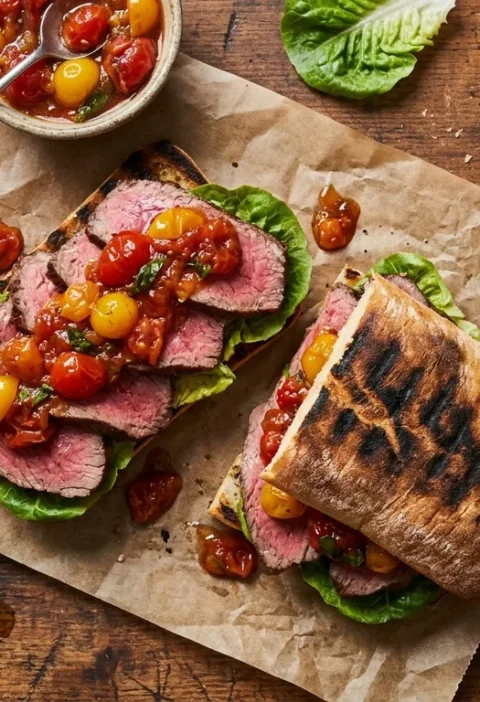
Cold rare beef carved thin makes a better sandwich than most hot ones: good bread, a thin spread of horseradish or mustard, and something sharp like watercress. The beef keeps for 3 days wrapped in the fridge, and leftover gravy reheats well and freezes for a month.
The Yorkshire puddings are the one thing that doesn’t store, as they lose their crispness within hours of coming out of the oven, so eat those fresh. If you’re building the full Sunday spread around the beef while you’re at it, his parsnip purée is a side that earns its place next to the gravy.