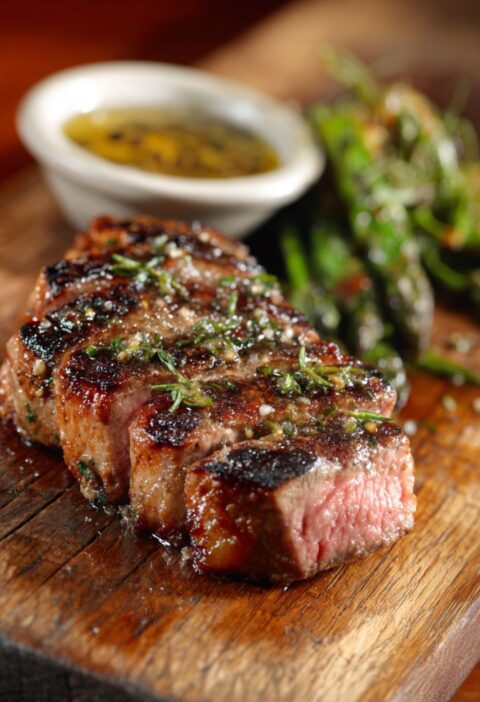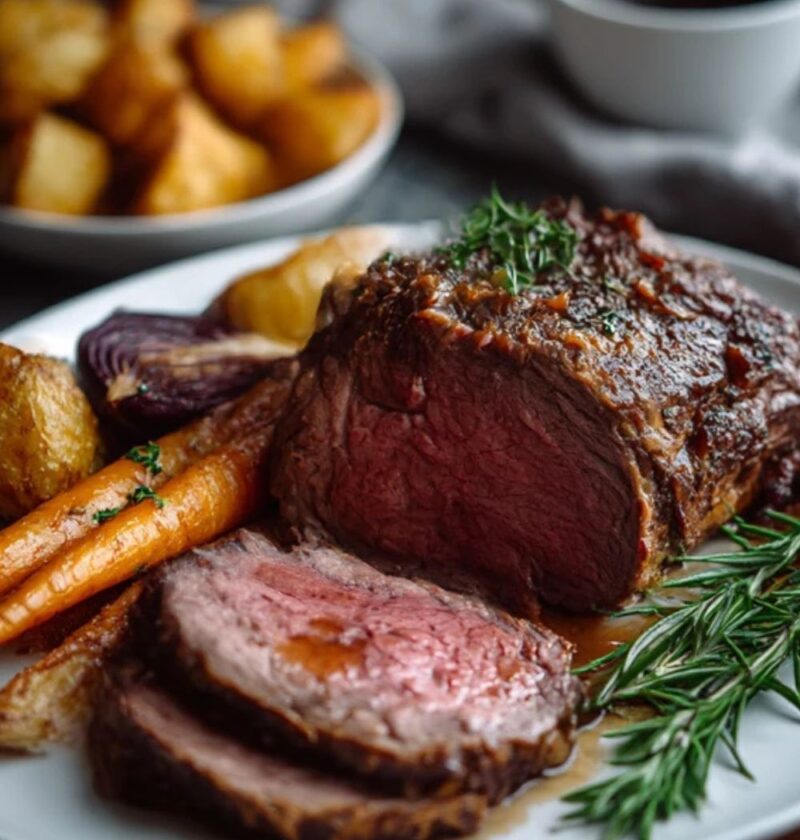
The only reliable way to know when meat is cooked is to measure its internal temperature with a thermometer. Colour, firmness, and cooking time are all unreliable. A chicken breast can look golden at 50°C (dangerously undercooked) or pale at 75°C (perfectly safe). This guide covers the target temperatures for every protein, how carryover cooking works, and the difference between UK and US safety guidelines.
I ruined a lot of good food before I started using a thermometer. Overcooked chicken, grey steaks, dry pork. Gordon Ramsay always says to use a thermometer and not your eyes, and he is right. A decent instant-read thermometer costs under £15 and is the single most useful tool in any kitchen. Every temperature in this guide comes from official food safety sources: the UK Food Standards Agency and the USDA.
Beef Internal Temperatures
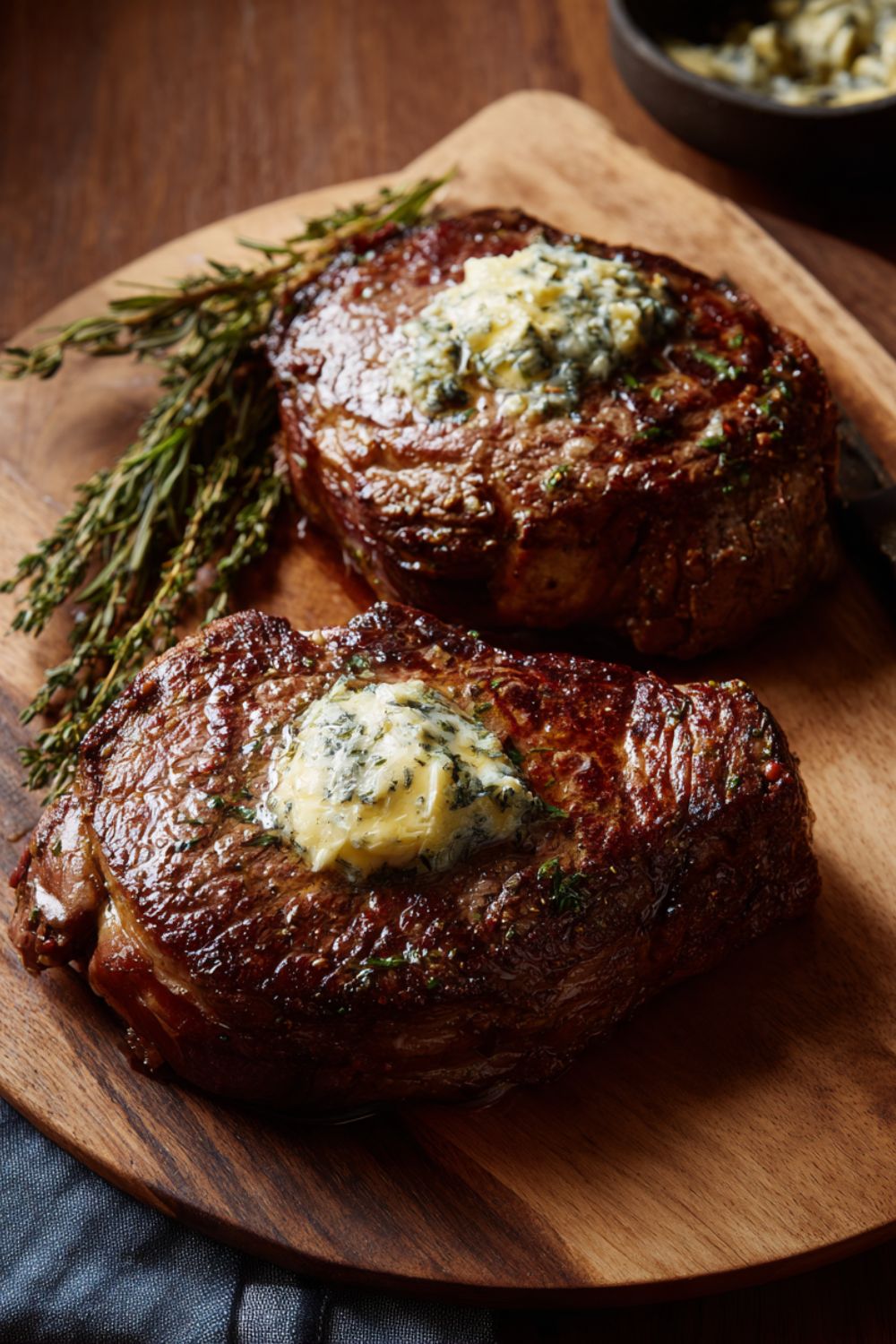
Whole cuts of beef (steaks, roasting joints) are safe at lower temperatures than minced beef because bacteria only live on the surface, which gets seared during cooking. The inside of a solid muscle is sterile. This is why you can eat a steak medium-rare but a burger must be cooked through.
Steak Doneness Temperatures
| Doneness | Pull from heat | After resting | What it looks like |
|---|---|---|---|
| Rare | 46°C / 115°F | 52°C / 125°F | Cool red centre, very soft |
| Medium-Rare | 52°C / 125°F | 57°C / 135°F | Warm pink centre, slightly firm |
| Medium | 57°C / 135°F | 63°C / 145°F | Hot pink centre, firm |
| Medium-Well | 63°C / 145°F | 68°C / 155°F | Slight trace of pink |
| Well Done | 68°C / 155°F | 74°C / 165°F | No pink, fully grey |
The USDA minimum safe temperature for whole beef cuts is 63°C (145°F) with a 3-minute rest. That is medium. For more on steak technique, my complete steak cooking guide covers every method in detail.
Beef Roasting Joint Temperatures
| Doneness | Pull from oven | After resting (20-30 min) |
|---|---|---|
| Rare | 48°C / 118°F | 54°C / 130°F |
| Medium-Rare | 54°C / 130°F | 60°C / 140°F |
| Medium | 60°C / 140°F | 66°C / 150°F |
Large joints carry over more than steaks because they have more thermal mass. Pull them 5 to 6°C below your target. Rest for at least 20 minutes, loosely tented with foil. My slow cooker roast beef and Sunday roast recipes include specific temperatures for each method.
Minced Beef (Burgers, Meatballs, Bolognese)
Minced beef must always reach 74°C (165°F) in the UK or 71°C (160°F) per USDA guidelines. When meat is minced, bacteria from the surface gets mixed throughout. There is no safe medium-rare for a burger unless you grind the meat yourself from a whole, seared cut. My Italian meatballs recipe and spaghetti bolognese both cook above this threshold.
Chicken and Poultry Temperatures
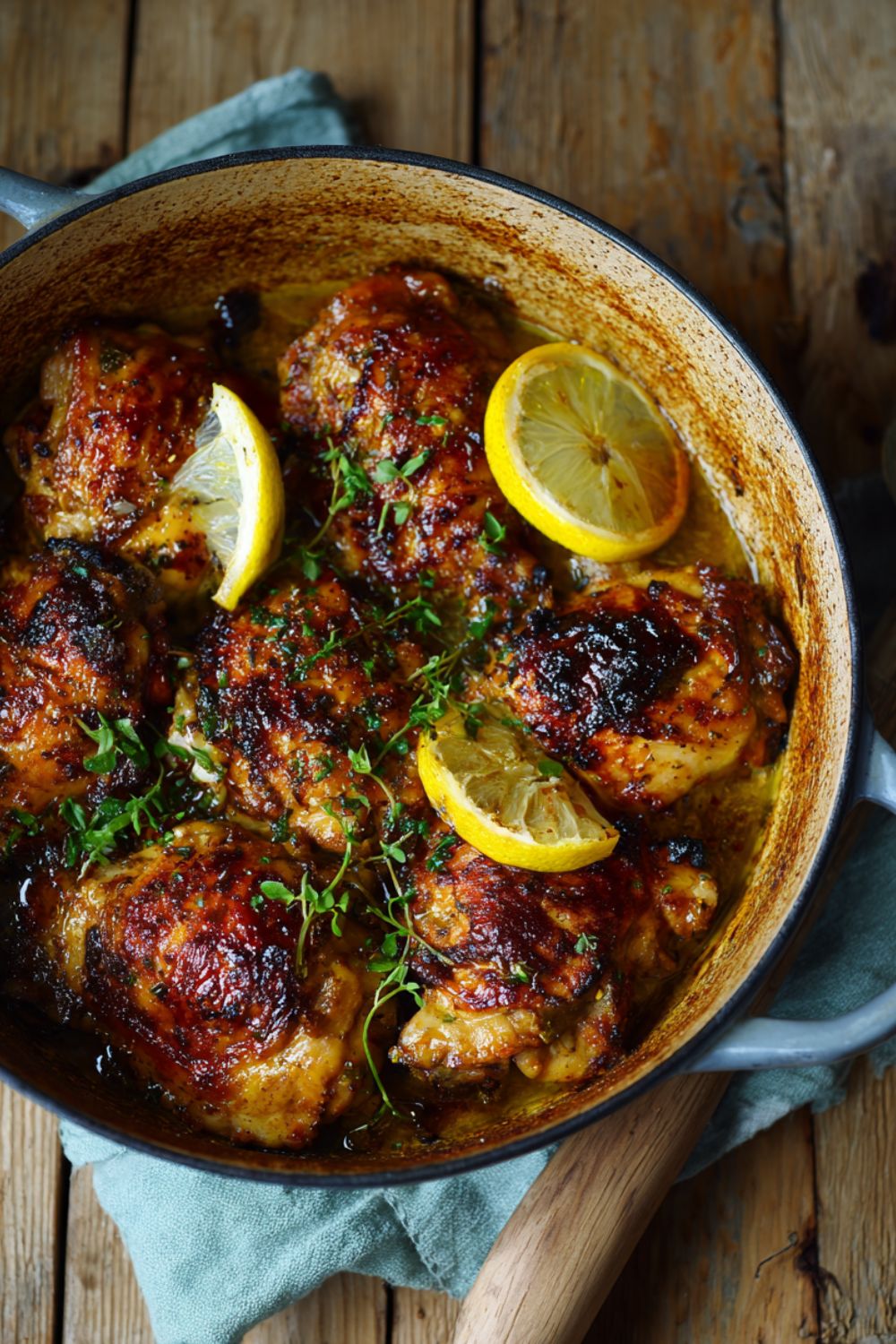
All poultry must reach 74°C (165°F) throughout the thickest part. No exceptions, no variations for doneness. The UK Food Standards Agency and the USDA agree on this number.
| Cut | Target temperature | Where to measure |
|---|---|---|
| Whole chicken | 74°C / 165°F | Inner thigh, not touching bone |
| Chicken breast | 74°C / 165°F | Thickest part of the breast |
| Chicken thigh | 74°C / 165°F | Centre of the thickest part |
| Turkey | 74°C / 165°F | Inner thigh and breast |
| Duck breast | 63°C / 145°F | Centre (can be served pink) |
The common advice to check that “juices run clear” is not reliable. Use a thermometer. Chicken can still show clear juices at unsafe temperatures, and pink juices at safe ones. If you only buy one kitchen tool, make it a thermometer.
Duck breast is the exception in poultry. Because it is a solid muscle (like steak), it can safely be served pink at 63°C. My duck breast recipe cooks it to medium for the best texture.
Pork Temperatures
Pork temperature guidelines have changed. The USDA lowered its recommendation to 63°C (145°F) with a 3-minute rest because modern farming has virtually eliminated trichinella. The UK FSA still recommends 71°C (160°F) for pork.
| Cut | UK FSA minimum | USDA minimum | Notes |
|---|---|---|---|
| Pork loin / chops | 71°C / 160°F | 63°C / 145°F + 3 min rest | Slightly pink at USDA temp |
| Pork tenderloin | 71°C / 160°F | 63°C / 145°F + 3 min rest | Very lean, dries out fast |
| Pork belly / shoulder | 71°C / 160°F | 63°C / 145°F + 3 min rest | Better at 88-93°C for pulled pork |
| Sausages | 74°C / 165°F | 71°C / 160°F | Minced meat rules apply |
For pork shoulder and belly destined for slow cooking or pulled pork, the safe temperature is just the floor. The target is 88 to 93°C (190 to 200°F), where the collagen breaks down completely and the meat falls apart. My sticky pork ribs recipe cooks low and slow to hit this range.
Lamb Temperatures
Lamb follows the same rules as beef. Whole cuts can be served pink. Minced lamb must be cooked through.
| Doneness | Pull from heat | After resting |
|---|---|---|
| Rare | 48°C / 118°F | 54°C / 130°F |
| Medium-Rare | 54°C / 130°F | 60°C / 140°F |
| Medium | 60°C / 140°F | 66°C / 150°F |
| Well Done | 68°C / 155°F | 74°C / 165°F |
Lamb leg and shoulder joints benefit from resting for at least 20 minutes. The Irish lamb stew cooks well past these temperatures because stew meat needs long, slow heat to break down connective tissue.
Fish and Seafood Temperatures
| Type | Target temperature | Visual check |
|---|---|---|
| Salmon | 52-57°C / 125-135°F | Flakes easily, slightly translucent centre |
| White fish (cod, halibut, sea bass) | 63°C / 145°F | Opaque throughout, flakes with a fork |
| Prawns / shrimp | 63°C / 145°F | Pink and opaque, curled into C shape |
| Scallops | 52-54°C / 125-130°F | Golden crust, translucent centre |
Salmon is best served at a lower temperature than the USDA’s official 63°C minimum. At 52 to 57°C, the flesh is silky, moist, and flakes in large pieces. Many chefs, including Gordon Ramsay, cook salmon to this range. At 63°C it is still good but noticeably drier. My pan-fried salmon recipe targets this sweet spot.
Scallops need very little time. They should be golden on the outside and still slightly translucent in the centre. Overcooking makes them rubbery. My scallop recipe covers timing in detail.
What Is Carryover Cooking?
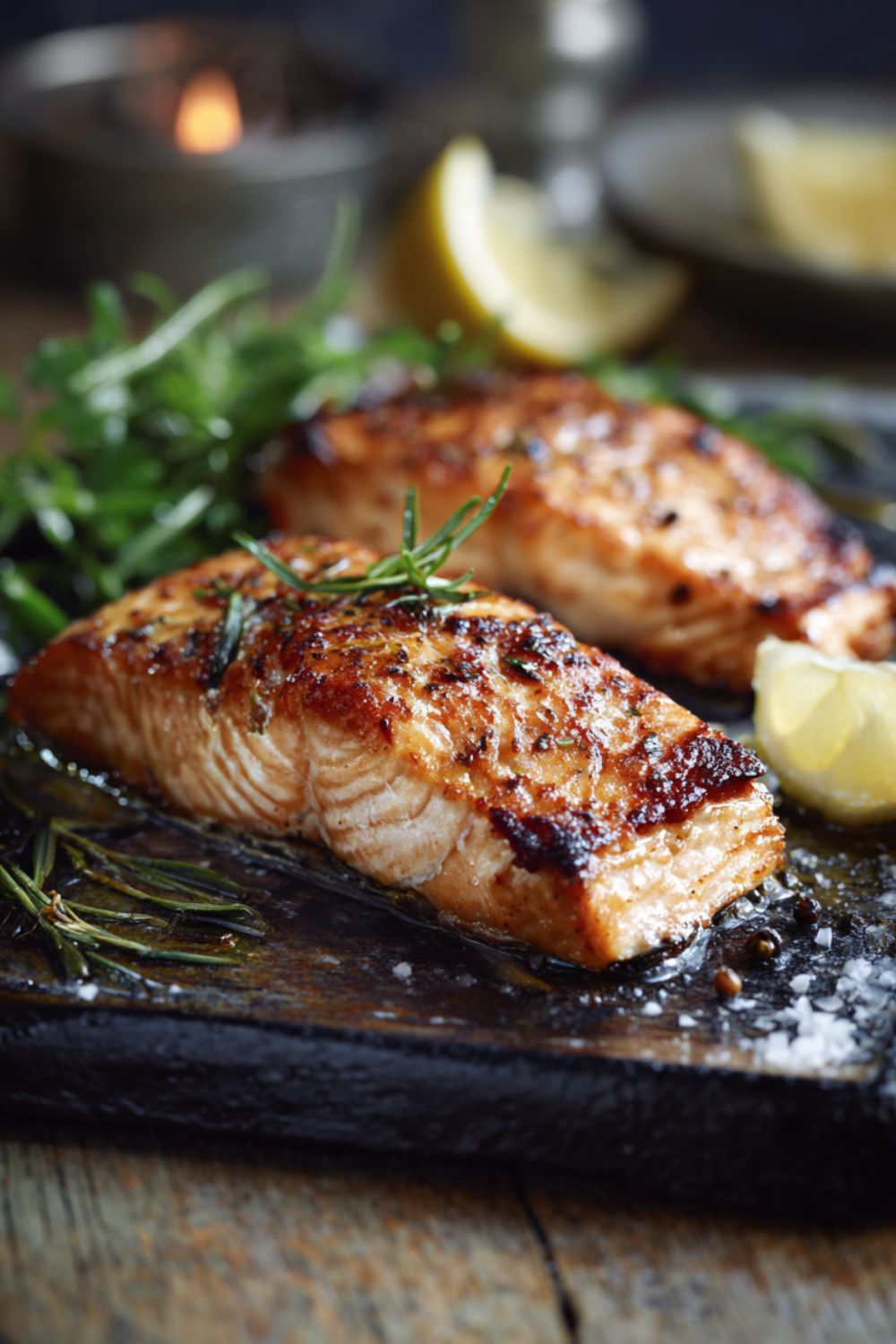
Carryover cooking is the rise in internal temperature that continues after you remove meat from the heat source. The outside of the meat is hotter than the centre, and that heat keeps moving inward even after cooking stops.
How much the temperature rises depends on the size of the cut. A thin steak might rise 3°C (5°F). A large roasting joint can rise 5 to 8°C (10 to 15°F). This is why every temperature table in this guide tells you to pull the meat BEFORE it reaches the final target.
If you wait until the thermometer reads your target while the meat is still on the heat, it will be overcooked by the time you eat it. Pull early, rest, then check again.
How to Use a Meat Thermometer
Where to insert: Push the probe into the thickest part of the meat, away from bone, fat, or gristle. For a steak, insert horizontally from the side into the centre. For a chicken, insert into the inner thigh without touching the bone.
How deep: The sensor on most instant-read thermometers is in the tip. Push it to the centre of the thickest part, then slowly pull it back to find the coldest spot. The lowest reading is the true internal temperature.
When to check: Start checking temperature a few minutes before you expect the meat to be done. For a steak, that is around the 3-minute mark per side. For a roast, start checking 15 minutes before the estimated time.
Which thermometer: An instant-read digital thermometer is all you need. They cost £10 to £25 and give a reading in 2 to 3 seconds. Probe thermometers with a cable are useful for roasts because you can monitor the temperature in the oven without opening the door.
UK vs US Temperature Guidelines
The UK Food Standards Agency and the USDA do not always agree. The main differences are:
Pork: The UK recommends 71°C (160°F). The USDA lowered its guideline to 63°C (145°F) with a 3-minute rest. Both are safe. The USDA change reflects modern farming eliminating the parasite risk that historically required higher temperatures.
Reheating: The UK requires reheated food to reach 70°C (158°F) and hold for 2 minutes. In Scotland, the requirement is 82°C (180°F). The USDA says 74°C (165°F).
Minced meat: Both agree it must be cooked through. The UK says 74°C (165°F). The USDA says 71°C (160°F). In practice, there is no meaningful difference at these temperatures.
FAQs
Do I really need a meat thermometer?
Yes. It is the only reliable way to know if food is safe and cooked to the doneness you want. Time, colour, and touch are all unreliable. A thermometer costs less than a single steak and lasts for years.
Why does my steak keep coming out overcooked?
You are probably not accounting for carryover cooking. Pull your steak 3 to 5°C (5 to 10°F) below your target temperature. It will continue rising during the 5-minute rest. If you wait until it reads your target on the heat, it overshoots every time.
Can chicken be slightly pink and still be safe?
Yes. Colour is not a reliable indicator of doneness in chicken. Some safely cooked chicken (especially near the bone) can have a pink tinge due to the protein myoglobin. If the thermometer reads 74°C (165°F) at the thickest point, it is safe regardless of colour.
What temperature is medium-rare steak?
57°C (135°F) after resting. Pull the steak from the heat at 52°C (125°F) and rest for 5 minutes. The centre will be warm, pink, and juicy. This is the temperature most chefs prefer.
Is it safe to eat rare steak?
For whole muscle cuts (not minced), yes. Bacteria live on the surface, and searing kills them. The sterile interior can safely be served rare at 52°C (125°F). This does not apply to minced beef, mechanically tenderised meat, or any meat that has been punctured or injected.