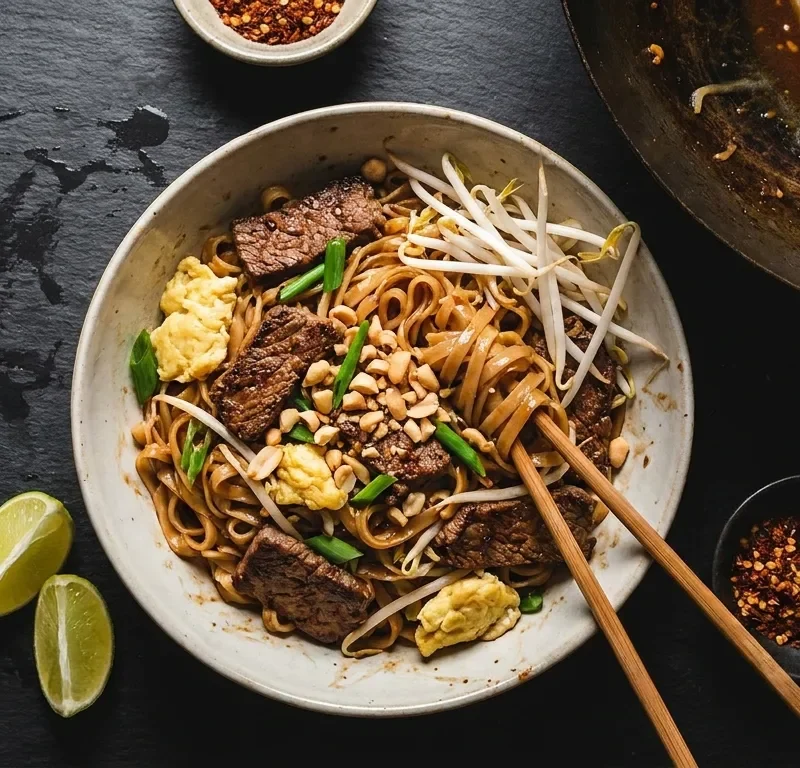
Gordon Ramsay’s pad thai is flat rice noodles stir-fried with beef, scrambled egg and beansprouts, finished with tamarind sauce, lime and roasted peanuts. The recipe comes from his Great Escape cookbook, serves four and takes about 20 minutes once the noodles have soaked.
Ramsay writes that he’d been cooking pad thai for years, but says travelling to Thailand changed his approach completely. He learnt that the dish “shouldn’t be a greasy affair, but more delicate and drier” than most Western versions.
The technique that makes his version work is removing the beef while it’s still rare, then folding it back at the end. It finishes cooking in the residual heat of the wok, which keeps every slice tender instead of tough and chewy.
Cooked this recipe? Send a photo or tell me what you changed at fans@gordonramsayrecipes.uk and I’ll share your experience live on this page.
Gordon Ramsay’s Beef Pad Thai
Course: DinnerCuisine: ThaiDifficulty: Medium4
15
minutes10
minutes390
kcal25
minutesFrom Gordon Ramsay’s Great Escape, the pad thai he refined after travelling to Thailand and learning from cooks who’ve been making it their whole lives. Swap the beef for prawns, chicken or tofu.
Ingredients
200g thin dried rice noodles
1 tbsp caster sugar
2 tbsp fish sauce
2 tbsp tamarind paste
1 tbsp chilli sauce
2 tbsp vegetable oil
1 shallot, peeled and chopped
2 garlic cloves, peeled and sliced
1 red chilli, deseeded and sliced
250g beef such as rump steak or sirloin, thinly sliced
2 medium eggs, beaten
100g beansprouts
2 spring onions, green parts cut into finger lengths
Juice of 1 lime
1 tbsp palm sugar
2 tbsp dark sweet soy sauce
2 tbsp light soy sauce
8 tbsp roasted chopped peanuts, to garnish
Lime wedges, to serve
Directions
- Soak the noodles: Put the rice noodles in warm water for about 10 minutes until flexible and pliable but not overly soft. Drain and set aside.
- Make the sauce: Combine the caster sugar, fish sauce, tamarind paste and chilli sauce in a small bowl and stir well.
- Stir-fry the aromatics: Heat the oil in a wok until hot. Add the shallot, garlic and chilli and stir over a medium heat until fragrant.
- Sear the beef: Tip in the beef and stir-fry for one minute so it is still rare. Remove to a plate with a slotted spoon and set aside.
- Cook the noodles: Add the drained noodles to the wok with the sauce and a splash of water. Stir-fry for a few minutes until tender.
- Scramble the eggs: Push the noodles to one side, add a little more oil and crack the eggs over it. Scramble lightly until almost cooked, then fold into the noodles.
- Finish the dish: Return the beef to the wok and add the beansprouts, spring onions, lime juice, palm sugar and both soy sauces. Stir briefly until the vegetables are slightly wilted but still crunchy.
- Serve: Divide among warm shallow bowls, sprinkle with peanuts and serve immediately with lime wedges.
FAQs
What did the Thai chef say about Ramsay’s pad thai?
In the famous F Word episode, Ramsay cooked pad thai for Buddhist monks at the Wimbledon Thai temple. Chef Chang from the Blue Elephant restaurant tasted it and said “this is not a pad thai at all,” pulling a face that became a viral meme.
The critique stung because Chang runs one of London’s top Thai restaurants and knows exactly what the balance should taste like. The monks themselves ate every bite though, which suggests the issue was authenticity rather than flavour.
How did Ramsay change his recipe after visiting Thailand?
The F Word version used king prawns with just fish sauce, salt and sugar for seasoning, which is why Chang found it too simple. The Great Escape version adds palm sugar, two types of soy sauce and lime juice, giving the sauce much more depth and complexity.
He also changed his noodle technique after watching Thai cooks, learning that flat rice noodles need soaking rather than boiling. His chicken rice noodles use a similar approach where the noodles go in barely softened and finish cooking in the sauce.
Can you use chicken or prawns instead of beef?
Ramsay writes that he “saw endless variations including calamari, shrimp, chicken or tofu” across Thailand. The key difference is cooking time, since beef only needs one minute while chicken needs three to four.
If you use king prawns like the F Word version, add them where the recipe says beef. Cook for two minutes until pink and curled, since his prawn curry uses the same late-addition technique to keep them juicy.
Why does Ramsay say tamarind is essential?
He writes in Great Escape that “tamarind is essential to provide sourness” because it creates the sweet-sour backbone that defines real pad thai. Without it the sauce just tastes of fish sauce and sugar, which is salty-sweet but missing that fruity tang that makes it Thai.
His chicken curry uses tamarind the same way, which the UHC cookbook lists alongside pad thai and Asian fish dishes. If you can’t find tamarind paste, extra lime juice works as a substitute, though the flavour won’t be quite as complex.
Did the monks actually enjoy Ramsay’s pad thai?
They did. The monks at the Wimbledon Thai temple can’t cook for themselves, so the local community offers their one daily meal at 11 o’clock. Ramsay called cooking for them “the most daunting task so far.”
Chef Chang dismissed the pad thai, but the monks ate every bite without complaint. Chang was judging against professional Thai restaurant standards, while the monks were grateful for a meal made with care, which says everything about the gap between technical perfection and real-world cooking.