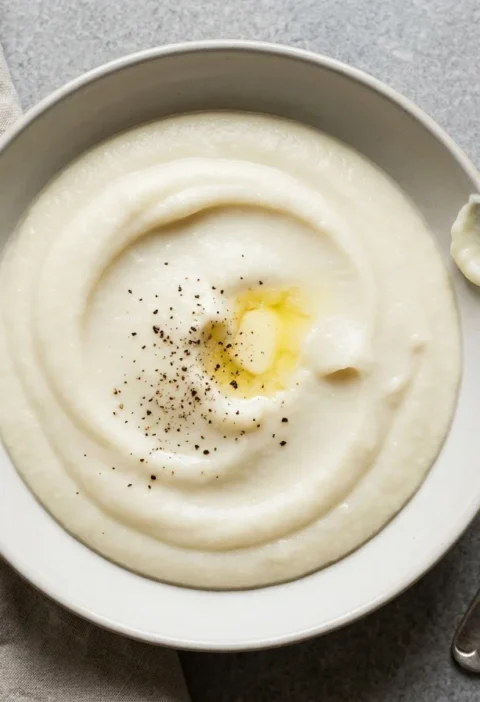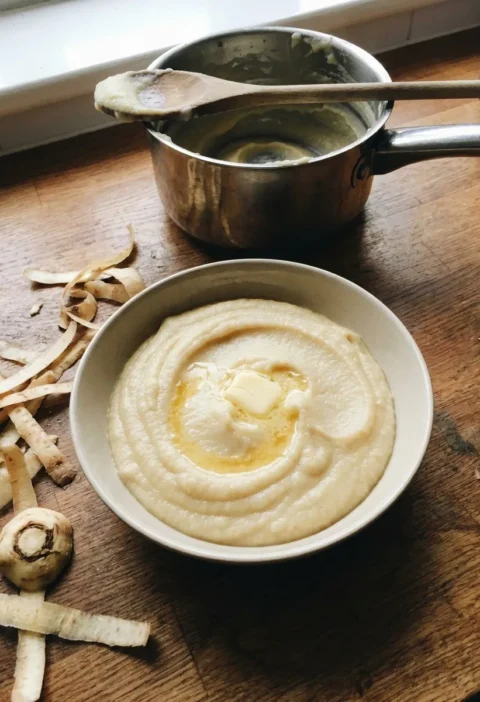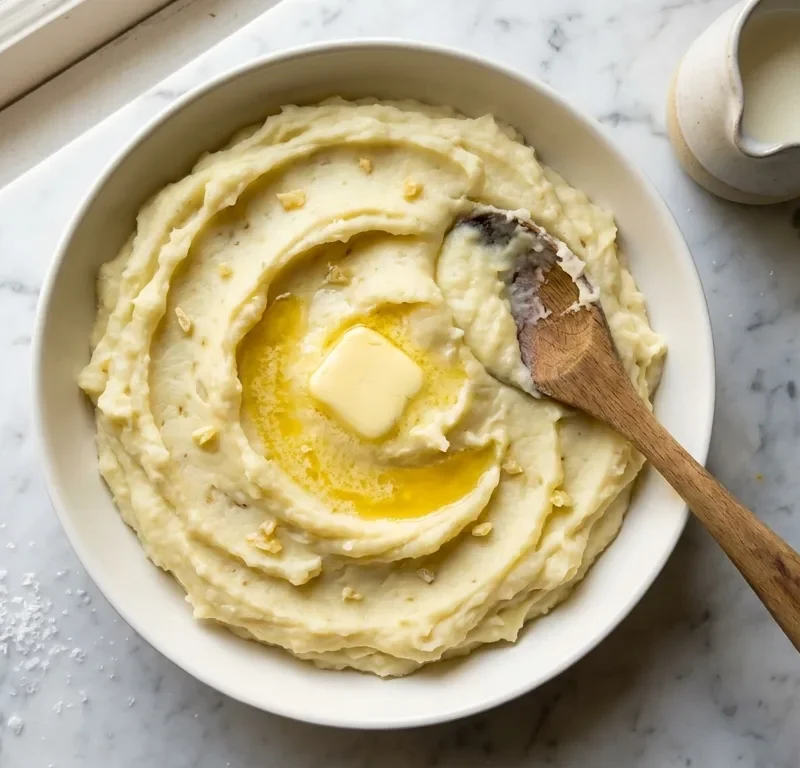
Gordon Ramsay’s mashed potatoes use 1kg floury King Edward potatoes, 100ml whole milk, 100ml double cream, 100g butter, and a garlic clove infused in the warm cream. Pushed through a ricer, never a food processor. Ready in about 30 minutes.
This recipe is from Bread Street Kitchen, where he writes “take delicious, creamy mashed potatoes and make them extra tasty by folding through some crushed garlic.” He publishes mash in three different cookbooks, and every version agrees on the same rules: floury potatoes, a ricer, and drying them after draining.
The technique that separates restaurant mash from lumpy homemade is the drying step. After draining the boiled potatoes, you put them back in the hot pan and shake until the steam stops. That removes all the excess water so the potatoes absorb butter and cream instead of moisture.
Cooked this recipe? Send a photo or tell me what you changed at fans@gordonramsayrecipes.uk and I’ll share your experience live on this page.
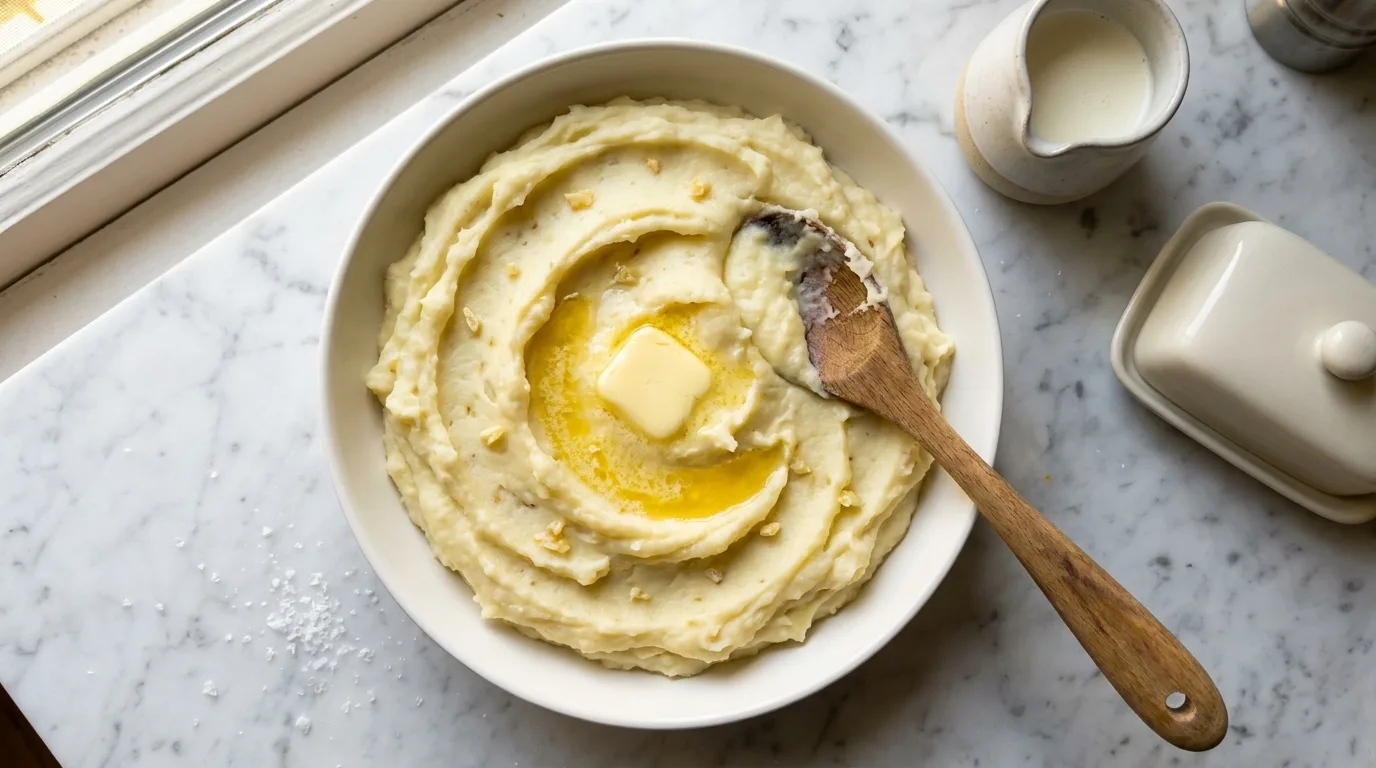
Gordon Ramsay’s Garlicky Mashed Potatoes
Course: SidesCuisine: BritishDifficulty: Easy4
servings10
minutes20
minutes320
kcal30
minutesFrom Bread Street Kitchen. Floury potatoes pushed through a ricer with garlic-infused cream and butter. Ramsay publishes this same technique across three cookbooks. Around 320 kcal per serving.
Ingredients
1kg King Edward, Desiree or red-skinned potatoes (2.2 lb), peeled and chopped into large chunks
100ml whole milk (scant ½ cup)
100ml double cream (heavy cream, scant ½ cup)
1 plump garlic clove, crushed
100g butter (7 tbsp)
Sea salt
Directions
- Boil the potatoes: Put the peeled potatoes into a large pan with enough cold water to cover them, then bring to the boil. Reduce the heat and simmer for 15 to 20 minutes until tender when pierced with a knife.
- Infuse the cream: Meanwhile, heat the milk and cream together in a small pan until small bubbles appear around the edge. Remove from the heat, stir in the crushed garlic, and leave to infuse for about 5 minutes.
- Rice the potatoes: Drain the potatoes well, then push through a ricer or mouli back into the pan. You can also use a potato masher, but never a food processor or the mash will turn gluey.
- Beat in the butter: Add the butter to the warm mashed potatoes and beat until fully combined.
- Add the cream: Pour the garlic-infused milk and cream mixture over the mash and mix well. Season to taste with salt and warm through gently over low heat before serving.
FAQs
Why does Ramsay use a ricer and never a food processor?
A ricer pushes the potato through tiny holes so every strand is smooth without being overworked. A food processor blade ruptures the starch cells, which releases a paste that turns your mash gummy and wallpaper-sticky. Ramsay says this in Chef’s Secrets, Sunday Lunch, and Bread Street Kitchen. Three books, same warning.
In Chef’s Secrets, he goes even further: push the riced potato through a fine sieve for an even silkier finish. That’s how he gets the texture at his restaurants. A cheap supermarket ricer gets you 90% of the way there. Golden baked dauphinoise potatoes skip the problem entirely, the slices bake whole in garlic cream instead of being mashed.
Does Ramsay put egg in his mashed potatoes?
Not in regular mash. He adds egg only when making duchess potatoes from Sunday Lunch, where you pipe the mash into rosettes and bake them at 220°C until golden. The eggs help the mash hold its shape and crisp at the edges. For everyday creamy mash, it’s just potatoes, butter, and cream.
In Chef’s Secrets, his restaurant version uses 150ml double cream reduced by half before beating it in, plus a grating of nutmeg and white pepper instead of black. That’s how he gets that impossibly smooth, rich purée without any egg. No milk either in that version, just concentrated cream and butter.
What about truffle, brie, or mustard variations?
In Sunday Lunch, Ramsay stirs wholegrain and Dijon mustard into the finished mash for a sharper, punchier version that pairs with sausages and roast pork. For truffle mash, drizzle a teaspoon of truffle oil through the finished mash just before serving and don’t cook it further or the heat kills the aroma.
For brie, stir 100g of ripe brie (rind removed, cubed) into the hot mash and let it melt through. You can also replace the cream with the same amount of full-fat crème fraîche for a tangier, lighter finish. A ladle of smooth glossy chicken gravy over any of these variations turns a simple side dish into the main event.
Which potato does Ramsay use for mash?
King Edward, Desirée, or Romano. All three are floury varieties and the best choice for mash because they have high starch and low moisture. They break apart when cooked and absorb butter and cream instead of holding water. He names these exact varieties across all three cookbooks.
Waxy potatoes like Charlotte or new potatoes hold their shape when boiled, which is great for salads but terrible for mash because they turn sticky instead of fluffy. In BSK, he also lists “red-skinned potatoes” as acceptable. If you’re in the US, Yukon Gold is the closest equivalent to Desirée. For a dinner party plate, spoon it under sliced pastry-wrapped beef wellington and let the resting juices soak into the mash.
What does Ramsay serve mashed potatoes with?
At his restaurants, mash is the default side for slow-cooked meats: lamb shanks braised in red wine, beef cheeks, and sausages with onion gravy. In Sunday Lunch he writes that mash goes with “meat, chicken, and vegetable dishes” and calls it “equally good” with all three.
For weeknight dinners, try his two-meat blend meatloaf, built to sit on a pile of creamy mash. The garlic in the potatoes works particularly well with beef and lamb. BSK also offers a wild garlic version in spring: blitz two handfuls of wild garlic leaves with olive oil, then fold the purée through the finished mash instead of the crushed clove.